Orchardist
Orchardists grow fruit trees and manage the harvest, from pruning and irrigation through to picking and selling the crop.
- Median salary*
- $72,800
4.0%vs last year, before tax
- People employed
- 8,200
0.0%vs last year
- Projected growth
- +4.6%
to 2035
- AI exposure*
- Low
- automation risk
- Average hours
- 48/wk
+8h vs all jobs
- Shortage status*
- In shortage (regional)
national
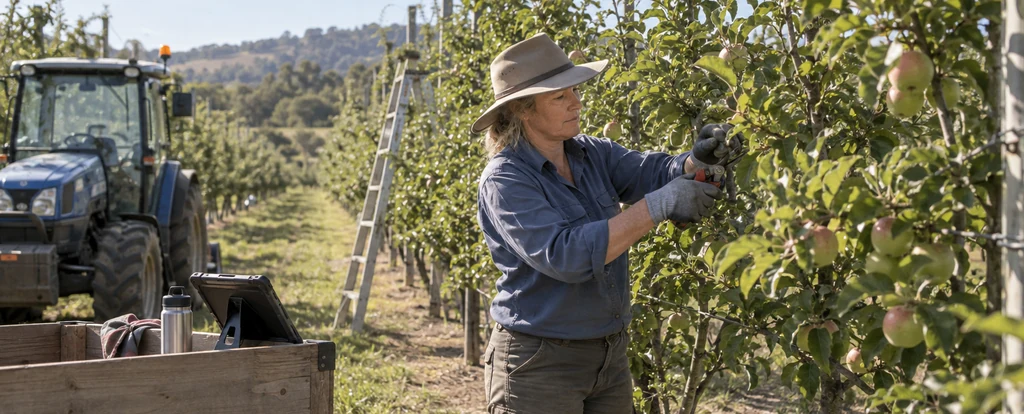
Orchardists look after fruit trees from planting through to harvest, deciding when to prune, water, spray and pick across the blocks they manage. They work outdoors on properties that range from a few hectares of apples or cherries to large commercial operations, often supervising seasonal picking crews at the busiest time of year. Many also run the business side, arranging labour, packing, cold storage and sales as well as the growing.
How much do orchardists earn?
The median full-time salary for an orchardist is $72,800 per annum, before tax, up $15,200 since 2018.
Pay depends heavily on the crop and the season, because a lot of orchard work is paid hourly or by the bin during harvest, and a poor year cuts both the hours and any bonuses. Supervisors and managers on salary generally earn more than seasonal pickers, while owners take their return from what the orchard sells. Location matters less than the crop, the scale of the operation and whether you are paid wages or a share of the harvest.
What does an orchardist do day to day?
The list below is what fills most weeks; the exact mix shifts with seniority and whatever stage the current work is at.
- Pruning and training trees to shape the canopy and keep fruit within reach
- Running irrigation and fertigation programs, checking soil moisture and repairing lines
- Scouting for pests and disease and deciding when and what to spray
- Thinning fruit and coordinating the picking crews who bring in the harvest
- Maintaining tractors, sprayers and trellis, and keeping records for buyers and certification
What skills do orchardists need?
Employers look for operations management, plant and equipment operation, worksite safety management, backed by Farm management software (e.g., AgWorld) fluency and strong problem solving.
Specialist skills
- Operations management
- Plant and equipment operation
- Worksite safety management
- Inventory management
- Supply chain planning
Software and tools
- Farm management software (e.g., AgWorld)
- Irrigation control systems
- GPS-guided tractors
- Pruning tools
- Harvesting equipment
General skills
- Problem solving
- Attention to detail
- Physical stamina and dexterity
Is the job growing?
About 8,200 people work as orchardists in Australia, and employment is projected to grow 4.6% over the decade to 2035. That's modest growth: demand is steady rather than booming.
How do you become an orchardist?
Here's the path most orchardists take, step by step.
- 1Start with a horticulture qualification
A Certificate III in Production Horticulture (AHC30624), available through TAFE and other registered training organisations, covers pruning, irrigation, pest management and safe machinery use, and can be done as a traineeship while you work.
- 2Learn the seasonal timing on the job
Knowing when to thin, spray and pick comes from working through several seasons, and casual harvest work is a common way in because it needs no prior experience. Around 50% of people in the job have Year 12 or below as their highest qualification, which reflects how much is learned in the orchard rather than the classroom.
- 3Take responsibility for a block
Supervising a crew or running a section under a manager is the usual next step, and it is where spray records, labour budgets and quality standards start to matter as much as the trees.
- 4Add business and management training if you want to run an orchard
A Diploma of Horticulture or a degree in agricultural science opens management roles, and courses in farm business management help with the cash flow, marketing and labour planning that come with owning or leasing a block.
- 5Keep the licences up to date
A current driver's licence is effectively essential on a rural property, and chemical user accreditation is expected for anyone applying agricultural chemicals, with states setting their own requirements for some of these.
Ready to apply as an orchardist?
Whether you're working toward becoming an orchardist or already are one and want a hand with the next step (sharpening your resume for ATS screening, tightening your cover letter, or knowing what you'll actually be asked at interview), here are examples grounded in this specific role, not generic templates.
What jobs can an orchardist move to?
Moving into Agricultural Machinery Operator typically comes with the biggest pay rise, worth $2,600 a year more on average.
| Move to | Typical pay change | Overlap | Retraining |
|---|---|---|---|
| Agricultural Machinery Operator Orchardists with tractor and sprayer experience can move into machinery operation, though a certificate and specialist equipment training are needed.Known move | +$2,600 | 41% | reskill |
| Vegetable Grower Orchardists can apply crop planning, irrigation and pest control to vegetable growing, with retraining for different crops and harvest methods.Known move | +$0 | 40% | reskill |
| Nut Grower Orchardists already manage tree crops, so pruning, spraying and harvest knowledge transfers to nut growing with a short course. | +$0 | 54% | short course |
| Flower Grower Orchardists bring horticultural production and crop care skills directly to flower growing, needing only market and variety adjustments. | −$7,800 | 83% | minimal |
| Farmer Orchardists bring fruit production and farm management to broader farming, though livestock and mixed enterprise skills need further study.Known move | −$18,200 | 30% | reskill |
Moves are chosen from Jobs and Skills Australia's Data on Occupation Mobility, which follows income tax records between 2011-12 and 2020-21, together with entry requirements and skill overlap. A known move is one people were seen making in that data. Pay change compares median full-time pay for the two roles.
Who works as an orchardist?
The typical orchardist is 52 years old; 74% are men, 73% work full-time, and full-timers average 48 hours a week.
- 52
- Median age
- 26%
- Female share
- 73%
- Full-time
- +8h
- vs all-jobs avg
What's it like being an orchardist?
The job follows the fruit rather than the clock. Winter is for pruning and repairs, spring brings thinning and spray programs, and summer and autumn are dominated by harvest, when full-time orchardists average 48 hours a week and the days get longer still. It suits people who like seeing a season's work turn into a crop and who are comfortable making decisions outdoors with the weather against them.
What people like
- The work changes with the season. Pruning, thinning, spraying and picking each belong to their own stretch of the year, so no two months look alike and the job never settles into a routine.
- You can see what your decisions did. A hard prune, a change to the irrigation schedule or an early spray shows up in the fruit at harvest, which gives the year a clear scoreboard.
- Days are outdoors and hands-on. Orchardists spend their time among the trees and on machinery rather than at a desk, which is the main reason many people stay in the work.
- Running your own block. For those who get there, owning or leasing an orchard means setting your own priorities, choosing varieties and dealing directly with buyers and packers.
What people find hard
- Weather sets the schedule. Hail, rain at harvest or a late frost can wipe out value that took a year to grow, and there is no rescheduling a picking window once the fruit is ripe.
- Harvest season is relentless. For several weeks the orchard runs at full pace, with long days, machinery to keep going and fruit that will not wait.
- Gathering a picking crew in time. The crop has to come off in a short window, so recruiting, housing and managing pickers is one of the harder parts of the job, and a crew that does not turn up costs fruit.
- Income moves with the crop. Prices, yields and fruit size vary year to year, and a bad season or a glut in the market flows straight through to what the orchard earns.
Based on our synthesis of professional-body surveys and public accounts of the role, not first-person verified reviews.
Which industries employ orchardists?
Agriculture, Forestry and Fishing employs the largest share of orchardists.
Top employing industries
- 1Agriculture, Forestry and Fishing
Ranked by employment share; the source doesn't publish an exact percentage per industry.
| Year 12 or below | 49.8% | |
|---|---|---|
| Certificate III/IV | 16.2% | |
| Bachelor degree | 12.2% | |
| Diploma / Advanced Diploma | 9.7% | |
| Postgraduate | 4.3% |
Will AI replace orchardists?
This is a low-exposure job. Farm management software such as AgWorld, GPS-guided tractors and automated irrigation controllers take care of records, steering and watering schedules, but pruning, thinning, pest decisions and harvest timing still rest on what a grower sees standing in the block.
Share of typical working time by exposure level
- Pruning and canopy managementHow hard to cut a tree back depends on its vigour, the variety and last season's crop, which is a call made in front of the tree rather than by a machine.30%low
- Irrigation and soil moisture managementSoil probes and automated controllers now schedule much of the watering, but someone still has to walk the rows, check emitters and work out why one block is stressed.25%moderate
- Pest and disease checksTraps and phone apps can flag a hotspot, yet identifying the insect or disease and deciding whether to spray is done by eye among the trees.25%low
- Harvest timing and pickingRipeness, weather and crew availability set the picking date, and fruit for the fresh market still comes off the tree by hand or with a watched shake-and-catch machine.20%low
Common questions about becoming an orchardist
Straight answers to the questions people ask most.
How much does an orchardist earn?
Full-time orchardists earn a median of $72,800 per year before tax. What you actually take home swings with the crop and the season, since much of the work is paid hourly or by the bin, while managers, supervisors and owners earn according to the size and success of the operation.
How do you become an orchardist?
There is no single requirement, but most people start with a Certificate III in Production Horticulture (AHC30624) or a traineeship and learn the seasonal timing of pruning, spraying and harvest on the job. Management roles usually call for a diploma or degree, and buying or leasing a block is a separate path that needs capital as much as training.
Are orchardists in demand?
Orchardists are currently in shortage in regional areas, and employment is projected to grow 4.6% over the decade to 2035. The work is concentrated in regional growing areas, so being able to live near the orchards matters more than the national picture suggests, and experienced growers who can run a block and a crew are the ones employers look for.
Will AI or automation replace orchardists?
Automation has reached packing sheds, grading lines and some tractor work, but pruning, thinning and picking fruit for the fresh market still depend on people who can read a tree and its fruit. Farm management software and soil sensors help with records and irrigation scheduling rather than replacing the grower's judgement about the block.
What can an orchardist move into?
The closest moves are to related crops, such as vegetable growing, where crop planning, irrigation and pest control carry over for about the same pay, or flower growing, which needs only market and variety adjustments. Some orchardists move into agricultural machinery operation if they prefer the equipment side, and many work towards owning or leasing their own orchard, which is often where earnings grow.
Do orchardists work long hours?
Full-time orchardists average 48 hours a week across the year, with quieter periods in winter and much longer days during harvest. Weekends and public holidays are ordinary working days when the fruit is ready, and time off is usually taken once the season finishes.
Related roles
Not sure this is you? Take the career quiz and get a ranked shortlist of roles that fit how you like to work.