Vegetable Grower
Vegetable growers plant, tend and harvest crops such as carrots, lettuce and potatoes, supplying supermarkets, greengrocers and food processors.
- Median salary*
- $72,800
3.6%vs last year, before tax
- People employed
- 6,300
0.0%vs last year
- Projected growth
- +4.6%
to 2035
- AI exposure*
- Moderate
- automation risk
- Average hours
- 49/wk
+9h vs all jobs
- Shortage status*
- Not in shortage
national
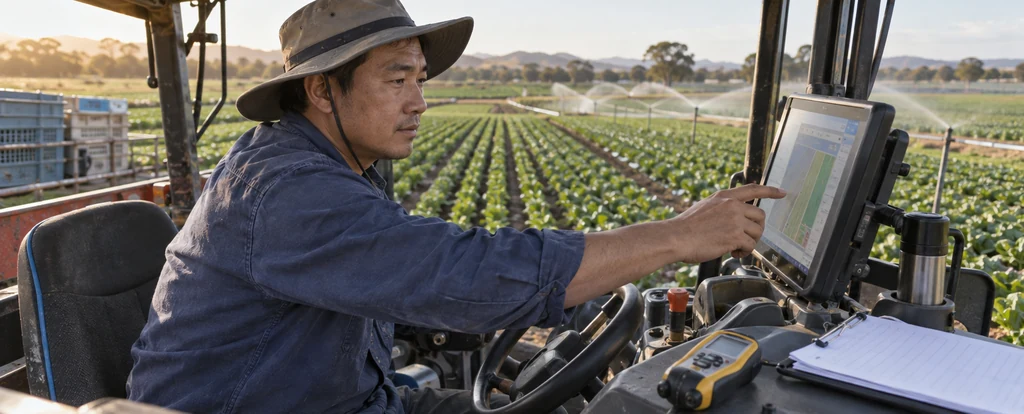
Vegetable growers work on farms that range from a few irrigated hectares to large operations supplying national retailers, mostly in regional growing districts. Unlike orchardists, who tend the same trees for years, they replant and rotate through short crop cycles, so the calendar is built around planting, spraying and harvest windows. Most work on family farms or for horticultural businesses, and crews grow sharply during picking.
How much do vegetable growers earn?
The median full-time salary for a vegetable grower is $72,800 per annum, before tax, up $15,500 since 2018.
Many vegetable growers work for wages on someone else's farm, where the Horticulture Award, your classification and penalty rates for weekend or public holiday harvest work set the base. Owner-operators take whatever the season leaves after water, fertiliser, labour and freight, so returns move with yields and with the prices wholesalers and supermarkets are paying. Farm size, whether the property is irrigated, and how much of the crop is sold direct all shift the figure.
What does a vegetable grower do day to day?
The list below is what fills most weeks; the exact mix shifts with seniority and whatever stage the current work is at.
- Preparing soil, beds and planting schedules for the next crop cycle
- Running irrigation and fertiliser programs through the growing season
- Scouting crops for pests, disease and weeds, and deciding when to spray
- Operating tractors and harvesters, then grading and packing produce for market
- Keeping budgets, chemical records, food safety and employment paperwork in order
What skills do vegetable growers need?
Employers look for operations management, plant and equipment operation, field inspection and testing, backed by Farm management software (e.g. AgWorld) fluency and strong safety and compliance awareness.
Specialist skills
- Operations management
- Plant and equipment operation
- Field inspection and testing
- Inventory management
- Budgeting and forecasting
Software and tools
- Farm management software (e.g. AgWorld)
- Irrigation controllers
- Tractor GPS guidance
- Soil testing kits
- Cold storage monitoring systems
General skills
- Safety and compliance awareness
- Physical stamina and dexterity
Is the job growing?
About 6,300 people work as vegetable growers in Australia, and employment is projected to grow 4.6% over the decade to 2035. That's modest growth: demand is steady rather than booming.
How do you become a vegetable grower?
Here's the path most vegetable growers take, step by step.
- 1Start with paid work on a vegetable farm
Most growers learn the practical side as a farm hand, doing planting, spraying, irrigation and harvest work for wages. It is the quickest way to find out whether you like the physical rhythm of the job before committing to study.
- 2Take on a traineeship or a certificate
A horticulture or agriculture traineeship combines paid farm work with study toward a Certificate III in Horticulture (AHC30722) or Agriculture at TAFE or another registered training organisation. The qualification helps when you apply for supervisory and machinery roles.
- 3Get the licences and accreditations the work needs
Chemical user accreditation, often delivered as ChemCert, is needed before you can spray, and a forklift licence is common for packing sheds. A car licence is effectively essential on farms outside town, and first aid training helps if you lead a crew.
- 4Learn the business and agronomy side
Budgets, water costs, soil nutrition and market timing decide whether a crop makes money, so growers pick up farm management skills on the job or through a diploma or agriculture degree. Larger operations increasingly expect familiarity with farm management software and GPS-guided machinery.
- 5Work toward managing or owning a block
Experienced growers move into managing a property for an owner, contract growing, leasing land or share farming, where they contribute labour and management in return for a share of the crop. This is the usual route to running your own operation.
Ready to apply as a vegetable grower?
Whether you're working toward becoming a vegetable grower or already are one and want a hand with the next step (sharpening your resume for ATS screening, tightening your cover letter, or knowing what you'll actually be asked at interview), here are examples grounded in this specific role, not generic templates.
What jobs can a vegetable grower move to?
Moving into Grain Grower typically comes with the biggest pay rise, worth $10,400 a year more on average.
| Move to | Typical pay change | Overlap | Retraining |
|---|---|---|---|
| Grain Grower Vegetable growers can transfer soil and crop management skills to grain growing, with a short course covering broadacre techniques. | +$10,400 | 54% | short course |
| Orchardist Vegetable growers bring crop planning, soil management and harvest skills to orchard work, with retraining in fruit tree care.Known move | +$0 | 40% | reskill |
| Nut Grower Vegetable growers can apply their horticultural knowledge to nut production, needing only a short course in tree nut management. | +$0 | 57% | short course |
| Cotton Grower Vegetable growers can move into cotton growing, applying irrigation and crop monitoring skills with a short course in cotton production. | +$0 | 55% | short course |
| Farmer Vegetable growers bring practical crop and farm management experience to broader farming, though the move requires significant retraining. | −$18,200 | 36% | reskill |
Moves are chosen from Jobs and Skills Australia's Data on Occupation Mobility, which follows income tax records between 2011-12 and 2020-21, together with entry requirements and skill overlap. A known move is one people were seen making in that data. Pay change compares median full-time pay for the two roles.
Who works as a vegetable grower?
The typical vegetable grower is 48 years old; 69% are men, 71% work full-time, and full-timers average 49 hours a week.
- 48
- Median age
- 31%
- Female share
- 71%
- Full-time
- +9h
- vs all-jobs avg
What's it like being a vegetable grower?
The job follows the crop rather than the clock: quiet weeks of preparation give way to intense planting, spraying and harvest periods when everything needs to happen at once. Weather, water availability and market prices sit behind every decision, which suits people who like working outdoors and solving practical problems as they come up. It rewards growers who are organised about records and labour as well as confident on a tractor.
What people like
- Working outdoors through the seasons. The days are spent in the paddock rather than an office, with planting, spraying and harvest each bringing a different kind of work.
- Seeing a crop through to the packhouse. You make the calls on soil preparation, irrigation and pest control, then watch the result graded and sold, which gives the work a visible finish.
- Practical problem solving. A blocked irrigation line, a disease outbreak or a breakdown during harvest all need a solution on the spot, and the fixes are usually hands-on.
- Independence on your own block. Growers who run their own operation set the cropping plan, the spray program and the sales approach without answering to a distant manager.
What people find hard
- Weather decides the year. Heat, frost, drought and flooding rain can cut a crop or wipe out a planting, and no amount of planning removes that exposure.
- Harvest hours are long. When produce is ready it has to come off quickly, so early starts, weekend work and long days are normal in peak season.
- Margins set by buyers. Supermarket and wholesale prices leave little room to move, while fertiliser, water, fuel and labour costs keep rising.
- Chemical handling and compliance. Spray records, withholding periods, safety procedures and food safety audits are a constant part of the job and carry real consequences if they slip.
Based on our synthesis of professional-body surveys and public accounts of the role, not first-person verified reviews.
Which industries employ vegetable growers?
Agriculture, Forestry and Fishing employs the largest share of vegetable growers.
Top employing industries
- 1Agriculture, Forestry and Fishing
Ranked by employment share; the source doesn't publish an exact percentage per industry.
| Year 12 or below | 59.4% | |
|---|---|---|
| Certificate III/IV | 12.4% | |
| Bachelor degree | 8.9% | |
| Diploma / Advanced Diploma | 6.5% | |
| Postgraduate | 2.7% |
Will AI replace vegetable growers?
Vegetable growing sits in the middle: some of the work is already software assisted while the core of it stays physical and local. Farm management platforms such as AgWorld, GPS-guided tractors, moisture sensors and cold storage monitors handle records, steering and scheduling, which trims paperwork and parts of field monitoring. Planting, diagnosing disease, judging ripeness and running a harvest crew still need a person on the ground.
Share of typical working time by exposure level
- Planting, spraying and harvest workGPS guidance steers the tractor on beds and spray runs, yet someone still has to adjust nozzles, monitor the job and drive the harvester when the crop is ready.30%low
- Irrigation and soil monitoringMoisture probes, irrigation controllers and soil testing kits flag when a block is dry or short of nutrients, which narrows the judgement call but does not make it.25%moderate
- Records, compliance and sellingSpray diaries, food safety audits, wage records and price reporting are increasingly generated and checked in software, though the grower signs off and answers for what it says.25%high
- Planning the crop and ordering inputsForecasting tools and farm management software help set planting dates and seed, fertiliser and chemical orders, but the grower still weighs water availability and contracts by hand.20%moderate
Moves least exposed to AI
These career moves from vegetable grower work are rated low for AI exposure:
- Orchardist
Solid skill overlap (40%), reskill to get there, and a low automation-risk profile.
- Nut Grower
Solid skill overlap (57%), short course to get there, and a low automation-risk profile.
- Cotton Grower
Solid skill overlap (55%), short course to get there, and a low automation-risk profile.
Common questions about becoming a vegetable grower
Straight answers to the questions people ask most.
How much do vegetable growers earn?
Vegetable growers earn a median of $72,800 per annum, before tax. Pay varies with your classification under the Horticulture Award, your skills and the season, and owner-operators take what is left after input costs rather than a set wage.
How do you become a vegetable grower?
Most people start as a farm hand on a vegetable property and learn planting, spraying, irrigation and harvest work on the job. A traineeship or a Certificate III in Horticulture (AHC30722) or Agriculture adds the agronomy and machinery knowledge that leads to supervisory roles. Chemical user accreditation and a forklift licence are commonly required.
Are vegetable growers in demand?
Vegetable growers are currently not in shortage, and employment is projected to grow 4.6% over the decade to 2035. Openings tend to come from growers leaving the industry and from the seasonal demand for harvest labour rather than rapid expansion. Experience with machinery, irrigation and spray programs helps you stand out when a farm is hiring.
Will AI and automation change vegetable growing?
Parts of the job are already software assisted: farm management platforms, GPS-guided tractors and soil moisture sensors handle records, steering and irrigation scheduling on many properties. Planting, diagnosing pests and disease, judging harvest timing and managing a crew still depend on someone walking the rows. The change is mostly about working from better information rather than replacing the grower.
What other jobs can a vegetable grower move into?
Growers move into orchard work or nut growing, where a short course covers the differences in tree crops and pay is about the same. Grain growing uses similar soil and crop management skills and pays $10,400 more. Longer term, leasing, share farming or buying a block is often where earnings grow.
What is a typical week like for a vegetable grower?
The week follows the crop, with planting, spraying, irrigation checks and harvest all needing attention at set points in the season. Expect early starts and longer days through harvest, and quieter periods in winter depending on where the farm is. Full-time vegetable growers average about 49 hours a week.
Related roles
Not sure this is you? Take the career quiz and get a ranked shortlist of roles that fit how you like to work.