Pyrotechnician
Pyrotechnicians plan and fire the fireworks and pyrotechnic effects that open concerts, close festivals and mark public celebrations.
- Median salary*
- $83,200
4.0%vs last year, before tax
- People employed*
- 400
0.0%vs last year
- Projected growth*
- +3%
to 2035
- AI exposure*
- Low
- automation risk
- Average hours*
- 42/wk
+2h vs all jobs
- Shortage status*
- Not in shortage
national
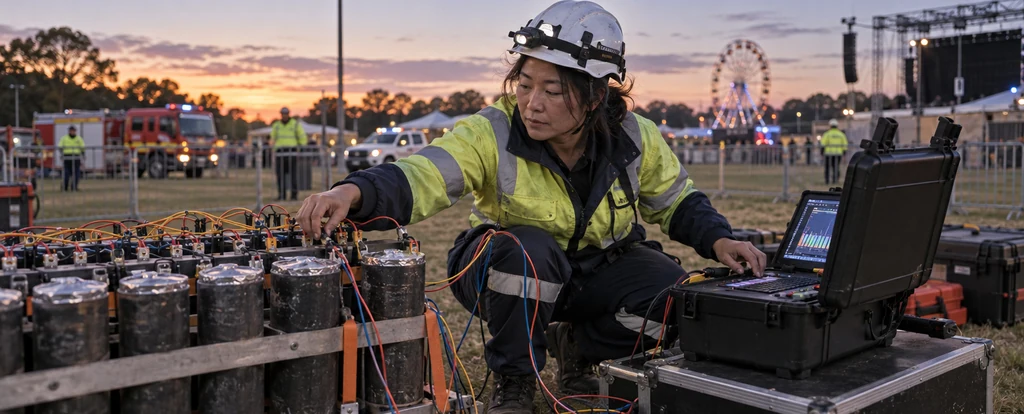
Pyrotechnicians work for display companies, production houses and film crews, mostly outdoors and almost always after dark. The job covers the whole display: designing the sequence, securing permits, storing and transporting explosives, and firing the show on cue. Most work is project-based, so a pyrotechnician might set up a council celebration one weekend and a stadium concert the next.
How much do pyrotechnicians earn?
The median full-time salary for a pyrotechnician is $83,200 per annum, before tax, up $17,400 since 2018.
Pay in this job is usually calculated per show or per day rather than by the hour, so annual earnings depend on how many displays you pick up in a season and how large they are. Leading a crew and holding the higher explosives licences lifts the day rate, and film and television effects work pays differently from council and community displays. Night, weekend and public holiday work is the norm, so penalty rates, travel allowances and away-from-home arrangements can make a noticeable difference.
What does a pyrotechnician do day to day?
The list below is what fills most weeks; the exact mix shifts with seniority and whatever stage the current work is at.
- Designing firework and effects sequences to match music, timing and the site
- Preparing and testing firing systems, e-matches and electrical circuits
- Applying for permits and briefing emergency services and venue staff
- Loading, wiring and securing shells and effects on site
- Firing the display by hand or from a computer controller
What skills do pyrotechnicians need?
Employers look for worksite safety management, plant and equipment operation, backed by FireOne fluency and strong safety and compliance awareness.
Specialist skills
- Worksite safety management
- Plant and equipment operation
Software and tools
- FireOne
- Finale 3D
- Cobra firing system
- AutoCAD
General skills
- Safety and compliance awareness
- Attention to detail
- Problem solving
- Time and deadline management
- Written communication
Is the job growing?
About 400 people work as pyrotechnicians in Australia, and employment is projected to grow 3% over the decade to 2035. That's modest growth: demand is steady rather than booming.
How do you become a pyrotechnician?
Here's the path most pyrotechnicians take, step by step.
- 1Join a display company crew
Most people start as casual crew on setup and pack-down, learning the safety routines before they touch a firing system. The work is paid, and display companies recruit their next licensed operators from the crews they already know.
- 2Complete accredited pyrotechnics training
Registered training organisations deliver short courses and certificate-level units in pyrotechnics and explosives handling, and this is the training state regulators accept as part of a licence application. 34% of people in the job hold a certificate III or IV, and some arrive with a diploma or degree in a related technical field.
- 3Get your state explosives licence
Pyrotechnics licensing sits with the work health and safety regulator in each state, such as SafeWork NSW, WorkSafe Victoria or WorkSafe Queensland, and the requirements differ between them. Applications generally need training evidence, a police check and sometimes a medical assessment.
- 4Build show experience and step up to firing
Crew move from assistant to lead firer by logging shows across different sites, shell sizes and effect types. Indoor and close-proximity work needs more experience again, and often extra endorsements on the licence.
- 5Specialise in the part of the industry you want
Experienced operators move into show design and choreography, film and television effects, or the technical side of large stadium and harbour displays. Each of those paths leans on a different mix of design software, rigging and client work.
Ready to apply as a pyrotechnician?
Whether you're working toward becoming a pyrotechnician or already are one and want a hand with the next step (sharpening your resume for ATS screening, tightening your cover letter, or knowing what you'll actually be asked at interview), here are examples grounded in this specific role, not generic templates.
What jobs can a pyrotechnician move to?
Moving into Special Effects Technician typically comes with the biggest pay rise, worth $5,200 a year more on average.
| Move to | Typical pay change | Overlap | Retraining |
|---|---|---|---|
| Special Effects Technician Pyrotechnicians bring explosives safety, timing and effects rigging to special effects work, though screen industry training and licensing are needed. | +$5,200 | 22% | reskill |
| Audiovisual Technician Pyrotechnicians bring show control and timing to audiovisual work, but need substantial retraining in sound, vision and staging systems. | −$7,800 | 38% | reskill |
| Lighting Technician Pyrotechnicians bring show timing, electrical firing and safety discipline to lighting work, with minimal extra training. | −$13,000 | 71% | minimal |
Moves are chosen from Jobs and Skills Australia's Data on Occupation Mobility, which follows income tax records between 2011-12 and 2020-21, together with entry requirements and skill overlap. A known move is one people were seen making in that data. Pay change compares median full-time pay for the two roles.
Who works as a pyrotechnician?
The typical pyrotechnician is 40 years old; 90% are men, 55% work full-time, and full-timers average 42 hours a week.
- 40
- Median age
- 10%
- Female share
- 55%
- Full-time
- +2h
- vs all-jobs avg
What's it like being a pyrotechnician?
The work runs on deadlines: a display has a fixed start time, a fixed site and one chance to go right. Between shows there is design, permits and stock control, so the year mixes intense outdoor nights with quieter planning weeks. People who like exact timing, small crews and working outdoors tend to stay with it.
What people like
- A show that finishes in minutes. A display is over almost as soon as it starts, and you know straight away whether the timing worked. Then the crew packs down and the site goes back to being a park or a paddock.
- Small crews and a flat structure. You work with the same handful of people across a season, and on most shows everyone pitches in on setup, wiring and pack-down, including the person who designed the sequence.
- Technical work with a physical edge. Firing systems, cue lists and electrical checks are exacting, and the same day has you lifting racks and running cable across a site.
- Displays that bring people together. New Year's Eve, council events and stadium shows all draw a crowd, and the audience response is part of what you are there to deliver.
What people find hard
- A seasonal calendar. Work clusters around New Year's Eve, Australia Day, festivals and major sporting events, and the quieter months between them can be thin.
- Weather and fire bans. Wind, rain and total fire bans can stop a show after the crew has already set up, and the call is often made only a few hours before firing.
- Night work and long drives. Shows fire after dark and crews travel to regional sites, so late drives home and weekend work come with the job.
- Licensing and paperwork. Storage records, transport rules, security clearances and notifications to authorities sit alongside the show itself, and they are checked rigorously.
Based on our synthesis of professional-body surveys and public accounts of the role, not first-person verified reviews.
Which industries employ pyrotechnicians?
Creative and performing arts activities employs the largest share of pyrotechnicians, followed by Motion picture and sound recording activities.
Top employing industries
- 1Creative and performing arts activities
- 2Motion picture and sound recording activities
- 3Amusement and other recreational activities
- 4Other administrative services
Ranked by employment share; the source doesn't publish an exact percentage per industry.
| Certificate III/IV | 34% | |
|---|---|---|
| Diploma / Advanced Diploma | 26% | |
| Bachelor degree | 20% | |
| Year 12 or below | 20% |
Will AI replace pyrotechnicians?
Pyrotechnics carries little AI exposure because the job ends in live explosives on a real site. Design software such as Finale 3D and firing systems like FireOne and Cobra automate cue timing and choreography and are already standard, but loading, wiring, fall-out zones and licence conditions stay with the operator.
Share of typical working time by exposure level
- Setting up and wiring the firing hardwareRunning cable, testing e-matches and building the racks is hands-on work in wind, rain and mud that no software replaces.30%low
- Loading shells and checking the siteSomeone has to position the racks, confirm the fall-out zone and check the crowd is clear before anything is armed.30%low
- Designing displays in show softwareFinale 3D and similar tools turn a music track into a timed cue list, which removes hours of manual charting but still needs a designer who knows the site and the shell limits.20%moderate
- Handling permits and compliance paperworkNotifications, storage records and security clearances are filed online now, which speeds up the administration without removing the licensed person's responsibility.20%moderate
Common questions about becoming a pyrotechnician
Straight answers to the questions people ask most.
How much does a pyrotechnician earn?
Full-time pyrotechnicians earn a median of $83,200 per year before tax. Display work is often paid per show or per day on top of that, so annual earnings depend on how many jobs you pick up in a season and whether you are leading the crew.
How do you become a pyrotechnician?
The usual route is to join a display company crew, complete accredited pyrotechnics training and then apply for the explosives licence your state requires. There is no degree requirement, but the work is regulated and you cannot fire a display without a licence.
Are pyrotechnicians in demand?
Pyrotechnicians are currently not in shortage, and employment is projected to grow 3% over the decade to 2035. About 400 people work in the role, so the number of jobs tracks the events calendar and how much councils and promoters spend on public displays.
Will AI replace pyrotechnicians?
AI is unlikely to replace this job, because the core of it is live explosives, site safety and licensing. Design software such as Finale 3D and firing systems like FireOne and Cobra already handle timing and cue lists, which speeds up planning rather than removing the operator.
What careers can a pyrotechnician move into?
Moving into lighting work needs minimal extra training because show control, electrical and timing skills transfer, and the pay difference between the two roles is $13,000 less. Special effects work in film and television uses the same explosives safety and rigging, though it calls for screen industry training and the pay gap between the roles is $5,200 more. Many experienced pyrotechnicians go on to run their own display company, which is often where earnings grow.
What hours do pyrotechnicians work?
Full-time pyrotechnicians average 42 hours a week, but the hours are uneven. Setup usually happens during the day and firing after dark, with most work falling on weekends, public holidays and the summer events season.
Related roles
- Lighting Technician
- Special Effects Technician
- Audiovisual Technician
- Stagehand
- Lighting Technician
- Special Effects Technician
Not sure this is you? Take the career quiz and get a ranked shortlist of roles that fit how you like to work.