Stagehand
Stagehands build, move and run the physical side of a live show, from the set and lights to the sound gear, so the performance starts on time.
- Median salary*
- $65,000
4.3%vs last year, before tax
- People employed*
- 3,500
0.0%vs last year
- Projected growth*
- +3%
to 2035
- AI exposure*
- Low
- automation risk
- Average hours*
- 40/wk
matches all-jobs average
- Shortage status*
- Not in shortage
national
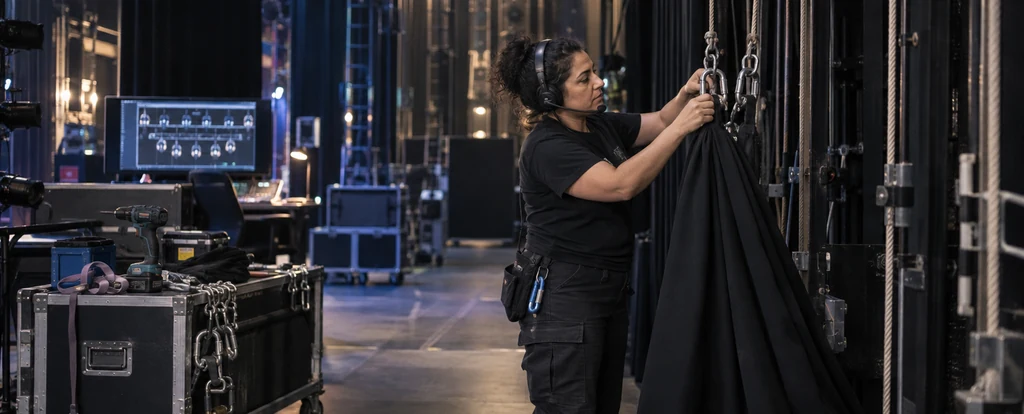
Stagehands work backstage in theatres, concert venues, festival sites and television studios, and most of the job happens before and after the audience arrives. They are the general crew who unload trucks, build the set, hang lights and speakers, then stay through the show to move scenery and props on cue. The role sits alongside specialist technicians: a lighting technician programs the console, while a stagehand hangs, focuses and cables the fixtures.
How much do stagehands earn?
The median full-time salary for a stagehand is $65,000 per annum, before tax, up $13,800 since 2018.
Stagehand pay is set by the entertainment industry award, and casual loadings plus penalty rates for nights, weekends and public holidays make up a large part of what you take home. Venue size matters as well: arena and touring crews working under enterprise agreements usually earn more than crews at small theatres or community events. Licences such as rigging or elevated work platform, and experience running a department, also lift rates.
What does a stagehand do day to day?
The list below is what fills most weeks; the exact mix shifts with seniority and whatever stage the current work is at.
- Loading road cases off trucks and building the set during a load-in, often with only a few hours to get it done
- Hanging and focusing lights, and flying speakers or scenery into position
- Running cables and patching equipment under direction from the department heads
- Moving scenery and props on cue during a show, following calls over headset
- Striking the set after the final performance and packing it back into the truck
What skills do stagehands need?
Employers look for operations management, hand and power tool work, plant and equipment operation, backed by Fly system fluency and strong physical stamina and dexterity.
Specialist skills
- Operations management
- Hand and power tool work
- Plant and equipment operation
- Worksite safety management
Software and tools
- Fly system
- Lighting console
- Sound desk
- Power tools
- Rigging hardware
General skills
- Physical stamina and dexterity
- Problem solving
- Time and deadline management
- Written communication
Is the job growing?
About 3,500 people work as stagehands in Australia, and employment is projected to grow 3% over the decade to 2035. That's modest growth: demand is steady rather than booming.
How do you become a stagehand?
Here's the path most stagehands take, step by step.
- 1Start as casual crew
There is no formal entry requirement for the job. Most stagehands begin on casual rosters with crew agencies, venue casual lists, festivals or community theatre and learn on the job, so reliability for odd hours, physical fitness and a basic feel for tools matter more than a qualification at this stage.
- 2Get a White Card
General construction induction training is required to work on construction sites, which covers many festival builds and bump-ins. It is a short course, and some venues and production companies ask for it before adding you to a roster.
- 3Study a Certificate III in Live Production and Technical Services
This is the main vocational qualification for backstage work, offered at TAFE and private providers. It usually takes about a year full time, or can be done part time while you pick up casual shifts, and it covers rigging basics, lighting, sound and safety so you can move from general crew into a department.
- 4Add licences for the equipment you operate
Elevated work platform and forklift licences are common on crew CVs, and rigging or scaffolding work needs a high risk work licence issued by the work health and safety regulator in your state. Electrical work is restricted to licensed electricians, so lighting departments route most wiring through them.
- 5Build a reputation on show calls
Steady work comes from being on time, listening on headset and being known to the department heads and production managers who book crews. From there you can specialise in lighting, audio, rigging or stage management, or move across to film and television sets.
Ready to apply as a stagehand?
Whether you're working toward becoming a stagehand or already are one and want a hand with the next step (sharpening your resume for ATS screening, tightening your cover letter, or knowing what you'll actually be asked at interview), here are examples grounded in this specific role, not generic templates.
What jobs can a stagehand move to?
Moving into Grip typically comes with the biggest pay rise, worth $23,400 a year more on average.
| Move to | Typical pay change | Overlap | Retraining |
|---|---|---|---|
| Grip Stagehand set building, rigging and load-in skills transfer to grip work on set, requiring little extra training. | +$23,400 | 71% | minimal |
| Pyrotechnician Stagehand rigging, timing and safety awareness suit pyrotechnics work, with a licence and specific training needed. | +$18,200 | 50% | short course |
| Audiovisual Technician Stagehand cabling, patching and equipment setup experience supports a move into audiovisual work, with a certificate needed for complex systems. | +$10,400 | 23% | reskill |
| Stage Manager Stagehand backstage knowledge and show timing give a foundation for stage management, though organisational and production training is required. | +$6,800 | 25% | reskill |
| Lighting Technician Stagehand rigging, focusing and show-call experience carries into lighting work, with formal training needed for consoles and electrical systems. | +$5,200 | 45% | reskill |
Moves are chosen from Jobs and Skills Australia's Data on Occupation Mobility, which follows income tax records between 2011-12 and 2020-21, together with entry requirements and skill overlap. A known move is one people were seen making in that data. Pay change compares median full-time pay for the two roles.
Who works as a stagehand?
The typical stagehand is 34 years old; 75% are men, 45% work full-time, and full-timers average 40 hours a week.
- 34
- Median age
- 25%
- Female share
- 45%
- Full-time
- +0h
- vs all-jobs avg
What's it like being a stagehand?
The job runs on a schedule that belongs to the show: a load-in, a technical rehearsal, the performances, then a bump-out that often finishes in the early hours. Days are physical and the pace comes in bursts, so people who like working with their hands in a crew and seeing a result by the end of the shift tend to stay with it. Much of the work is casual, which suits some people and makes budgeting hard for others.
What people like
- Seeing the show come together. A load-in starts with an empty floor and a truck full of cases; a few hours later the stage is set and the audience is walking in. That turnaround is the visible result of the shift.
- Working with your hands and real gear. Rigging, cabling and flying scenery are practical problems solved with tools and a bit of planning, and you can see straight away whether it worked.
- A different venue every week. Touring productions, festivals, theatres and television studios all draw on the same core skills, so the work is not tied to one building.
- The crew you work with. Stagehands work in small teams under time pressure, talking over headset and handing gear to each other all shift. That closeness is a large part of why people keep doing it.
What people find hard
- Casual and unpredictable work. Rosters are built shift by shift, and quiet stretches between productions mean income varies from month to month.
- Heavy work at unsocial hours. Load-ins and bump-outs involve lifting, carrying and long shifts, often through the night to meet a morning deadline.
- Outdoor festivals and the weather. Rain, heat and mud are part of festival work, and the show tends to go ahead regardless.
- Slow pay progression at small venues. Rates in small theatres and community venues are modest, and the better money sits with touring, arena and enterprise agreement crews.
Based on our synthesis of professional-body surveys and public accounts of the role, not first-person verified reviews.
Which industries employ stagehands?
Performing Arts employs the largest share of stagehands, followed by Events and Conferences.
Top employing industries
- 1Performing Arts
- 2Events and Conferences
- 3Sports and Recreation
- 4Broadcasting and Media
Ranked by employment share; the source doesn't publish an exact percentage per industry.
| Certificate III/IV | 34% | |
|---|---|---|
| Diploma / Advanced Diploma | 26% | |
| Bachelor degree | 20% | |
| Year 12 or below | 20% |
Will AI replace stagehands?
AI barely touches most of this job. A stagehand's work is physical and tied to one venue on one day: unloading trucks, hanging fixtures, flying scenery and clearing a stage between scenes. Where software has made inroads, it is in the lighting and sound desks that store and replay cue stacks, which changes how a show is programmed rather than who builds and runs it.
Share of typical working time by exposure level
- Load-in and load-outUnloading road cases, building truss and running cable to a deadline is hands-on work that cannot be done remotely.35%low
- Rigging and flyingAttaching motors, checking slings and operating the fly system depends on inspecting the gear in front of you and judging the load on the day.25%low
- Lighting, sound and video setupConsoles can store and replay cues and help pre-visualise a design, but someone still has to hang, focus and patch the fixtures.20%moderate
- Show callMoving scenery and props on cue means following calls over headset and reacting when a performer or a scene changes at short notice.20%low
Common questions about becoming a stagehand
Straight answers to the questions people ask most.
How much do stagehands earn?
Stagehands earn $65,000 per year before tax on a full-time basis, but a large share of the work is casual and paid by the shift. Casual loadings and penalty rates for nights, weekends and public holidays make up much of the take-home pay, and touring or arena crews on enterprise agreements usually earn more than those at small venues.
How do you become a stagehand?
Most people start by getting onto a casual crew roster through a labour hire agency, a venue, a festival or a community theatre, and learning the work on the job. A Certificate III in Live Production and Technical Services (CUA30425) helps if you want to specialise in a department, and a White Card is needed for festival builds and other construction sites.
Are stagehands in demand?
Stagehands are currently not in shortage, and employment is projected to grow 3% over the decade to 2035 over that period. Work is concentrated in capital cities and follows festival and touring seasons, and because much of it is short-term and casual, the practical question is whether you can build a roster of regular venues rather than whether jobs exist at all.
Will AI replace stagehands?
AI has little reach into this job, because the work is physical and tied to one venue on one day. A machine cannot hang a moving light, catch a piece of scenery or clear a stage between scenes. Where software has arrived, it is in the control desks that store and replay lighting and sound cues, which changes how a show is programmed rather than who builds and runs it.
What can stagehands move into?
Load-in and rigging experience carries across to grip work on film and television sets, where pay is $23,400 more and little extra training is needed. Moving to a lighting technician role is worth $5,200 more and usually requires formal training for consoles and electrical systems. Audiovisual technician work is another option, at $10,400 more, with a certificate needed for complex systems.
What hours do stagehands work?
Stagehands work around the show, which means nights, weekends and public holidays, plus load-ins that can run overnight. Average full-time hours sit around 40 a week, but casual shifts vary widely, with long days during a bump-in and quiet gaps between productions.
Related roles
Not sure this is you? Take the career quiz and get a ranked shortlist of roles that fit how you like to work.