Roofer
Roofers install, repair and replace the roofing materials that keep water and weather out of a building.
- Median salary*
- $66,800
4.4%vs last year, before tax
- People employed
- 9,400
1.1%vs last year
- Projected growth
- +4.4%
to 2035
- AI exposure*
- Low
- automation risk
- Average hours
- 42/wk
+2h vs all jobs
- Shortage status
- In shortage
national
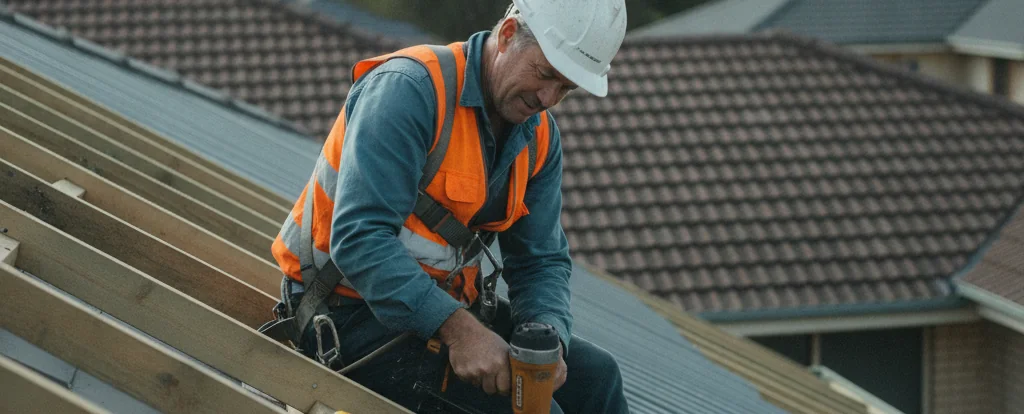
Roofers install, repair and replace roof coverings such as tiles, metal sheeting, shingles and membranes on houses, factories and other buildings. Most work for a roofing subcontractor or run a small crew of their own, moving between construction sites rather than staying with one builder throughout a job. In most states, metal roofing and guttering that connects to stormwater is plumbing work done by a licensed roof plumber, so many roofers specialise in tiling, membrane and shingle work instead.
How much do roofers earn?
The median full-time salary for a roofer is $66,800 per annum, before tax, up $14,200 since 2018.
Many roofers are paid per square metre or per roof as subcontractors rather than by the hour, so how quickly you lay and how much work you line up shape what you take home. On commercial jobs, hourly employees pick up overtime plus height, site and travel allowances on top of the award rate, and heavy rain or high wind stops work altogether, which can leave gaps in a subcontractor's year.
What does a roofer do day to day?
The list below is what fills most weeks; the exact mix shifts with seniority and whatever stage the current work is at.
- Climbing onto the roof each morning to size up pitch, access and the weather before deciding how the day will run
- Stripping the old covering and checking the timber and structure underneath for rot or damage before laying anything new
- Cutting and fitting sheets, tiles or shingles while harnessed up and working around chimneys, valleys and vents
- Sealing flashings, joints and penetrations so the finished roof actually keeps water out
- Clearing materials and offcuts from the roof and checking the site is safe before climbing down at knock-off
What skills do roofers need?
Employers look for hand and power tool work, reading plans and specifications, installation and maintenance, backed by Tape measure and chalk line fluency and strong attention to detail.
Specialist skills
- Hand and power tool work
- Reading plans and specifications
- Installation and maintenance
- Worksite safety management
- Building codes and standards
Software and tools
- Tape measure and chalk line
- Circular saw and nail gun
- Safety harness and scaffolding
- Roofing nailer
- Spirit level
General skills
- Attention to detail
- Problem solving
Is the job growing?
About 9,400 people work as roofers in Australia, and employment is projected to grow 4.4% over the decade to 2035. That's modest growth: demand is steady rather than booming.
How do you become a roofer?
Here's the path most roofers take, step by step.
- 1Get a White Card and your first site job
The general construction induction card is required before you set foot on a construction site. A stint as a labourer or trade assistant is how many roofers get a first look at the work and a start with a crew, and it counts towards the on-the-job side of an apprenticeship.
- 2Start a roof tiling or roof plumbing apprenticeship
The usual qualification is a Certificate III in Roof Tiling (CPC30820) or a Certificate III in Roof Plumbing (CPC32620), both three- to four-year apprenticeships that combine paid site work with TAFE blocks. Employers generally look for a White Card, a driver licence and comfort with heights rather than prior roofing experience.
- 3Check the licensing rules in your state
Metal roofing and guttering that connects to stormwater is plumbing work and needs registration as a plumber in most states, which is why some roofers train on the tiling side instead. The licence names and requirements differ between states, so check with your state's building or plumbing regulator before you commit to a direction.
- 4Qualify as a contractor
Once you hold the trade qualification and any required licence, a contractor licence in your own name lets you quote directly for jobs or run your own crew instead of working under someone else's. It usually needs a set number of years on the tools plus evidence of the work you've done.
Ready to apply as a roofer?
Whether you're working toward becoming a roofer or already are one and want a hand with the next step (sharpening your resume for ATS screening, tightening your cover letter, or knowing what you'll actually be asked at interview), here are examples grounded in this specific role, not generic templates.
What jobs can a roofer move to?
Moving into Concreter typically comes with the biggest pay rise, worth $48,100 a year more on average.
| Move to | Typical pay change | Overlap | Retraining |
|---|---|---|---|
| Concreter Concreting draws on a roofer's formwork and surface preparation experience, with little retraining needed for flatwork and slabs.Known move | +$48,100 | 67% | minimal |
| Plumber Roofers can train as plumbers, carrying roofing and waterproofing skills into pipework, drainage and building services installation.Known move | +$36,700 | 100% | requalify |
| Carpenter Carpentry builds on roofing knowledge, with timber framing and structural skills transferring to building and fit-out work.Known move | +$24,700 | 57% | requalify |
| Scaffolder Scaffolding suits roofers comfortable at height, with a short course adding rigging and platform assembly skills.Known move | +$24,200 | 76% | short course |
| Tiler Tiling uses similar surface preparation and waterproofing skills, letting a roofer move into wall and floor finishing work.Known move | −$5,400 | 70% | requalify |
Moves are chosen from Jobs and Skills Australia's Data on Occupation Mobility, which follows income tax records between 2011-12 and 2020-21, together with entry requirements and skill overlap. A known move is one people were seen making in that data. Pay change compares median full-time pay for the two roles.
Who works as a roofer?
The typical roofer is 30 years old; 98% are men, 87% work full-time, and full-timers average 42 hours a week.
- 30
- Median age
- 2%
- Female share
- 87%
- Full-time
- +2h
- vs all-jobs avg
What's it like being a roofer?
Roofing is outdoor work at height, and the job's rhythm follows the weather and the building schedule rather than a desk calendar. The pace is steady but the conditions are unforgiving: heat, wind and rain decide what gets done, and the physical load lands on knees, backs and shoulders. People who stay in it tend to like the variety of moving between sites and the plain satisfaction of a roof that doesn't leak.
What people like
- You can see what you finished. A roof is a clear result at the end of a job, and a watertight finish after a downpour is proof the work was done properly. There's not much ambiguity about whether the day went well.
- A different site every few weeks. Roofers move between houses, warehouses and unit blocks rather than staying in one place, so the work rarely settles into the same view and the same four walls.
- Independence once you're qualified. A trade qualification and a contractor licence open up quoting your own work, running a small crew or subcontracting to several builders. Many roofers see self-employment as the point where the job starts paying properly.
- Working outdoors and off a screen. The job is hands, tools and open air, with the day spent moving rather than sitting. That suits people who would rather be physically tired at knock-off than restless.
What people find hard
- The weather runs the schedule. Heat, wind and rain stop work, and a wet week can push a job back and cut a subcontractor's income. Summer starts early on hot roofs to avoid the worst of the day.
- Hard on knees, back and shoulders. Kneeling on battens, lifting sheets and tiles, and working with your arms above your head for hours all take a cumulative toll. Long careers often involve a move into supervising, estimating or running a crew.
- Working at height carries real risk. Falls are the main danger in the trade, which is why harnesses, anchor points and scaffold checks are part of every day rather than an occasional formality. The risk never entirely goes away.
- Quoting against other roofers. Price competition on residential jobs is tight, and a quote that wins on price can leave little margin once materials, travel and downtime are counted. Subcontractors carry that uncertainty themselves.
Based on our synthesis of professional-body surveys and public accounts of the role, not first-person verified reviews.
Which industries employ roofers?
Construction employs the largest share of roofers.
Top employing industries
- 1Construction
Ranked by employment share; the source doesn't publish an exact percentage per industry.
| Certificate III/IV | 50.6% | |
|---|---|---|
| Year 12 or below | 42.3% | |
| Diploma / Advanced Diploma | 1.9% | |
| Bachelor degree | 1.6% | |
| Postgraduate | 0.4% |
Will AI replace roofers?
Roofing is one of the least exposed trades to AI, because the job happens on a roof: stripping coverings, cutting and fixing sheets, sealing flashings and working safely at height. Technology does reach the edges of it, with drone roof surveys and estimating software that measure a roof and price a job, plus scheduling and rostering apps that organise crews. None of that installs anything, and a roof still has to be made watertight by hand.
Share of typical working time by exposure level
- Installing and fixing roof coveringsLaying tiles or sheeting to the right pitch and overlap, and nailing or clipping each one off, is manual work done at height with nowhere for software to help.45%low
- Finding and repairing leaksTracking water back to a failed flashing or cracked tile means getting onto the roof, lifting coverings and testing with a hose, which no sensor or model does for you.25%low
- Measuring, quoting and ordering materialsDrone surveys and estimating tools can take roof dimensions and turn them into a materials list and a price, which saves time on quoting but still needs a roofer to check the measurements and the access.20%moderate
- Safety setup and harness checksOn a two-storey tile job that means setting the ladder bracket over the gutter, clipping the lanyard to a rated anchor point and walking the scaffold planks before anyone steps past the fascia.10%low
Common questions about becoming a roofer
Straight answers to the questions people ask most.
How much does a roofer earn in Australia?
The median full-time pay for a roofer is $66,800 per year before tax. Subcontractors paid by the square metre can earn more or less depending on how much work they take on, while hourly employees add overtime, height and site allowances on commercial jobs.
How do you become a roofer?
Most people start with a White Card and a job as a labourer or trade assistant, then take on a Certificate III in Roof Tiling (CPC30820) or Roof Plumbing apprenticeship, which takes three to four years and is paid. Metal roofing and guttering that connects to stormwater also needs plumbing registration in most states, so check your state's rules before choosing a direction.
Are roofers in demand in Australia?
Roofers are currently in shortage nationally, and employment is projected to grow 4.4% over the decade to 2035 over the decade to 2035. That means openings will come from growth as well as from experienced roofers leaving the trade, and a qualification and licence make it easier to move between employers when work in one area slows.
Will AI replace roofers?
The installation work itself is done by hand at height, and there is little for AI to do on a roof. Software is changing the edges of the job, with drone roof surveys and estimating tools that measure a roof and price a job faster, but someone still has to strip the old covering, set the flashing and make the finish watertight.
What else can a roofer do?
Roofers who retrain as plumbers take their waterproofing and flashing knowledge into drainage and pipework, and typically earn $36,700 more a year. Moving into concreting needs little retraining because formwork and surface preparation overlap, with median pay $48,100 more. Many also stay in roofing and start their own crew or subcontracting business, which is often where earnings grow.
Is roofing hard on your body?
Yes, it is physical: kneeling on battens, lifting sheets and tiles, and working overhead all take a toll on knees, backs and shoulders over the years. Experienced roofers often shift into supervising, estimating or running a crew as their bodies slow down, and that move is easier with a trade qualification and contractor licence behind you.
Related roles
Not sure this is you? Take the career quiz and get a ranked shortlist of roles that fit how you like to work.