School Laboratory Technician
School laboratory technicians prepare the equipment, chemicals and materials science teachers need for practical classes, and keep the laboratory safe and well stocked.
- Median salary*
- $67,600
4.0%vs last year, before tax
- People employed
- 3,200
0.0%vs last year
- Projected growth*
- +1%
to 2035
- AI exposure*
- Low
- automation risk
- Average hours*
- 38/wk
−2h vs all jobs
- Shortage status*
- Not in shortage
national
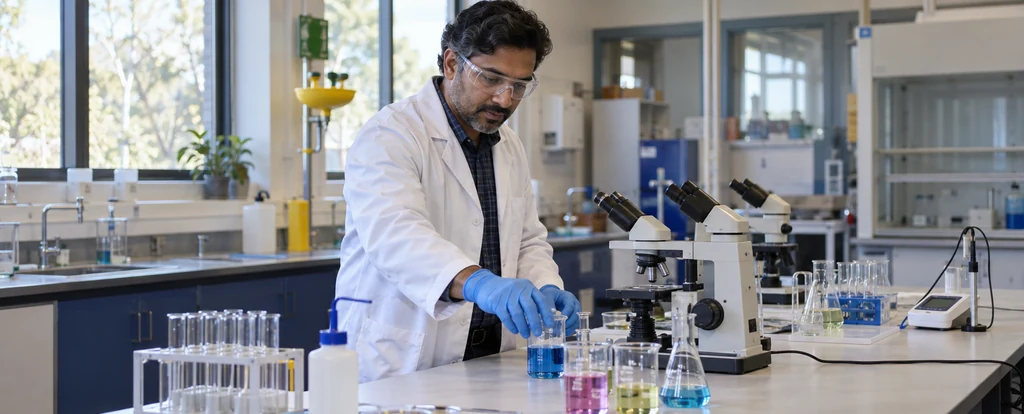
Most work in secondary school science departments, running the prep room behind the classrooms, though some are based at TAFE campuses or primary schools. The role is closest to a laboratory technician's, but the work is shaped by the school timetable and by students handling the equipment, so everything has to be set up simply, safely and in class-sized quantities. One technician often covers biology, chemistry and physics for a whole school.
How much do school laboratory technicians earn?
The median full-time salary for a school laboratory technician is $67,600 per annum, before tax, up $14,100 since 2018.
Pay depends heavily on the school sector, because government, Catholic and independent schools each negotiate their own enterprise agreement and classifications. Some positions are part-time or term-time only, which lowers annual earnings even when the hourly rate is similar. Experience and a higher qualification, such as a Certificate IV, can move you up a classification within a school.
What does a school laboratory technician do day to day?
The list below is what fills most weeks; the exact mix shifts with seniority and whatever stage the current work is at.
- Setting out chemicals, glassware and instruments for practical classes, then packing them away and checking what came back
- Working with teachers to plan practicals at class scale, sometimes trialling an experiment before students do it
- Maintaining, calibrating and repairing equipment such as microscopes, balances, pH meters and data loggers
- Keeping the chemical register current and storing, labelling and disposing of chemicals to work health and safety requirements
- Tracking stock levels of consumables and glassware and ordering replacements within a termly budget
What skills do school laboratory technicians need?
Employers look for laboratory analysis, regulatory compliance, plant and equipment operation, backed by Chemwatch fluency and strong safety and compliance awareness.
Specialist skills
- Laboratory analysis
- Regulatory compliance
- Plant and equipment operation
- Inventory management
Software and tools
- Chemwatch
- RiskAssess
- Microsoft Excel
- Vernier Logger Pro
General skills
- Safety and compliance awareness
- Attention to detail
- Problem solving
- Written communication
Is the job growing?
About 3,200 people work as school laboratory technicians in Australia, and employment is projected to grow 1% over the decade to 2035. That's modest growth: demand is steady rather than booming.
How do you become a school laboratory technician?
Here's the path most school laboratory technicians take, step by step.
- 1Finish Year 12 with science subjects
Chemistry and biology are the useful ones, because the work assumes you can handle chemicals and follow what a class is doing. It is not a formal requirement, and some technicians come across from other laboratory or trade backgrounds.
- 2Complete a Certificate III in Laboratory Skills or a Certificate IV in Laboratory Techniques
TAFE and some private providers offer these over roughly six months to a year, covering chemical handling, storage, record keeping and equipment maintenance. The Certificate IV generally opens up higher classifications and larger schools.
- 3Get a Working with Children Check and first aid training
Every school requires a Working with Children Check or its state equivalent, and a current first aid certificate is often asked for because you are the person who responds when something spills or breaks.
- 4Apply to schools and learn their chemical and risk systems
Vacancies are advertised on school websites or through the state education department. Each school runs its own chemical register and risk assessment process, usually Chemwatch and RiskAssess, and arriving already familiar with them shortens the settling-in period.
- 5Consider further study if you want to move beyond schools
A diploma or degree in laboratory science or a related field is what opens up hospital, research and industrial laboratory roles, and it builds on the preparation and safety work you already do.
Ready to apply as a school laboratory technician?
Whether you're working toward becoming a school laboratory technician or already are one and want a hand with the next step (sharpening your resume for ATS screening, tightening your cover letter, or knowing what you'll actually be asked at interview), here are examples grounded in this specific role, not generic templates.
What jobs can a school laboratory technician move to?
Moving into Chemist typically comes with the biggest pay rise, worth $46,500 a year more on average.
| Move to | Typical pay change | Overlap | Retraining |
|---|---|---|---|
| Chemist Applies laboratory and chemical handling experience to analytical chemistry, requiring a science degree. | +$46,500 | 41% | requalify |
| Non-destructive Testing Technician Applies testing and safety skills to non-destructive testing of materials, with a short course. | +$33,800 | 68% | short course |
| Laboratory Technician Builds on school laboratory preparation and chemical safety, moving into a broader laboratory role with further study. | +$25,700 | 41% | reskill |
| Microbiologist Uses sterile technique and laboratory preparation in microbiological analysis, requiring a science degree. | +$12,700 | 36% | requalify |
| Sterilisation Technician Transfers equipment preparation and chemical safety to hospital sterilisation, with a short course. | −$5,200 | 55% | short course |
Moves are chosen from Jobs and Skills Australia's Data on Occupation Mobility, which follows income tax records between 2011-12 and 2020-21, together with entry requirements and skill overlap. A known move is one people were seen making in that data. Pay change compares median full-time pay for the two roles.
Who works as a school laboratory technician?
The typical school laboratory technician is 50 years old; 79% are women, 50% work full-time, and full-timers average 38 hours a week.
- 50
- Median age
- 79%
- Female share
- 50%
- Full-time
- −2h
- vs all-jobs avg
What's it like being a school laboratory technician?
The job runs on the school calendar. Terms are busy and holidays are quiet, and the pressure comes from several classes needing the same equipment at the same time with one prep room to supply them. Technicians who enjoy it tend to like practical work, order and small problems, and are comfortable in a supporting role where the class gets the credit.
What people like
- Hands-on work across three sciences. A week can move from staining slides to setting up electrolysis to servicing microscopes, so the job rarely sits inside one subject.
- The school calendar. Many positions follow school hours with the longer breaks free, though some schools ask technicians to come in during part of the holidays for stocktake and maintenance.
- Running your own prep room. In a single-technician school you decide how the store is organised and how practicals are sequenced, and teachers come to you to ask what is possible.
- A practical that works first time. When a demonstration behaves in front of a class, it is usually because the equipment was tested and the solutions were made up correctly beforehand.
What people find hard
- Everything wanted at once. Practical timetables bunch up, and three teachers can need the same set of balances in the same period.
- The safety responsibility sits with you. If a chemical is mislabelled or stored next to something it should not be, it is your register and your problem, and the consequences can be serious.
- Budgets and ageing equipment. Replacing a broken microscope or restocking chemicals competes with everything else the school is paying for, so you often work with what you already have.
- A short ladder in small schools. Where there is only one technician, there may be no next step without changing schools or moving outside the school system.
Based on our synthesis of professional-body surveys and public accounts of the role, not first-person verified reviews.
Which industries employ school laboratory technicians?
Education and Training employs the largest share of school laboratory technicians, followed by Professional, Scientific and Technical Services.
Top employing industries
- 1Education and Training
- 2Professional, Scientific and Technical Services
Ranked by employment share; the source doesn't publish an exact percentage per industry.
| Certificate III/IV | 34% | |
|---|---|---|
| Diploma / Advanced Diploma | 26% | |
| Bachelor degree | 20% | |
| Year 12 or below | 20% |
Will AI replace school laboratory technicians?
Exposure to AI and automation is low here, because the job is mostly physical: making up solutions, setting out benches and fixing equipment that students have handled. The software already in the role, Chemwatch for chemical registers and RiskAssess for safety documentation, along with data loggers such as Vernier sensors, handles record keeping and measurement rather than the preparation itself. Automation changes how results are captured and how compliance is tracked, not who sets up the classroom bench.
Share of typical working time by exposure level
- Setting up and packing down practical classesDeciding what a class needs, counting out glassware and checking that a solution is the right strength is physical work done in a hurry between periods.45%low
- Maintaining and troubleshooting equipmentDiagnosing why a pH meter is drifting or a microscope light has failed takes hands-on testing that no system can do from a record.25%low
- Chemical register and stock recordsChemwatch flags incompatible storage, expiry dates and minimum quantities, but someone still has to check what is actually on the shelf and update the record.15%moderate
- Risk assessments and safety documentationRiskAssess and similar tools generate a starting document for a practical, though the technician still adjusts it for the local store, the year level and what the class has done before.15%moderate
Common questions about becoming a school laboratory technician
Straight answers to the questions people ask most.
How much does a school laboratory technician earn?
The median for full-time school laboratory technicians is $67,600 per year before tax. The school sector and its enterprise agreement matter more than anything else, and part-time or term-time positions mean take-home pay can sit below the full-time figure.
How do you become a school laboratory technician?
The usual entry is a Certificate III in Laboratory Skills (MSL30122) or a Certificate IV in Laboratory Techniques (MSL40122), along with a Working with Children Check and often first aid training. Schools then expect you to learn their chemical register and risk assessment systems on the job. A science degree is not required, though it helps if you later want to move into a hospital or research laboratory.
Are school laboratory technicians in demand?
School laboratory technicians are currently not in shortage, and employment is projected to grow 1% over the decade to 2035. The workforce is small and turnover is low, so openings mostly appear when someone retires or a school expands its science program, and many of those positions are part-time.
Will AI replace school laboratory technicians?
Not to any great extent, because the core of the job is physical: making up solutions, setting out benches and repairing equipment. Software such as Chemwatch and RiskAssess already flags incompatible chemicals, expiry dates and risk assessments, which trims the paperwork but still relies on a technician checking the shelf and the setup. Data loggers change how students record results, not who prepares the apparatus.
What can a school laboratory technician move into?
A common next step is a laboratory technician role in a hospital, research or industrial lab, where the preparation and chemical safety work overlaps, further study is usually needed, and pay is around $25,700 more. Non-destructive testing technician is a shorter route that reuses the testing and safety habits, with a short course behind it. Sterilisation technician is another option, applying instrument preparation and chemical handling in a hospital, though pay is around $5,200 less.
What are the hours like?
Most school laboratory technicians work about 38 hours a week full time and follow the school day. Some are employed term-time only or part-time, and the rhythm is busy during term and quiet in the holidays, when maintenance and stocktake tend to happen.
Related roles
- Laboratory Technician
- Chemist
- Microbiologist
- Sterilisation Technician
- Non-destructive Testing Technician
- Sterilisation Technician
Not sure this is you? Take the career quiz and get a ranked shortlist of roles that fit how you like to work.