Sports Coach
Sports coaches plan and run the training that helps athletes and teams improve, then make the tactical calls that put that training to use on competition day.
- Median salary
- $75,000
4.0%vs last year, before tax
- People employed
- 8,800
1.1%vs last year
- Projected growth
- +12.1%
to 2035
- AI exposure*
- Low
- automation risk
- Average hours
- 45/wk
+5h vs all jobs
- Shortage status
- Not in shortage
national
Sports coaches design and deliver training programs for individual athletes or teams, usually working through a club, school or sporting association rather than taking on private clients directly. They assess performance, adjust technique and tactics, and manage the buildup to competition. That focus on sport-specific skill and competitive performance, rather than general fitness, is what separates coaching from personal training.
How much do sports coachs earn?
The median full-time salary for a sports coach is $75,000 per annum, before tax, up $15,600 since 2018.
Coaching pay depends heavily on the level and the employer, with elite and national programs sitting on a different scale to community clubs, and school coaching usually paid under an education award with set increments. A lot of coaching work is part-time, seasonal or volunteer, paid as an hourly rate or a season stipend, so annual earnings often combine coaching with another job. Accreditation level, whether you run your own sessions, and how much travel the role involves all shift the figure.
What does a sports coach do day to day?
The list below is what fills most weeks; the exact mix shifts with seniority and whatever stage the current work is at.
- Planning the week's sessions around what went wrong in the last game
- Running drills at training and changing the plan mid-session when the group isn't picking something up
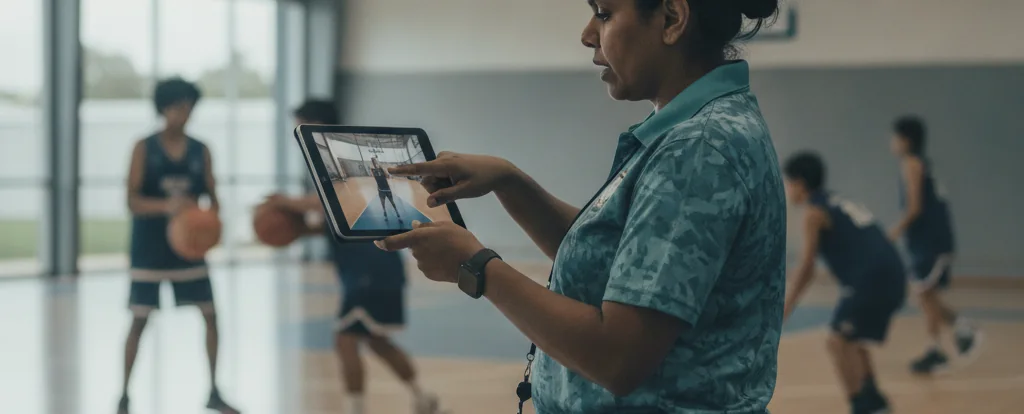
- Reviewing match footage with players to show them the moments that cost them points
- Sitting down with an athlete about a form slump, confidence, or something going on outside the sport
- Explaining a selection call to a player, then to a parent or a club committee that disagrees with it
What skills do sports coachs need?
Employers look for strategy development, backed by Video analysis software (Dartfish, Kinovea) fluency and strong written communication.
Specialist skills
- Strategy development
Software and tools
- Video analysis software (Dartfish, Kinovea)
- Performance tracking apps (Wattbike, Tableau)
- Session planning software (TeamSnap, Hudl)
- Fitness testing equipment (force plates, lactate analysers)
- Standard coaching kit (cones, resistance bands, stopwatch)
General skills
- Written communication
- Problem solving
- People leadership
- Time and deadline management
- Client relationships and advisory
- Attention to detail
Is the job growing?
About 8,800 people work as sports coachs in Australia, and employment is projected to grow 12.1% over the decade to 2035. That's healthy, above-average growth, and the role should stay in solid demand.
How do you become a sports coach?
Here's the path most sports coachs take, step by step.
- 1Start coaching where you already are
Most coaches begin at a club or school they know, often as a volunteer assistant, which is the quickest way to find out whether you enjoy teaching the sport rather than playing it.
- 2Get accredited in your sport
National sporting bodies run coaching courses from a foundation level through to advanced and high performance, and most clubs and associations require the relevant certificate before you take charge of a team.
- 3Sort out the working with children check and first aid
Anyone coaching juniors needs a working with children check, issued by the state or territory, along with current first aid and usually CPR certification.
- 4Add a qualification if you want paid work
A Certificate III or IV in sport coaching, or a diploma, opens paid roles in schools, academies and clubs, and a degree in exercise and sport science is the usual route towards high performance coaching or a teaching qualification.
- 5Build a record and move up
Coaches progress by taking on stronger squads and higher grades, so a record of results, accreditation levels and the athletes you have developed matters when clubs are hiring.
Ready to apply as a sports coach?
Whether you're working toward becoming a sports coach or already are one and want a hand with the next step (sharpening your resume for ATS screening, tightening your cover letter, or knowing what you'll actually be asked at interview), here are examples grounded in this specific role, not generic templates.
What jobs can a sports coach move to?
Moving into Sports Administrator typically comes with the biggest pay rise, worth $72,900 a year more on average.
| Move to | Typical pay change | Overlap | Retraining |
|---|---|---|---|
| Sports Administrator Planning training and managing teams carries into administering sport programs and competitions, with study in sport management needed.Known move | +$72,900 | 9% | reskill |
| Secondary School Teacher Knowledge of physical education and working with young athletes suits secondary teaching, though a teaching degree and registration are required.Known move | +$45,700 | 8% | requalify |
| Primary School Teacher Coaching children in sport builds group management and lesson planning skills that primary teaching uses, plus a teaching degree.Known move | +$40,800 | 8% | requalify |
| Racing Steward Knowledge of competition rules and athlete conduct suits race day officiating, with further study in racing regulation required. | +$29,000 | 16% | reskill |
| Personal Trainer Fitness assessment and program design skills carry into personal training, with a fitness certification needed to practise.Known move | +$3,000 | 25% | reskill |
Moves are chosen from Jobs and Skills Australia's Data on Occupation Mobility, which follows income tax records between 2011-12 and 2020-21, together with entry requirements and skill overlap. A known move is one people were seen making in that data. Pay change compares median full-time pay for the two roles.
Who works as a sports coach?
The typical sports coach is 26 years old; 72% are men, 27% work full-time, and full-timers average 45 hours a week.
- 26
- Median age
- 28%
- Female share
- 27%
- Full-time
- +5h
- vs all-jobs avg
What's it like being a sports coach?
The work follows the season rather than the office week: training sits in the early evening, games take up weekends, and full-time coaches average 45 hours a week. Most of the job is teaching in small increments, so progress shows up over months rather than after one good session. It suits someone who enjoys the tactical puzzle and the relationships, and who can stay steady when results go against them, because the scoreboard judges the work publicly even when the squad is young or rebuilding.
What people like
- Watching a skill click. A player who couldn't time a pass in round one does it under pressure in round ten, and you had a hand in that.
- The tactical puzzle. Working out why the team keeps turning the ball over in the same part of the field, then building a session that fixes it, is the part many coaches find most absorbing.
- A group you get to know. You spend a season or more with the same squad, so you learn how each player responds to a loss and what they need on a bad day.
- Players who move up. A junior you coached into their first senior game, or an athlete who makes a state squad, is the clearest sign that the work landed.
What people find hard
- Evenings, weekends and travel. Training after work and games on Saturday, plus away fixtures, takes a bite out of family and social life through the season.
- The hours around the hours. Session plans, video review, emails, selection meetings and replying to parents sit outside the paid time in many roles.
- Selection and hard conversations. Leaving a player out, moving someone to the bench or telling a parent their child isn't in the top side is part of the job and rarely gets easier.
- Results you don't fully control. Injury, a young list or a club with limited resources can decide a season regardless of how well you coach, and the ladder doesn't record the reason.
Based on our synthesis of professional-body surveys and public accounts of the role, not first-person verified reviews.
Which industries employ sports coachs?
Education and Training employs the largest share of sports coachs, followed by Arts and Recreation Services.
Top employing industries
- 1Education and Training
- 2Arts and Recreation Services
Ranked by employment share; the source doesn't publish an exact percentage per industry.
| Year 12 or below | 52% | |
|---|---|---|
| Bachelor degree | 17.8% | |
| Certificate III/IV | 10.6% | |
| Diploma / Advanced Diploma | 9.2% | |
| Postgraduate | 5.6% |
Will AI replace sports coachs?
Coaching sits at the low end of AI exposure because the job happens in front of a group of people, in real time. Video analysis software, wearable GPS and performance tracking apps have taken over much of the clip tagging and stat counting that used to fill a coach's week, but they feed the coach's judgement rather than replace it. Reading a squad, teaching a skill and making a call from the sideline stay with the person on the field.
Share of typical working time by exposure level
- Running sessions and coaching on the fieldReading a group's energy and changing a drill mid-session when the skill isn't landing happens face to face, at speed, and can't be handed to a screen.35%low
- Selection, feedback and conversations with players and familiesTelling a player they're on the bench, or explaining that call to a parent or committee, depends on knowing the person and the history of the season.25%low
- Planning training sessions and drillsSoftware can pull drills from a library and draft a weekly plan, but choosing what this group needs after Tuesday's session is still the coach's call.20%moderate
- Reviewing match footage and performance dataTagging software and GPS units already log every possession and sprint, and AI speeds up cutting the clips, though deciding what they mean for the next game is not automatic.20%high
Common questions about becoming a sports coach
Straight answers to the questions people ask most.
How much does a sports coach earn?
Sports coaches earn a median of $75,000 per year before tax. Pay varies widely with the level of the sport and the employer, and because many coaching roles are part-time or seasonal, the annual figure often reflects a mix of coaching and other work.
How do you become a sports coach?
You can start by coaching a junior or lower-grade team at a club or school you already know, which in most states needs nothing more than a working with children check. Accreditation through your sport's national body is what lets you take a team at higher levels, and paid roles usually ask for a Certificate III or IV in sport coaching or a related diploma. Around 52% of the people working as sports coaches hold a Year 12 qualification or below, so a degree isn't the standard entry point.
Are sports coaches in demand?
Sports coaches are currently not in shortage, and employment is projected to grow 12.1% over the decade to 2035. That work is spread across schools, community clubs and junior development programs, which together employ most coaches, and hiring in each of them follows participation numbers in that sport.
Will AI replace sports coaches?
AI is unlikely to replace coaching, because the job is built on teaching in person and reading a group of athletes in real time. Video analysis software and performance tracking apps already handle much of the clip cutting and stat counting that coaches once did by hand, which frees time for planning and feedback. What they can't do is decide what this squad needs this week.
What can a sports coach move into?
Coaching skills carry into sports administration, where planning programs and managing teams translates directly and the pay is typically $72,900 more, though study in sport management is usually needed. Teaching is another route if you want to work with young athletes full time, but it requires a teaching degree and registration in your state. Some coaches move into personal training with a fitness certification, or build their own coaching academy, which is often where earnings grow.
Do you need to have played the sport at a high level?
No. Clubs hire on accreditation and coaching experience, and plenty of coaches work in sports they played only at school or club level. An elite playing career helps with credibility and tactical knowledge and is one of the recognised ways into coaching, but it isn't a requirement.
Related roles
- Sports Administrator
- Personal Trainer
- Racing Steward
- Secondary School Teacher
- Primary School Teacher
- Personal Trainer
Not sure this is you? Take the career quiz and get a ranked shortlist of roles that fit how you like to work.