Home Manufacturing & Production
Textile Machine Operator
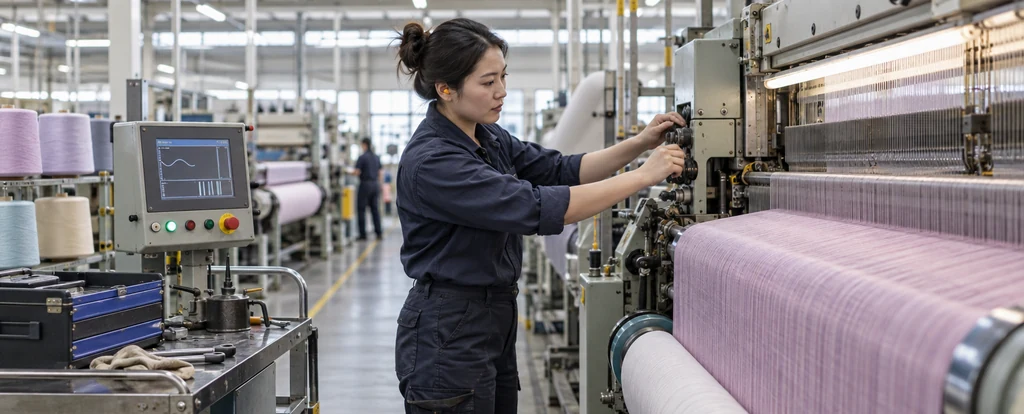
Textile machine operators run the looms, knitting machines and spinning frames that turn fibre into yarn and fabric, checking quality as the machines run.
- Median salary*
- $65,000
3.8%vs last year, before tax
- People employed
- 1,500
0.0%vs last year
- Projected growth*
- −12%
to 2035
- AI exposure*
- High
- automation risk
- Average hours*
- 38/wk
−2h vs all jobs
- Shortage status*
- Not in shortage
national
Textile machine operators work on the production floor of spinning mills, weaving and knitting plants, and dyeing and finishing operations. They keep a continuous process running: setting the machine up, watching it, adjusting it and stopping it when something goes wrong. The role sits between the technicians who repair the machinery and the quality staff who test the finished fabric, and in smaller plants one operator often covers parts of all three.
How much do textile machine operators earn?
The median full-time salary for a textile machine operator is $65,000 per annum, before tax, up $13,500 since 2018.
Base pay comes from a manufacturing award or a site enterprise agreement, so your classification and the agreement at your plant matter more than the job title. Shift loadings add to it, since afternoon, night and weekend rosters are common in mills that run continuously. Operators who can set up and fault-find across several machine types are usually classified higher.
What does a textile machine operator do day to day?
The list below is what fills most weeks; the exact mix shifts with seniority and whatever stage the current work is at.
- Setting up and threading looms, knitting machines and spinning frames before a production run
- Monitoring machines as they run, watching and listening for broken yarn, faults and quality drift
- Adjusting tension, speed and other controls to hold the product within specification
- Cleaning and lubricating machines and doing minor repairs, and calling maintenance when a fault is beyond the line
- Recording output, waste and downtime, and handing issues to the supervisor at shift change
What skills do textile machine operators need?
Employers look for plant and equipment operation, operations management, process improvement, backed by Loom control systems fluency and strong attention to detail.
Specialist skills
- Plant and equipment operation
- Operations management
- Process improvement
Software and tools
- Loom control systems
- Textile testing equipment
- Production monitoring software
- Machine maintenance tools
General skills
- Attention to detail
- Problem solving
- Time and deadline management
- Safety and compliance awareness
Is the job growing?
About 1,500 people work as textile machine operators in Australia, and employment is projected to decline 12% over the decade to 2035. That's a real decline, worth weighing carefully before training into the role.
How do you become a textile machine operator?
Here's the path most textile machine operators take, step by step.
- 1Start with a Certificate II or III in textile production
TAFE and other registered training organisations offer these qualifications, which cover machine setup, fibre and fabric handling and workplace safety, and take roughly six months to a year. Many employers will instead train a new operator on site, so the certificate is useful rather than mandatory.
- 2Learn the machines on the job
Supervised production time is where most of the skill comes from: threading, setting tensions, reading fault codes and knowing when a machine needs stopping rather than adjusting. New operators usually start on one machine type and add others as they gain confidence.
- 3Add the licences used around the line
A forklift licence helps where you move yarn bales or finished rolls, and sites that handle dyeing chemicals may ask for confined space or breathing apparatus qualifications. These are short courses and are often arranged by the employer.
- 4Move into setup, leading hand or technician work
Operators who can set up complex machines and keep them running become the people supervisors rely on, and that is where pay and responsibility increase. Larger plants also have process technician and quality roles that operators move into.
- 5Or come across from a related machine operating role
Experience running plastics, rubber or paper machinery transfers well, because the monitoring, quality checking and material handling are similar and the retraining needed is minimal.
Ready to apply as a textile machine operator?
Whether you're working toward becoming a textile machine operator or already are one and want a hand with the next step (sharpening your resume for ATS screening, tightening your cover letter, or knowing what you'll actually be asked at interview), here are examples grounded in this specific role, not generic templates.
What jobs can a textile machine operator move to?
Moving into Chemical Plant Operator typically comes with the biggest pay rise, worth $41,600 a year more on average.
| Move to | Typical pay change | Overlap | Retraining |
|---|---|---|---|
| Chemical Plant Operator With additional training, a textile machine operator can apply process monitoring and safety skills to chemical plant operations. | +$41,600 | 86% | short course |
| Paper Machine Operator The operator's ability to monitor continuous production and maintain quality aligns well with paper machine operation. | +$10,400 | 75% | minimal |
| Rubber Machine Operator Similar machine operating and material handling experience allows a smooth move to rubber processing with minimal retraining. | +$5,200 | 75% | minimal |
| Plastics Machine Operator A textile machine operator brings machine monitoring and quality control skills that transfer directly to operating plastics machinery. | +$0 | 86% | minimal |
| Glass Production Operator Skills in machine operation and product inspection carry over to glass production, though the material differs. | +$0 | 65% | minimal |
Moves are chosen from Jobs and Skills Australia's Data on Occupation Mobility, which follows income tax records between 2011-12 and 2020-21, together with entry requirements and skill overlap. A known move is one people were seen making in that data. Pay change compares median full-time pay for the two roles.
Who works as a textile machine operator?
The typical textile machine operator is 48 years old; 66% are men, 78% work full-time, and full-timers average 38 hours a week.
- 48
- Median age
- 34%
- Female share
- 78%
- Full-time
- −2h
- vs all-jobs avg
What's it like being a textile machine operator?
The job has a steady rhythm built around a continuous process: set the machine up, watch it run, and step in when the yarn breaks or the fabric faults. It suits someone who likes routine, notices small changes in how a machine sounds and runs, and is happy working to a production schedule rather than to a customer. The trade-off is that the work is repetitive and often noisy, and advancement usually means changing sites or materials.
What people like
- Knowing your machine. Operators who run the same machines for years learn their quirks, and that knowledge is what keeps quality steady and unplanned downtime short. It is a job where experience visibly counts.
- Clear measure of a good shift. Output, waste and fault counts are recorded, so you know by the end of the shift whether it went well or badly. That feedback is quick and specific.
- Rosters with whole weekdays off. Plants that run shifts often give operators days off during the week, which can suit people managing study, school pickups or other commitments.
- Skills that carry to other plants. Machine monitoring, quality checking and material handling transfer to plastics, rubber and paper production, so the trade is not a dead end if your site closes.
What people find hard
- Noise and fibre dust. Mills are loud, and airborne fibre means hearing protection and dust masks are part of the uniform rather than optional. It takes some getting used to.
- Repetition across long runs. You may run the same machine on the same product for weeks. The interest comes from keeping the line running well rather than from variety in what you make.
- Nights, weekends and public holidays. Continuous plants need operators around the clock, so night shift and holiday work are normal parts of the roster. Shift loadings compensate but the disruption is real.
- A short ladder on most sites. Smaller plants may have one leading hand role and no obvious next step, so getting ahead often means moving to another site, another material or a technician pathway.
Based on our synthesis of professional-body surveys and public accounts of the role, not first-person verified reviews.
Which industries employ textile machine operators?
Textile Manufacturing employs the largest share of textile machine operators, followed by Clothing, Footwear and Leather Manufacturing.
Top employing industries
- 1Textile Manufacturing
- 2Clothing, Footwear and Leather Manufacturing
- 3Furniture and Other Manufacturing
Ranked by employment share; the source doesn't publish an exact percentage per industry.
| Certificate III/IV | 34% | |
|---|---|---|
| Diploma / Advanced Diploma | 26% | |
| Bachelor degree | 20% | |
| Year 12 or below | 20% |
Will AI replace textile machine operators?
Textile machine operation carries a high level of AI and automation exposure, because much of the job is watching a continuous process and recording what it produces, and those are the parts sensors, vision systems and production software handle well. Modern looms and knitting machines already detect yarn breaks and fabric faults automatically, and machine data flows into production systems without an operator writing anything down. What stays human is the physical work: threading, reeling on, cleaning, and working out what a reported fault actually means.
Share of typical working time by exposure level
- Watching the line for faults and quality driftInspection cameras and yarn break sensors on modern looms flag many faults automatically, which shifts the operator's attention to confirming the alert and clearing the problem.30%high
- Threading machines and changing beamsThreading, reeling on and swapping beams remain hands-on tasks, and automated doffing appears only on some newer high-volume lines.25%low
- Recording output, waste and downtimeThis is the most automated part of the shift: machine data feeds straight into production systems and the shift report is largely compiled for the operator.25%high
- Adjusting settings to hold product specificationsProduction monitoring software suggests and logs settings, but the operator still decides what to change when the fabric comes off the machine looking different from the sample.20%moderate
Common questions about becoming a textile machine operator
Straight answers to the questions people ask most.
How much do textile machine operators earn?
Textile machine operators earn a median of $65,000 per year before tax. That figure covers full-time workers, and what you take home moves with the shift loadings built into your roster and the classification you hold under the site's agreement.
How do you become a textile machine operator?
Most operators start with a Certificate II or III in textile production or manufacturing technology, which takes about six months to a year, though plenty of sites will train someone with no qualification who shows good machine sense. A forklift licence helps you get hired, since moving yarn bales and finished rolls is part of the job.
Are textile machine operators in demand?
Textile machine operators are currently not in shortage. Employment is projected to decline 12% over the decade to 2035, so most openings come from replacing operators who leave the trade rather than from new positions, which means local knowledge of which plants are hiring matters more than applying broadly.
Will AI and automation replace textile machine operators?
Automation has already taken over much of the monitoring and record keeping, with loom sensors, inspection cameras and production software tracking output and faults without an operator watching every metre. The physical side is harder to automate, so threading, reeling on, cleaning and diagnosing mechanical faults still need someone on the floor. Expect the role to shift further towards responding to alerts and keeping machinery running.
What can a textile machine operator move into?
Plastics machine operation is a close match: the machine monitoring and quality control work is similar and pay is about the same. Paper machine operation pays $10,400 more, and chemical plant operation pays $41,600 more but usually needs a short course first because of the process safety requirements.
What hours do textile machine operators work?
Full-time textile machine operators average around 38 hours a week, and most mills run shifts, so the hours you actually work depend on the roster rather than a standard week. Continuous plants need operators on afternoon, night and weekend shifts, which pay loadings on top of the base rate.
Related roles
- Plastics Machine Operator
- Chemical Plant Operator
- Rubber Machine Operator
- Paper Machine Operator
- Glass Production Operator
- Plastics Machine Operator
Not sure this is you? Take the career quiz and get a ranked shortlist of roles that fit how you like to work.