Water Engineer
Water engineers design and look after the pipes, pumps and treatment works that supply drinking water, carry sewage away and drain stormwater from towns and roads.
- Median salary*
- $111,800
4.3%vs last year, before tax
- People employed
- 2,000
0.0%vs last year
- Projected growth*
- +8%
to 2035
- AI exposure*
- Moderate
- automation risk
- Average hours*
- 42/wk
+2h vs all jobs
- Shortage status*
- In shortage
national
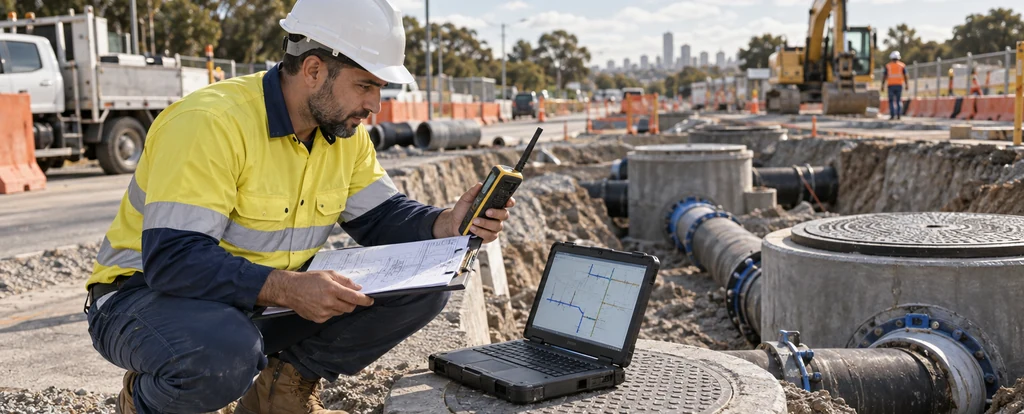
The work covers the whole water cycle, from the catchment and dam through the treatment plant to the mains under a street. Water engineers work in design consultancies, water utilities, local government and civil contracting firms, and their projects tend to run for years rather than weeks. It sits close to civil engineering, but the focus stays on hydraulics, water quality and the rules governing what can be discharged or reused.
How much do water engineers earn?
The median full-time salary for a water engineer is $111,800 per annum, before tax, up $23,500 since 2018.
Pay depends heavily on who employs you: water utilities and local government work to set classifications, while consultancies and civil contractors often pay more for the same experience, particularly when a project moves into site hours. Chartered status and experience leading design or delivery teams are the main things that lift a water engineer's pay. Some employers also pay allowances for remote or regional project placements.
What does a water engineer do day to day?
The list below is what fills most weeks; the exact mix shifts with seniority and whatever stage the current work is at.
- Designing water supply mains, sewerage networks and stormwater systems
- Modelling pipe networks in tools such as EPANET or WaterGEMS to check pressure, flow and capacity
- Preparing drawings, specifications and tender documents for contractors
- Inspecting sites and monitoring construction, testing and commissioning
- Assessing environmental and health requirements, and preparing the reports that support project approvals
What skills do water engineers need?
Employers look for engineering design and analysis, project engineering and delivery, cAD and technical drawing, backed by AutoCAD fluency and strong stakeholder management.
Specialist skills
- Engineering design and analysis
- Project engineering and delivery
- CAD and technical drawing
- Field inspection and testing
- Environmental assessment
- Project management
Software and tools
- AutoCAD
- 12d Model
- EPANET
- ArcGIS
- WaterGEMS
General skills
- Stakeholder management
Is the job growing?
About 2,000 people work as water engineers in Australia, and employment is projected to grow 8% over the decade to 2035. That's modest growth: demand is steady rather than booming.
How do you become a water engineer?
Here's the path most water engineers take, step by step.
- 1Complete an accredited engineering degree
A four-year Bachelor of Engineering (Honours) with a civil or environmental major is the standard entry point, and it needs to be accredited by Engineers Australia if you want to register later. Choose electives in hydraulics, hydrology and water treatment where they are offered.
- 2Apply for a graduate program
Water utilities, councils and the large consultancies run graduate intakes that rotate you through design, planning and site work. Applications usually open in your final year and close months before the start date, so it pays to watch the dates.
- 3Work toward registration
Engineers Australia's chartered status is the common goal and generally takes four to six years of practice plus a competency assessment. Some states, including Victoria and Queensland, require registration for engineers on certain building and infrastructure work, so check the rules where you plan to work.
- 4Choose an area to specialise in
Network planning, treatment design, drainage and flood modelling, and asset management each open up different work. Moving between them is easier early in a career than after a decade in one area.
Ready to apply as a water engineer?
Whether you're working toward becoming a water engineer or already are one and want a hand with the next step (sharpening your resume for ATS screening, tightening your cover letter, or knowing what you'll actually be asked at interview), here are examples grounded in this specific role, not generic templates.
What jobs can a water engineer move to?
Moving into Environmental Engineer typically comes with the biggest pay rise, worth $25,900 a year more on average.
| Move to | Typical pay change | Overlap | Retraining |
|---|---|---|---|
| Environmental Engineer Water engineers already understand water treatment and pollution control, so only a short course in environmental assessment is needed. | +$25,900 | 58% | short course |
| Civil Engineer Water engineers bring expertise in hydraulics and drainage systems, making the move to broader civil engineering straightforward. | +$3,500 | 70% | minimal |
| Geotechnical Engineer Water engineers can specialise in groundwater and dam foundations, but substantial retraining in soil mechanics is required. | +$3,500 | 44% | reskill |
| Agricultural Engineer Water engineers apply irrigation and drainage knowledge directly to farm water systems, requiring no further formal training. | −$7,800 | 90% | minimal |
Moves are chosen from Jobs and Skills Australia's Data on Occupation Mobility, which follows income tax records between 2011-12 and 2020-21, together with entry requirements and skill overlap. A known move is one people were seen making in that data. Pay change compares median full-time pay for the two roles.
Who works as a water engineer?
The typical water engineer is 37 years old; 73% are men, 85% work full-time, and full-timers average 42 hours a week.
- 37
- Median age
- 27%
- Female share
- 85%
- Full-time
- +2h
- vs all-jobs avg
What's it like being a water engineer?
Water engineering is project work, so the rhythm shifts between design phases, approvals and construction. It involves a lot of coordination, with planners, contractors, regulators and residents all holding a view on how water is managed, and a design failure is public and quickly visible. It suits people who want technical depth but also like seeing the result of their work as something built.
What people like
- The results are visible. A new main, a pump station or a stormwater upgrade is a physical thing you can point to and know you designed or delivered.
- A mix of office and site. The week can move between modelling at a desk, a meeting with a utility and standing at a treatment plant while it is commissioned.
- Technical depth with a public purpose. Hydraulic modelling and treatment design reward people who like getting the numbers right, and the outcome is safer water for a town.
- Specialist knowledge is valued. Experience in a niche such as dam safety, flood modelling or reuse schemes gives you more say in which projects and employers you choose.
What people find hard
- Approvals take time. A discharge licence or planning approval can involve several agencies, and a design may sit still for months waiting on a decision.
- Public scrutiny. Water projects attract community concern about cost, odour, flooding and tree removal, and engineers often front those meetings.
- Emergency callouts. Main breaks, sewer blockages and flood events do not wait for office hours, so utilities keep rostered engineers on call.
- Site conditions. Construction is messy, and you may spend hot, cold or wet days on site checking work that does not match the drawings.
Based on our synthesis of professional-body surveys and public accounts of the role, not first-person verified reviews.
Which industries employ water engineers?
Water Supply, Sewerage and Drainage Services employs the largest share of water engineers, followed by Architectural, Engineering and Technical Services.
Top employing industries
- 1Water Supply, Sewerage and Drainage Services
- 2Architectural, Engineering and Technical Services
- 3Local Government Administration
- 4Heavy and Civil Engineering Construction
- 5Construction Services
Ranked by employment share; the source doesn't publish an exact percentage per industry.
| Bachelor degree | 52% | |
|---|---|---|
| Postgraduate | 26% | |
| Diploma / Advanced Diploma | 13% | |
| Other | 9% |
Will AI replace water engineers?
AI and automation have a moderate reach into this job. Hydraulic modelling, drawing production and routine calculations are increasingly automated, and digital twins of networks are making some design work faster. What keeps the exposure in the middle is the physical side of the job: commissioning a pump station, tracing a leak or a contamination source, and negotiating an approval with a regulator and a concerned community.
Share of typical working time by exposure level
- Hydraulic modelling of pipe networksEPANET and WaterGEMS already run the calculations, so most of the engineer's time goes into framing scenarios and judging whether the results hold up.30%high
- Design drawings and documentationAutoCAD and 12d Model handle repetitive drafting and standards checks, but the engineer still sets the layout and signs off the drawings contractors build from.25%moderate
- Site inspection, testing and commissioningChecking trench depths, witnessing pressure tests and starting up a pump station happen in ground conditions that no model captures.25%low
- Regulatory approvals and community consultationDischarge licence applications and public meetings depend on local knowledge and judgement, and AI can draft the paperwork but not answer the room.20%moderate
Moves least exposed to AI
These career moves from water engineer work are rated low for AI exposure:
- Civil Engineer
High skill overlap (70%), little retraining to get there, and a low automation-risk profile.
Common questions about becoming a water engineer
Straight answers to the questions people ask most.
How much do water engineers earn?
$111,800 per year before tax is the median for full-time water engineers. Chartered status, experience leading projects and the type of employer move that figure most, with consultancies and contractors often paying above utility rates.
How do you become a water engineer?
Start with an accredited engineering degree with a civil or environmental major, then apply for a graduate program with a utility, council or consultancy. Registration comes later, usually through Engineers Australia's chartered program or a state registration scheme.
Are water engineers in demand?
Water engineers are currently in shortage nationally, and employment is projected to grow 8% over the decade to 2035. That national picture is only a starting point, so look at the regions and employers you would actually work for before you commit to a move.
Will AI replace water engineers?
Not the job as a whole. Hydraulic modelling software already handles much of the routine calculation and AI tools are speeding up documentation, but commissioning a pump station, assessing a contaminated supply and negotiating approvals with regulators stay in the engineer's hands.
What can water engineers move into?
Broader civil engineering is a close move, and pay there is $3,500 more. Environmental engineering suits those who want to work on treatment and pollution control, with pay of $25,900 more. Some experienced engineers move into consulting leadership or start their own practice, which is often where earnings grow further.
Is water engineering the same as civil engineering?
They overlap, and many water engineers hold a civil engineering degree. The difference is focus: civil engineers work across roads, bridges and structures as well as water, while water engineers specialise in hydraulics, treatment and the regulations around supply and discharge.
Related roles
- Civil Engineer
- Environmental Engineer
- Agricultural Engineer
- Geotechnical Engineer
- Civil Engineering Technician
- Civil Drafter
Not sure this is you? Take the career quiz and get a ranked shortlist of roles that fit how you like to work.