Aboriginal and Torres Strait Islander Ranger
Aboriginal and Torres Strait Islander rangers look after country, using cultural knowledge and land management skills to care for plants, animals, fire and heritage sites.
- Median salary*
- $67,600
4.2%vs last year, before tax
- People employed
- 250
25.0%vs last year
- Projected growth*
- +12%
to 2035
- AI exposure*
- Low
- automation risk
- Average hours*
- 38/wk
−2h vs all jobs
- Shortage status*
- Not in shortage
national
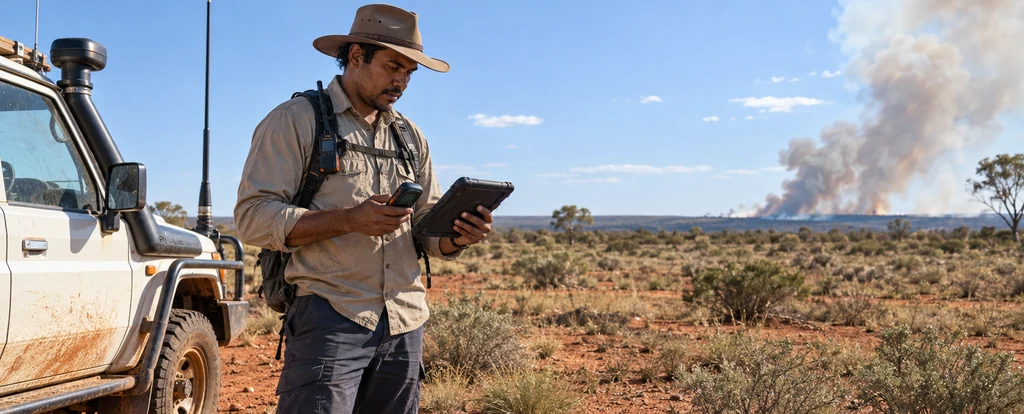
Aboriginal and Torres Strait Islander rangers work on country, usually for an Aboriginal corporation, land council or government agency, managing land, sea, fire and cultural heritage. What sets the role apart from other conservation work is that cultural knowledge and community authority sit at the centre of the job rather than alongside it. Teams are small, often three to ten people, and many are funded through the federal Indigenous Rangers Program to look after their own country.
How much do aboriginal and torres strait islander rangers earn?
The median full-time salary for an aboriginal and torres strait islander ranger is $67,600 per annum, before tax, up $14,200 since 2018.
Who employs you shapes the pay more than anything else, because government parks agencies pay under public sector agreements while ranger teams run by Aboriginal corporations and land councils set rates within their program funding. Remote area allowances, on-call and fire duties add to the base, and trainee rates sit below the figures for qualified rangers. Senior ranger and coordinator roles attract higher classifications, which is where most of the progression in pay happens.
What does an aboriginal and torres strait islander ranger do day to day?
The list below is what fills most weeks; the exact mix shifts with seniority and whatever stage the current work is at.
- Carrying out weed, feral animal and erosion control across the ranger group's country
- Planning and running cultural burns and fire management work through the fire season
- Recording cultural heritage sites, waterholes and threatened species with GPS and field apps
- Monitoring water quality, wildlife and vegetation on regular patrol routes
- Taking community groups, schools and visitors onto country and explaining local protocols
What skills do aboriginal and torres strait islander rangers need?
Employers look for environmental assessment, field inspection and testing, field research and sampling, backed by CyberTracker fluency and strong safety and compliance awareness.
Specialist skills
- Environmental assessment
- Field inspection and testing
- Field research and sampling
- Surveying and geospatial work
- Animal care and handling
- Community engagement
Software and tools
- CyberTracker
- QGIS
- GPS
- UHF radio
- 4WD vehicles
General skills
- Safety and compliance awareness
Is the job growing?
About 250 people work as aboriginal and torres strait islander rangers in Australia, and employment is projected to grow 12% over the decade to 2035. That's healthy, above-average growth, and the role should stay in solid demand.
How do you become an aboriginal and torres strait islander ranger?
Here's the path most aboriginal and torres strait islander rangers take, step by step.
- 1Apply for a ranger traineeship or entry-level position
Most people start through a paid traineeship with an Aboriginal corporation, land council or natural resource management body, learning on country while they study. These positions are advertised through the organisations themselves and through the Indigenous Rangers Program, and they usually recruit from the community the team serves.
- 2Complete a Certificate III or IV in conservation and ecosystem management
The certificate covers weed and feral animal control, fire, plant and animal identification, safety and cultural site work, and some registered training organisations deliver it on country with the whole ranger group. It suits the job directly and is held by 34% of rangers.
- 3Pick up the field qualifications the work requires
First aid, 4WD, chemical handling, chainsaw and fire training are often conditions of the job rather than things you need before applying, and employers usually arrange them in the first year. Each one opens up more of the work you can do unsupervised.
- 4Build cultural authority alongside the technical skills
Ranger work depends on knowing local protocols, sites, language and who speaks for what, and that knowledge comes from elders and family rather than a course. It is what makes a ranger employable on their own country and hard to replace elsewhere.
- 5Take on a diploma for senior or coordinator roles
A Diploma of Conservation and Ecosystem Management (AHC51120) or a related qualification supports senior ranger, coordinator and joint management positions, which carry more planning, budget and reporting responsibility. It is the usual step for someone who wants to run a team rather than a work program.
Ready to apply as an aboriginal and torres strait islander ranger?
Whether you're working toward becoming an aboriginal and torres strait islander ranger or already are one and want a hand with the next step (sharpening your resume for ATS screening, tightening your cover letter, or knowing what you'll actually be asked at interview), here are examples grounded in this specific role, not generic templates.
What jobs can an aboriginal and torres strait islander ranger move to?
Moving into Park Ranger typically comes with the biggest pay rise, worth $34,000 a year more on average.
| Move to | Typical pay change | Overlap | Retraining |
|---|---|---|---|
| Park Ranger The ranger's land, fire and heritage management skills transfer directly to park ranger duties, with a short course covering formal conservation qualifications. | +$34,000 | 48% | short course |
| Weeds Officer The ranger's knowledge of country and plant management suits weeds officer work, with a short course adding herbicide and weed control tickets. | +$7,800 | 50% | short course |
| Fisheries Officer The ranger's field monitoring and compliance experience supports fisheries officer work, though a substantial course is needed for marine enforcement and legislation. | +$1,600 | 25% | reskill |
Moves are chosen from Jobs and Skills Australia's Data on Occupation Mobility, which follows income tax records between 2011-12 and 2020-21, together with entry requirements and skill overlap. A known move is one people were seen making in that data. Pay change compares median full-time pay for the two roles.
Who works as an aboriginal and torres strait islander ranger?
The typical aboriginal and torres strait islander ranger is 35 years old; 60% are men, 80% work full-time, and full-timers average 38 hours a week.
- 35
- Median age
- 40%
- Female share
- 80%
- Full-time
- −2h
- vs all-jobs avg
What's it like being an aboriginal and torres strait islander ranger?
The shape of the year follows the seasons: burning when conditions allow, weed and animal work when growth is on, survey and visitor programs in between. Days are long and often spent hours from town, on rough roads or walking country, and the team is small enough that everyone's absence is felt. It suits someone who wants to be outdoors, works well in a tight group, and is comfortable carrying both cultural and technical responsibility.
What people like
- Time on country rather than in an office. Most of the week is spent outdoors checking waterholes, tracks, weeds and animals, often on the same country your family is from.
- Two kinds of knowledge in one job. Traditional knowledge and western land management science both count, and rangers use them together to decide where to burn, what to survey and what to leave alone.
- Results stay in the community. Because the team is usually run by a local corporation or land council, cleaner country, recorded sites and training for younger people stay close to home.
- The work changes through the year. Fire season, weed season, wildlife surveys and visitor programs mean the job looks different month to month rather than repeating the same rounds.
What people find hard
- Remote bases and long drives. Many ranger teams work hours from the nearest town, so a week can include early starts and long stretches on rough roads in a 4WD.
- Small teams and tight budgets. A team of three to ten people has little slack, so a sick day, a vehicle breakdown or a funding gap lands on everyone.
- Reporting and paperwork. Funding agreements and joint management plans need monitoring records, permits and reports, and that side of the job grows as you become more senior.
- Narrow windows for the work. Burns and spraying have to happen in the right conditions, so a wet or windy week pushes scheduled work into an already full month.
Based on our synthesis of professional-body surveys and public accounts of the role, not first-person verified reviews.
Which industries employ aboriginal and torres strait islander rangers?
Environmental and Conservation Services employs the largest share of aboriginal and torres strait islander rangers, followed by Government Administration.
Top employing industries
- 1Environmental and Conservation Services
- 2Government Administration
- 3Tourism
- 4Agriculture, Forestry and Fishing
Ranked by employment share; the source doesn't publish an exact percentage per industry.
| Certificate III/IV | 34% | |
|---|---|---|
| Diploma / Advanced Diploma | 26% | |
| Bachelor degree | 20% | |
| Year 12 or below | 20% |
Will AI replace aboriginal and torres strait islander rangers?
Ranger work is only lightly exposed to AI, because the job is physical, land-based and built on cultural authority held by people in the community. Mapping and reporting tools have taken over more of the record keeping than they used to: field apps replace notebooks, and satellite imagery and GIS help plan burns and track weed spread. The decisions about where to burn, what to protect and who speaks for country stay with rangers and elders.
Share of typical working time by exposure level
- Weed and feral animal controlSpraying, trapping and fence checks happen in country that vehicles often cannot reach, and knowing which plants to leave alone comes from local knowledge.30%low
- Cultural burning and fire managementReading fuel loads, wind and country before lighting up is learned on the ground, and when to burn is a cultural decision as much as a technical one.25%low
- Community engagement and knowledge sharingTaking school groups, researchers and visitors onto country means explaining protocols in person and knowing which stories can be shared and which cannot.25%low
- Heritage site checks, mapping and recordsGPS points and photos now go straight into field apps such as CyberTracker and QGIS, which saves hours of data entry but still needs someone to walk the site and interpret what is there.20%high
Common questions about becoming an aboriginal and torres strait islander ranger
Straight answers to the questions people ask most.
How much do Aboriginal and Torres Strait Islander rangers get paid?
Aboriginal and Torres Strait Islander rangers earn a median of $67,600 per year before tax. Government employers pay under public sector agreements, while corporation and land council roles depend on their program funding, and remote allowances or fire duties can add to the base. Rates vary with the employer and how remote the work is.
How do you become an Aboriginal or Torres Strait Islander ranger?
Most rangers start through a paid traineeship with an Aboriginal corporation, land council or natural resource management body, completing a certificate while working on country. A Certificate III or IV in conservation and ecosystem management is the usual qualification, and first aid, 4WD, chemical handling and fire training are normally picked up on the job. Connection to the community the team serves counts for more than school results.
Do you have to be Aboriginal or Torres Strait Islander to work as a ranger?
Positions funded through the Indigenous Rangers Program are reserved for Aboriginal and Torres Strait Islander people, as are many roles with land councils and community corporations. General park ranger jobs with state agencies are open to anyone, but they are a different job with different responsibilities. If you are Indigenous and want to work on your own country, the program roles are the ones to look for.
Are Aboriginal and Torres Strait Islander ranger jobs in demand?
Aboriginal and Torres Strait Islander rangers are currently not in shortage, and employment is projected to grow 12% over the decade to 2035. The workforce is small at about 250 people, so vacancies come up individually rather than in large intakes, and they are usually filled by people already connected to the community. Watching the job pages of land councils, corporations and the agencies that fund ranger teams is the practical way to catch them.
Will AI change ranger work?
Ranger work has low exposure to AI, because most of it happens on country and rests on cultural authority that no system holds. Mapping, GPS recording and reporting have changed most: field apps such as CyberTracker, satellite imagery and QGIS make it quicker to log sites, plan burns and track weed spread. The decisions about where to burn, what to protect and who speaks for country stay with rangers and elders.
What can rangers move into later?
Park ranger roles are the clearest move, since land, fire and heritage management transfer directly and pay is $34,000 more, with a short course filling the formal conservation qualification gap. Weed officer work is a smaller step that leans on plant and herbicide knowledge, and bush regenerators come the other way into ranger teams with practical landcare skills. Fisheries officer roles suit rangers who want field compliance work, though marine law and enforcement need substantial retraining.
Related roles
Not sure this is you? Take the career quiz and get a ranked shortlist of roles that fit how you like to work.