Dance Teacher
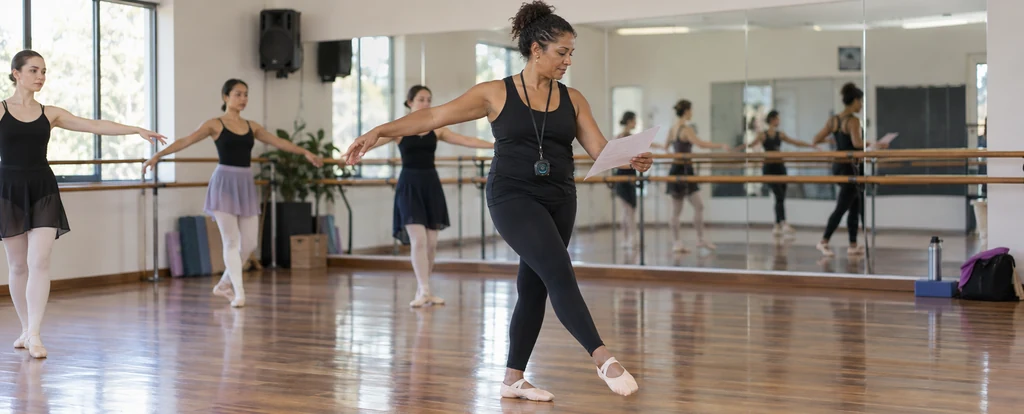
Dance teachers teach technique, choreography and performance skills to students of all ages, from first ballet classes through to exam and competition work.
- Median salary*
- $54,600
4.2%vs last year, before tax
- People employed
- 7,500
0.0%vs last year
- Projected growth*
- +5%
to 2035
- AI exposure*
- Low
- automation risk
- Average hours*
- 38/wk
−2h vs all jobs
- Shortage status*
- Not in shortage
national
Most dance teachers work in private studios, with others in schools, community programs or their own businesses. The job sits between coach and performer: you demonstrate, correct and choreograph, and the class only works if you can hold a room's attention while moving through it. Timetables follow the school year, with classes after school and on Saturdays, building towards exams and end-of-year concerts.
How much do dance teachers earn?
The median full-time salary for a dance teacher is $54,600 per annum, before tax, up $11,500 since 2018.
Pay depends most on the setting: private studios typically pay an hourly rate for class time, while school and TAFE positions sit on an enterprise agreement with defined steps. Casual and part-time hours are common in studios, so weekly earnings move with the timetable and thin out over the summer break. Teaching privately or running your own studio shifts income onto enrolments and fees, where earnings grow with the number of students you can hold.
What does a dance teacher do day to day?
The list below is what fills most weeks; the exact mix shifts with seniority and whatever stage the current work is at.
- Planning and teaching classes in styles such as ballet, contemporary, jazz, tap or hip hop
- Demonstrating steps and correcting students' technique, posture and timing
- Choreographing routines for exams, concerts, competitions and eisteddfods
- Preparing students for performances and exams, and assessing their progress
- Handling enrolments, timetables, studio safety and contact with parents
What skills do dance teachers need?
Employers look for teaching and instruction, curriculum and lesson design, classroom and behaviour management, backed by Mindbody fluency and strong written communication.
Specialist skills
- Teaching and instruction
- Curriculum and lesson design
- Classroom and behaviour management
- Student assessment and reporting
- Event coordination
Software and tools
- Mindbody
- Jackrabbit Dance
- Google Workspace
- YouTube
- GarageBand
General skills
- Written communication
- Physical stamina and dexterity
- Attention to detail
Is the job growing?
About 7,500 people work as dance teachers in Australia, and employment is projected to grow 5% over the decade to 2035. That's modest growth: demand is steady rather than booming.
How do you become a dance teacher?
Here's the path most dance teachers take, step by step.
- 1Train seriously in at least one style
Most dance teachers start as dancers, taking graded exams through a syllabus body such as the Royal Academy of Dance, Cecchetti or Australian Teachers of Dancing, and reaching an advanced level in the styles they want to teach.
- 2Add a teaching qualification
A Certificate IV or diploma in dance teaching and management covers class planning, safe technique and student assessment, and is what most private studios look for. A bachelor degree in dance or education is the longer route, and it is the one that leads to teaching dance as a school subject.
- 3Get class time as an assistant
Assisting with junior classes while you study builds the class management a qualification does not teach, and studios often hire from the assistants they already know.
- 4Complete a Working with Children Check
Every state and territory requires one before you teach anyone under 18, though the scheme and its name differ, from a Blue Card in Queensland to a Working with Children Check in Victoria and NSW. A current first aid certificate is also commonly expected.
- 5Register if you want to teach in schools
Teaching dance as a school subject means a teaching degree and registration with the state authority, such as NESA in New South Wales or the VIT in Victoria. It is a longer path than studio teaching, but it comes with an enterprise agreement and school holidays.
Ready to apply as a dance teacher?
Whether you're working toward becoming a dance teacher or already are one and want a hand with the next step (sharpening your resume for ATS screening, tightening your cover letter, or knowing what you'll actually be asked at interview), here are examples grounded in this specific role, not generic templates.
What jobs can a dance teacher move to?
Moving into Music Teacher typically comes with the biggest pay rise, worth $76,300 a year more on average.
| Move to | Typical pay change | Overlap | Retraining |
|---|---|---|---|
| Music Teacher Dance teachers with music background can requalify as music teachers, bringing rhythm and performance skills to the classroom. | +$76,300 | 70% | requalify |
| VET Trainer Dance teachers can move into vocational training by completing a short course, bringing practical performance skills and student instruction experience. | +$56,100 | 70% | short course |
| Art Teacher Dance teachers bring creative expression and classroom management to art teaching, with minimal retraining to apply visual arts techniques. | +$46,800 | 67% | minimal |
| Drama Teacher Dance teachers bring movement, performance and stage presence to drama teaching, needing minimal retraining to adapt to script and character work. | +$44,200 | 68% | minimal |
Moves are chosen from Jobs and Skills Australia's Data on Occupation Mobility, which follows income tax records between 2011-12 and 2020-21, together with entry requirements and skill overlap. A known move is one people were seen making in that data. Pay change compares median full-time pay for the two roles.
Who works as a dance teacher?
The typical dance teacher is 29 years old; 90% are women, 17% work full-time, and full-timers average 38 hours a week.
- 29
- Median age
- 90%
- Female share
- 17%
- Full-time
- −2h
- vs all-jobs avg
What's it like being a dance teacher?
The week runs on the studio timetable: afternoons and evenings during term, Saturday mornings for the youngest classes, and a build towards exams and concerts at the end of each term. The teaching itself is energetic and repetitive in equal measure, and much of the skill lies in watching a room closely enough to fix one student's timing without losing the other nineteen. It suits people who like performing, explaining movement in plain words, and working with children and teenagers as much as with adults.
What people like
- Progress you can see. A student who could not hold a balance in February is turning cleanly by June, and the improvement is visible rather than buried in a report.
- A working day spent moving. You teach on your feet, to music, in a room full of people, which suits anyone who finds desk work draining.
- The same studio, different ages. A Tuesday might run from pre-schoolers through to adults, so the material, the pacing and the way you explain things change constantly.
- Concert and exam days. A term of repetition pays off in front of an audience, and the staging, costumes and nerves are all part of the job you are running.
What people find hard
- After-school and weekend hours. Classes run when students are free, so most teaching happens between mid-afternoon and evening plus Saturday mornings, often with a long break in the middle of the day.
- Term-by-term work. Many studio roles are hourly and settled again each term, with fewer classes over the summer holidays, so hours and income are less predictable than in a school job.
- Managing a whole room at once. Keeping twenty beginners safe, engaged and on the beat while giving each of them feedback takes years to get right, and some classes are loud and repetitive.
- The body carries the load. Demonstrating jumps, lifts and floor work for hours a day adds up, and injury is a real risk, which is one reason some teachers move towards coaching or older students as their own dancing winds down.
Based on our synthesis of professional-body surveys and public accounts of the role, not first-person verified reviews.
Which industries employ dance teachers?
Education and Training employs the largest share of dance teachers, followed by Arts and Recreation Services.
Top employing industries
- 1Education and Training
- 2Arts and Recreation Services
- 3Other Services
Ranked by employment share; the source doesn't publish an exact percentage per industry.
| Bachelor degree | 38% | |
|---|---|---|
| Diploma / Advanced Diploma | 24% | |
| Certificate III/IV | 20% | |
| Postgraduate | 10% | |
| Other | 8% |
Will AI replace dance teachers?
Dance teaching has low exposure to AI, because the work happens in a room with people moving. Tools can suggest choreography, clean up music tracks and run the studio's administration, but they cannot watch alignment, spot a student who is about to land badly or keep a class of teenagers on task. Almost all of the working week is spent teaching and correcting in person, and that is what keeps the exposure low.
Share of typical working time by exposure level
- Teaching technique and correcting students in classReading a student's alignment and adjusting it mid-movement is physical, immediate work that no tool can do from a screen.40%low
- Rehearsing students for exams, eisteddfods and concertsRehearsals and staging are managed in person, with routines cut or reworked live as students tire or the running order changes.25%low
- Choreographing routines for concerts and examsChoreography tools can generate step sequences as a starting point, but the routine still has to suit a particular group's strengths and fit the music's timing.20%moderate
- Studio admin: enrolments, timetables and fee remindersStudio software such as Jackrabbit Dance and Mindbody already automates enrolment, invoicing and attendance, and AI tools are taking over the follow-up messages.15%high
Common questions about becoming a dance teacher
Straight answers to the questions people ask most.
How much do dance teachers earn?
Full-time dance teachers earn a median of $54,600 per year before tax. Studio work is usually paid by the hour and can be casual or part-time, while school and TAFE positions follow an enterprise agreement, so the same qualification can lead to quite different weekly earnings.
How do you become a dance teacher?
Most dance teachers come through years of dance training plus a teaching qualification such as the Certificate IV in Dance Teaching and Management. A bachelor degree is the qualification most dance teachers currently hold, at around 38%, though that number reflects the school-teaching route more than studio work. You will also need a Working with Children Check before teaching students under 18.
Are dance teachers in demand?
Dance teachers are currently not in shortage, and employment is projected to grow 5% over the decade to 2035. The role is small, with about 7,500 people working as dance teachers nationally, so most openings come through studios replacing teachers who leave rather than through rapid expansion.
Will AI replace dance teachers?
Dance teaching has low exposure to AI, because the core of the job is watching a body move and adjusting it in real time. Software already handles enrolments, invoicing and scheduling, and choreography tools can suggest movement phrases, but neither can spot a student's knee collapsing or keep a room of eight-year-olds focused. The teaching itself is likely to stay in the studio.
What can dance teachers move into?
Dance teaching shares ground with other performance and arts subjects: drama teaching overlaps by about 68% and needs little retraining, since both roles rest on stagecraft and classroom management. Moving into vocational training takes a short course and pays $56,100 more, and art teaching is a similar step with minimal retraining. Many dance teachers eventually open or take over a studio, which is often where earnings grow.
What hours do dance teachers work?
Full-time dance teachers average around 38 hours a week, but the hours fall across afternoons, evenings and Saturday mornings rather than a standard day. Casual and part-time arrangements are common in studios, so your week can look quite different from one term to the next.
Related roles
Not sure this is you? Take the career quiz and get a ranked shortlist of roles that fit how you like to work.