Home Manufacturing & Production
Food Factory Worker
Food factory workers run the machines and lines that turn raw ingredients into packaged food, keeping each batch safe and consistent.
- Median salary*
- $57,200
3.6%vs last year, before tax
- People employed
- 3,200
0.0%vs last year
- Projected growth*
- −1%
to 2035
- AI exposure*
- High
- automation risk
- Average hours*
- 38/wk
−2h vs all jobs
- Shortage status*
- Not in shortage
national
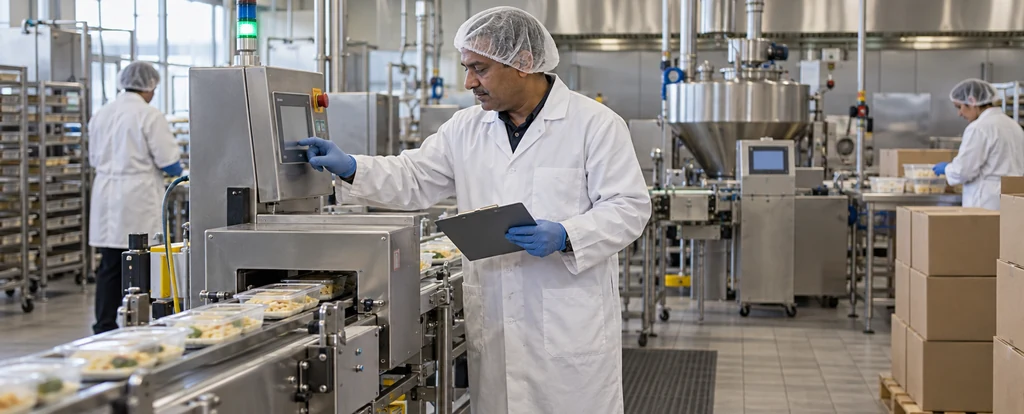
Food factory workers spend their shifts on a production line in a plant that makes food or drink, from a small bakery to a large processing site. The job sits between the ingredients coming in and the sealed product going out, so hygiene and temperature rules shape almost everything you do. Work is rostered across mornings, afternoons and nights, and you cover one step in a line of people.
How much do food factory workers earn?
The median full-time salary for a food factory worker is $57,200 per annum, before tax, up $12,200 since 2018.
Pay is usually set by the Food, Beverage and Tobacco Manufacturing Award or a site enterprise agreement, so the rate depends more on your employer than on the job title. Shift loadings are the main difference between people on the same line: afternoon and night shifts, weekend work and overtime all attract penalty rates. Moving from general hand to machine operator or team leader is the other route to a higher rate.
What does a food factory worker do day to day?
The list below is what fills most weeks; the exact mix shifts with seniority and whatever stage the current work is at.
- Operating mixers, slicers, ovens and other processing machinery
- Watching the line for jams, underfilled packs and product that falls outside spec
- Packing, labelling and stacking finished products for dispatch
- Checking temperatures, weights and use-by dates against the batch record, because a missed check can mean a whole run is pulled
- Cleaning and sanitising equipment between runs, as food safety rules require at the end of each production period
What skills do food factory workers need?
Employers look for food safety and hygiene, food preparation and cooking, plant and equipment operation, backed by Conveyor systems fluency and strong safety and compliance awareness.
Specialist skills
- Food safety and hygiene
- Food preparation and cooking
- Plant and equipment operation
- Cleaning and grounds maintenance
Software and tools
- Conveyor systems
- Food slicers
- Industrial mixers
- Checkweighers
- Metal detectors
General skills
- Safety and compliance awareness
- Physical stamina and dexterity
- Attention to detail
Is the job growing?
About 3,200 people work as food factory workers in Australia, and employment is projected to decline 1% over the decade to 2035. That's a real decline, worth weighing carefully before training into the role.
How do you become a food factory worker?
Here's the path most food factory workers take, step by step.
- 1Get a food handler certificate
A short course covering hygiene, contamination and safe food handling, often a few hours online. Many employers ask for it before your first shift, and it is the cheapest way to show you understand the rules a plant runs on.
- 2Apply directly to manufacturers or through labour hire
Most entry is by direct application or through a labour hire agency, and no prior experience is required because sites train new starters on their own equipment. Labour hire is a common first step into a plant, and a good performance often leads to a permanent offer.
- 3Pick up a Certificate II or III in food processing
A traineeship lets you earn while you learn, and the course covers machinery operation, quality assurance and HACCP. It is the qualification that separates someone who stays a general hand from someone who moves onto the machines.
- 4Add the licences the site uses
A forklift licence opens stores and dispatch work, and a high risk work licence is needed if you operate overhead cranes or similar equipment. Sites often pay for the training once you are permanent.
- 5Specialise in a processing stream
Moving into meat, seafood or smallgoods processing builds on the same hygiene and line skills. Butchery and smallgoods making need a meat trade apprenticeship, which takes about three years and pays more once you are qualified.
Ready to apply as a food factory worker?
Whether you're working toward becoming a food factory worker or already are one and want a hand with the next step (sharpening your resume for ATS screening, tightening your cover letter, or knowing what you'll actually be asked at interview), here are examples grounded in this specific role, not generic templates.
What jobs can a food factory worker move to?
Moving into Butcher typically comes with the biggest pay rise, worth $23,400 a year more on average.
| Move to | Typical pay change | Overlap | Retraining |
|---|---|---|---|
| Butcher Food factory workers can become butchers by completing a meat trade apprenticeship, using existing food safety and knife skills. | +$23,400 | 47% | requalify |
| Smallgoods Maker Food factory workers move into smallgoods making through a meat trade apprenticeship, building on food safety and processing experience. | +$7,800 | 57% | requalify |
| Meat Process Worker Food factory workers apply food safety and production line skills to meat processing, with minimal retraining for meat handling and equipment. | +$7,500 | 67% | minimal |
| Slaughterer Food factory workers bring hygiene and manual handling skills to slaughtering, with minimal retraining for animal welfare and knife work. | +$5,200 | 67% | minimal |
| Seafood Process Worker Food factory workers bring food safety, hygiene and machine operating skills to seafood processing, needing only minimal retraining for species-specific handling. | +$2,600 | 100% | minimal |
Moves are chosen from Jobs and Skills Australia's Data on Occupation Mobility, which follows income tax records between 2011-12 and 2020-21, together with entry requirements and skill overlap. A known move is one people were seen making in that data. Pay change compares median full-time pay for the two roles.
Who works as a food factory worker?
The typical food factory worker is 41 years old; 61% are men, 67% work full-time, and full-timers average 38 hours a week.
- 41
- Median age
- 39%
- Female share
- 67%
- Full-time
- −2h
- vs all-jobs avg
What's it like being a food factory worker?
A food factory runs to a schedule, so the pace comes from the line rather than from you, and a breakdown at one station holds up everyone behind it. The work is physical and repetitive and the hygiene rules are strict, but rosters are predictable and you leave the job at the door when your shift ends. People who settle into it tend to like a clear routine, a team around them and not having to take work home.
What people like
- Predictable rosters. Shifts are published in advance, and the day finishes when your shift does, so the work does not follow you home.
- No experience needed to start. Sites train new starters on their own equipment, which makes it a realistic first job or a way back into work after a break.
- Training that is within reach. A forklift licence, a high risk work licence or a food processing certificate can be picked up on the job, and each one opens a slightly better-paid role.
- Work that feeds people. The product leaves the plant and ends up on a shelf somewhere that day, so the output is easy to see.
What people find hard
- Repetition. You might make the same cut or stack the same pack hundreds of times in a shift, and the line sets the speed rather than you.
- Cold rooms and constant noise. Many plants are chilled, and the machinery hum is steady enough that hearing protection is standard rather than optional.
- Strict hygiene routine. Hairnets, boots, hand washing and rules about jewellery and phones apply every time you step into the production area.
- Weekend and night shifts. Plants often run around the clock, so a share of your roster will fall on evenings, weekends or public holidays.
Based on our synthesis of professional-body surveys and public accounts of the role, not first-person verified reviews.
Which industries employ food factory workers?
Manufacturing employs the largest share of food factory workers, followed by Retail Trade.
Top employing industries
- 1Manufacturing
- 2Retail Trade
- 3Administrative and Support Services
- 4Wholesale Trade
- 5Accommodation and Food Services
Ranked by employment share; the source doesn't publish an exact percentage per industry.
| Certificate III/IV | 34% | |
|---|---|---|
| Diploma / Advanced Diploma | 26% | |
| Bachelor degree | 20% | |
| Year 12 or below | 20% |
Will AI replace food factory workers?
Food factory work is one of the more exposed jobs to automation, because so much of it is repetitive, stationary and done with products that arrive in a consistent shape. Packaging, palletising and inspection have already been mechanised on many lines, and checkweighers and camera vision systems now catch faults that people once looked for by eye. What keeps workers on the line is the part of the job that changes: product changeovers, cleaning between runs, and getting a machine going again when it jams.
Share of typical working time by exposure level
- Packing, labelling and palletisingRobotic pick-and-place units and automatic labellers already handle much of this on newer lines, so fewer people are needed at the end of the line.30%high
- Running the processing machineryMixers, slicers and ovens run to programmed settings, but someone still loads them, watches for jams and adjusts when the product changes.30%moderate
- Checking weights, seals and product qualityCheckweighers, metal detectors and vision systems now catch most faults automatically as packs pass a scanner.20%high
- Cleaning and sanitising between runsCleaning means hoses and chemicals around open machinery that has to be pulled apart, which is hard to automate on a line that changes product several times a day.20%low
Common questions about becoming a food factory worker
Straight answers to the questions people ask most.
How much does a food factory worker earn?
$57,200 per year before tax for full-time work. That is a median across the occupation, and what a particular site pays depends on its award or enterprise agreement and how much shift loading sits in your roster.
How do you become a food factory worker?
Most people start with a food handler certificate, then apply directly to food manufacturers or through a labour hire agency. No prior experience is needed because sites train new starters on their own lines, though a Certificate II or III in food processing helps if you want to move onto the machinery or into quality roles.
Are food factory workers in demand?
Food factory workers are currently not in shortage, and employment is projected to decline 1% over the decade to 2035 over the decade to 2035. Food manufacturing keeps running through most economic conditions, but the number of line jobs depends on how much of the work each site automates. Most openings come from staff turnover rather than new positions, so applying to several plants and to labour hire firms is the practical approach.
Will AI and automation replace food factory workers?
Automation already does much of the packing, labelling and inspection work in food plants, and that reach is likely to widen. Robotic pickers, automatic checkweighers and vision systems handle the repetitive jobs with consistent products, while changeovers, cleaning and troubleshooting a jammed machine still need a person. The roles that hold up best combine machine operation with the food safety judgement the line depends on.
Is food factory work physically demanding?
Much of the shift is spent on your feet, lifting, reaching and repeating the same movement, and sites often rotate people between stations to spread the strain. Lifting aids take the heaviest loads, but stamina matters more than raw strength.
Where can food factory work lead?
Seafood process workers handle different products but use the same hygiene and machine operating skills, and the pay is $2,600 more. Meat processing, slaughtering and smallgoods making build on that same experience, while butchery pays $23,400 more and needs a meat trade apprenticeship first.
Related roles
Not sure this is you? Take the career quiz and get a ranked shortlist of roles that fit how you like to work.