Fruit and Vegetable Packer
Fruit and vegetable packers grade, sort and pack fresh produce so it reaches shops, markets and export customers in good condition.
- Median salary*
- $52,000
4.4%vs last year, before tax
- People employed
- 8,000
0.0%vs last year
- Projected growth*
- −2%
to 2035
- AI exposure*
- Moderate
- automation risk
- Average hours*
- 38/wk
−2h vs all jobs
- Shortage status*
- In shortage (regional)
national
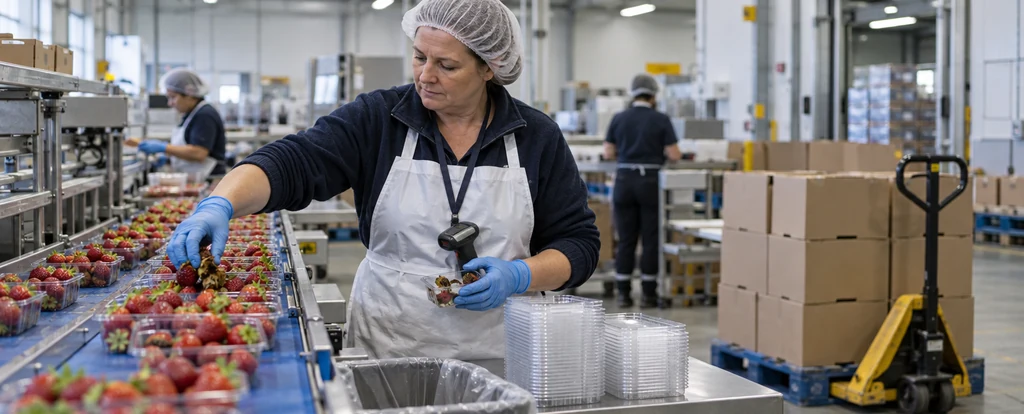
Fruit and vegetable packers work in packhouses and cool stores, usually in the growing regions where the crop is harvested, and their work sits at the end of the harvest: produce arrives from the field and leaves packed to a customer's specification. Grading is the closest job to it and is sometimes done by the same person, with the grader setting the quality standard for a line while packers keep it moving. Crews are often small and mixed, and they swell with seasonal workers during peak harvest.
How much do fruit and vegetable packers earn?
The median full-time salary for a fruit and vegetable packer is $52,000 per annum, before tax, up $11,000 since 2018.
Pay usually comes from the horticulture award or an enterprise agreement, so base rates are fairly consistent between packhouses, with casual and seasonal workers receiving a loading on top. Shift work, weekend work and public holidays during harvest lift weekly earnings, and a few sheds pay piece rates that can reward speed but vary with the crop. Larger growers and food manufacturers generally pay above the smaller family-run packhouses, and qualifications such as a forklift licence or a food safety certificate can move you onto a higher classification.
What does a fruit and vegetable packer do day to day?
The list below is what fills most weeks; the exact mix shifts with seniority and whatever stage the current work is at.
- Sorting and grading fruit and vegetables by size, ripeness and quality
- Packing produce into punnets, bags, cartons and bins to a customer's specification
- Labelling and stacking packed items for cold storage or dispatch
- Pulling damaged or spoiled produce off the line before it reaches the pack
- Cleaning the line, bins and work areas to food safety standards at the end of a shift
What skills do fruit and vegetable packers need?
Employers look for food safety and hygiene, operations management, inventory management, backed by Conveyor sorting lines fluency and strong attention to detail.
Specialist skills
- Food safety and hygiene
- Operations management
- Inventory management
- Plant and equipment operation
- Cleaning and grounds maintenance
Software and tools
- Conveyor sorting lines
- Produce grading machines
- Pallet jacks
- Barcode scanners
- Packhouse inventory software
General skills
- Attention to detail
- Physical stamina and dexterity
Is the job growing?
About 8,000 people work as fruit and vegetable packers in Australia, and employment is projected to decline 2% over the decade to 2035. That's a real decline, worth weighing carefully before training into the role.
How do you become a fruit and vegetable packer?
Here's the path most fruit and vegetable packers take, step by step.
- 1Check what the work asks of you
No formal qualification is needed to start, but the job means long shifts on your feet, a cold room for much of the day and strict hygiene rules. Most packhouses sit in regional growing areas, so you'll usually need your own transport to get there.
- 2Apply where the harvest is
Packhouses hire directly, and labour hire firms and harvest offices place most casual crews. Applications pick up shortly before a crop comes in, so timing your approach to the local season matters more than the resume you send.
- 3Complete food safety and hygiene training
Employers run their own induction covering food safety, handwashing and how the line works. A short food handling or food hygiene certificate is inexpensive and helps you get picked up by larger growers and food manufacturers.
- 4Add a licence or certificate that widens your options
A forklift licence, or a Certificate II in Horticulture (AHC20422) or Certificate III in Food Processing (FBP30121), opens grading, quality checking and store work rather than keeping you on the end of the line.
- 5Move up inside the packhouse
With a season or two behind you, quality assurance, dispatch and line supervision are the usual next steps, and they come with steadier hours and a classification above general packing.
Ready to apply as a fruit and vegetable packer?
Whether you're working toward becoming a fruit and vegetable packer or already are one and want a hand with the next step (sharpening your resume for ATS screening, tightening your cover letter, or knowing what you'll actually be asked at interview), here are examples grounded in this specific role, not generic templates.
What jobs can a fruit and vegetable packer move to?
Moving into Orchardist typically comes with the biggest pay rise, worth $20,800 a year more on average.
| Move to | Typical pay change | Overlap | Retraining |
|---|---|---|---|
| Orchardist Knowledge of fruit varieties and handling gained in packing supports managing an orchard's harvest. | +$20,800 | 46% | short course |
| Bakery Assistant Packing skills and food safety knowledge apply to preparing and packaging baked goods in a bakery. | +$19,800 | 62% | minimal |
| Coffee Roaster Experience with sorting and assessing produce helps in selecting and roasting coffee beans. | +$13,000 | 62% | minimal |
| Meat Process Worker Food handling and hygiene practices transfer directly to preparing and packing meat products in processing plants. | +$12,700 | 52% | short course |
| Product Grader A fruit and vegetable packer's eye for quality and sorting carries into grading produce for market standards. | +$7,800 | 52% | short course |
Moves are chosen from Jobs and Skills Australia's Data on Occupation Mobility, which follows income tax records between 2011-12 and 2020-21, together with entry requirements and skill overlap. A known move is one people were seen making in that data. Pay change compares median full-time pay for the two roles.
Who works as a fruit and vegetable packer?
The typical fruit and vegetable packer is 33 years old; 64% are women, 51% work full-time, and full-timers average 38 hours a week.
- 33
- Median age
- 64%
- Female share
- 51%
- Full-time
- −2h
- vs all-jobs avg
What's it like being a fruit and vegetable packer?
The shape of the job follows the harvest: a packhouse runs flat out for a few weeks or months and then quietens, so the days are long and the work steady while the fruit is coming in. Most shifts start early, because produce needs to be cooled and packed the day it's picked, and much of the work happens standing at a line in a cold room. People who like a set routine, a clear finish and a team around them tend to settle into it well.
What people like
- Your work is visible by the end of the shift. Pallets stack up through the day, so you can see exactly what the crew got through, which suits people who like a definite finish to a shift.
- The work is hands-on and social. You spend the shift alongside the same people on the line, talking and working at a shared pace rather than sitting alone at a screen.
- You can start without a qualification. Most packers learn on the job, and a short food handling course is often all that's asked for, which makes it a quick way into horticulture work.
- You learn to judge produce quickly. After a few weeks you can spot bruising, sunburn and ripeness at a glance, and that eye is what employers look for when they move people into grading.
What people find hard
- Cold rooms and long shifts on your feet. Packhouses are kept cold to protect the produce, and you're standing, reaching and lifting for most of the shift, which takes some getting used to.
- The line sets the pace. Once the fruit is coming in, the belt doesn't slow down. Breaks are scheduled and the same movements repeat thousands of times a day.
- Work follows the harvest, not your calendar. Contracts are often seasonal, so you might work six days a week through summer and then look for the next crop, the next region or another job entirely.
- Peak season takes over your week. Early starts and weekend shifts are normal in harvest, and taking time off is difficult when the crop is ripe and waiting to be packed.
Based on our synthesis of professional-body surveys and public accounts of the role, not first-person verified reviews.
Which industries employ fruit and vegetable packers?
Agriculture, Forestry and Fishing employs the largest share of fruit and vegetable packers, followed by Administrative and Support Services.
Top employing industries
- 1Agriculture, Forestry and Fishing
- 2Administrative and Support Services
- 3Retail Trade
- 4Manufacturing
- 5Wholesale Trade
Ranked by employment share; the source doesn't publish an exact percentage per industry.
| Certificate III/IV | 34% | |
|---|---|---|
| Diploma / Advanced Diploma | 26% | |
| Bachelor degree | 20% | |
| Year 12 or below | 20% |
Will AI replace fruit and vegetable packers?
Automation reaches a fair way into this job. Optical sorters and machine vision now grade a large share of fruit and vegetables faster than a line of people can, and automatic palletisers and packhouse software handle stacking and stock records. What keeps the exposure moderate rather than high is the produce itself: soft fruit, mixed orders and damaged items still need hands, and someone has to keep the machines fed, cleared and clean in a food facility.
Share of typical working time by exposure level
- Packing punnets, bags and cartonsAutomatic fillers, weighers and sealers do much of the packing on large lines, while hands-on packing remains for soft fruit, mixed orders and short runs.30%high
- Grading and sorting on the lineCamera sorters make most of the size and colour calls, so people increasingly pull out rejects and reset the machine rather than judge every piece themselves.25%high
- Running and tending the lineSomeone still clears jams, changes over film and trays, checks weights and keeps the machine fed, and that judgement comes from knowing how the crop is behaving that day.25%low
- Cleaning down and food safety checksWashing equipment, clearing waste and recording temperatures and hygiene steps are done by hand and signed off by the people on the shift.20%low
Moves least exposed to AI
These career moves from fruit and vegetable packer work are rated low for AI exposure:
- Orchardist
Solid skill overlap (46%), short course to get there, and a low automation-risk profile.
Common questions about becoming a fruit and vegetable packer
Straight answers to the questions people ask most.
How much do fruit and vegetable packers earn?
Fruit and vegetable packers earn a median of $52,000 per year before tax, based on full-time workers. Casual and seasonal packers are usually paid an hourly rate with a casual loading, so what you take home depends on the season and how many hours are available. It's a median across the occupation, so a first job in a packhouse may pay less.
How do you become a fruit and vegetable packer?
Most packers start with no formal qualification and learn the job through a packhouse induction covering hygiene, food safety and how the line runs. A short food handling certificate helps, and larger employers often ask for one. After a season or two, experience on a grading line or a forklift licence is what opens better-paid roles.
Are fruit and vegetable packers in demand?
Fruit and vegetable packers are currently in shortage in regional areas, and employment is projected to decline 2% over the decade to 2035. Packhouses sit in the growing regions and hire around the harvest calendar, so the number of jobs at any one time depends on the season as much as on the yearly total. Being willing to travel between regions or take work in a food manufacturing plant keeps more of the year covered.
Will AI or automation replace fruit and vegetable packers?
Automation already reaches into the middle of this job. Optical sorters and machine vision grade much of the fruit and vegetables that pass through a large packhouse, and automatic palletisers and packhouse software handle stacking and stock records. The work that stays human involves delicate or irregular produce, tending and resetting the machines, and the cleaning and hygiene that keep a food facility compliant.
What are the hours like?
Full-time packers average about 38 hours a week, though the season decides the roster. During harvest that can mean early starts, six-day weeks and weekend shifts, with quieter periods or no work at all between crops. Casual and seasonal contracts are common, so ask how long the season runs before you accept a job.
What can a fruit and vegetable packer move into?
Moving onto grading is a close step, and product graders earn $7,800 more, with the same eye for quality that packers use on the line. Meat process work pays $12,700 more and relies on the food handling and hygiene practices you already follow. Orchardist is a longer move that pays $20,800 more and suits packers who want to work the growing side, often on their own or a family block.
Related roles
Not sure this is you? Take the career quiz and get a ranked shortlist of roles that fit how you like to work.