Goat Farmer
Goat farmers breed and raise goats for meat, milk and fibre, supplying dairy processors, meat buyers and textile markets.
- Median salary*
- $59,800
3.6%vs last year, before tax
- People employed
- 220
10.0%vs last year
- Projected growth
- +1.2%
to 2035
- AI exposure*
- Low
- automation risk
- Average hours
- 52/wk
+12h vs all jobs
- Shortage status
- Not in shortage
national
Goat farmers run herds for milk, meat or fibre, and plenty run more than one enterprise, such as a dairy herd plus meat kids, or fibre goats alongside cattle and sheep. Most herds are small and family run, and kidding, milking and shearing set the rhythm of the year. About 220 people work in the occupation nationally.
How much do goat farmers earn?
The median full-time salary for a goat farmer is $59,800 per annum, before tax, up $12,300 since 2018.
What you earn depends on whether you own the herd or work for someone else, and on which enterprise the property runs: milk sold on contract to a processor, meat kids sold through saleyards or direct, or fibre sold at auction. Wages on larger properties usually follow the Pastoral Award, while owner-operators take what is left after feed, labour and transport. A dry season is the biggest single swing, because supplement and water costs rise while prices do not always follow.
What does a goat farmer do day to day?
The list below is what fills most weeks; the exact mix shifts with seniority and whatever stage the current work is at.
- Joining does and bucks and selecting breeding stock for milk, meat or fibre
- Feeding the herd and managing pasture, browsing country and supplementary rations
- Checking animal health, drenching for worms and treating illness and injury
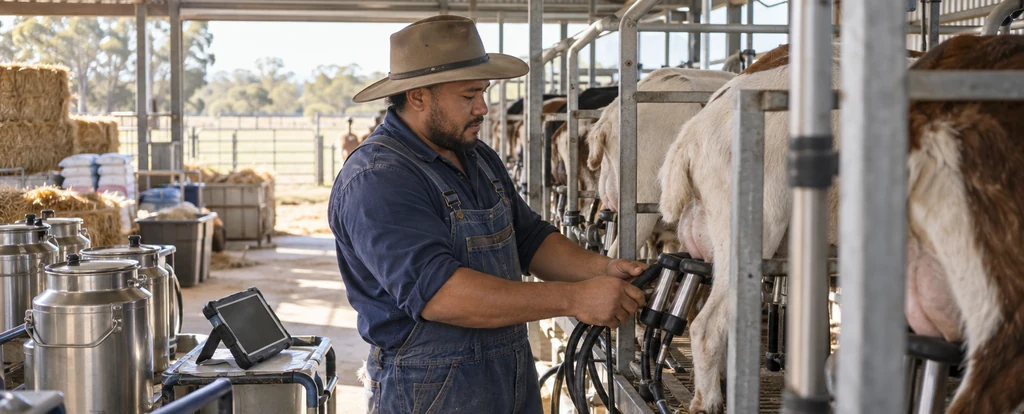
- Milking the dairy herd and cooling or delivering milk to a processor
- Selling livestock, fibre and dairy products to processors, buyers and saleyards
What skills do goat farmers need?
Employers look for animal care and handling, operations management, inventory management, backed by NLIS database fluency and strong safety and compliance awareness.
Specialist skills
- Animal care and handling
- Operations management
- Inventory management
- Plant and equipment operation
- Selling and negotiation
Software and tools
- NLIS database
- Xero
- Breedplan
- Herd management software
- Pasture management apps
General skills
- Safety and compliance awareness
- Physical stamina and dexterity
Is the job growing?
About 220 people work as goat farmers in Australia, and employment is projected to grow 1.2% over the decade to 2035. That's modest growth: demand is steady rather than booming.
How do you become a goat farmer?
Here's the path most goat farmers take, step by step.
- 1Get hands-on livestock experience
Regular work on a goat, sheep or dairy property teaches animal handling, drenching and health checks, and it is the experience owners look for before handing over responsibility for a herd. Casual and seasonal work counts.
- 2Study agriculture or goat husbandry
A Certificate III in Agriculture (AHC30122) is the standard qualification and covers livestock handling, feeding and farm safety, and TAFE and rural training providers run short courses in goat husbandry and dairy goat management. A traineeship combines the certificate with paid work on a property.
- 3Learn the business and the records
Feed budgets, sale prices and records decide whether a herd makes money, so budgeting and livestock record keeping matter as much as husbandry. Goats come under the National Livestock Identification System, and tagging and movement rules differ by state, so check what applies where you plan to work.
- 4Move into your own herd
Most people enter the occupation by buying or agisting stock, leasing a block or going into a share-farming arrangement with an established owner. Managing someone else's herd first is a common way to learn the buyers and the market before taking on the risk.
Ready to apply as a goat farmer?
Whether you're working toward becoming a goat farmer or already are one and want a hand with the next step (sharpening your resume for ATS screening, tightening your cover letter, or knowing what you'll actually be asked at interview), here are examples grounded in this specific role, not generic templates.
What jobs can a goat farmer move to?
Moving into Deer Farmer typically comes with the biggest pay rise, worth $15,600 a year more on average.
| Move to | Typical pay change | Overlap | Retraining |
|---|---|---|---|
| Deer Farmer Goat farmers' experience with grazing and breeding alternative livestock transfers to deer farming, requiring minimal retraining for deer-specific handling. | +$15,600 | 70% | minimal |
| Sheep Farmer Goat farmers' skills in fibre and meat production carry over to sheep farming, with a short course covering shearing and wool classing. | +$15,600 | 54% | short course |
| Dairy Farmer Goat farmers bring livestock husbandry, breeding and pasture management to dairy farming, with minimal retraining needed for milking systems. | +$14,000 | 78% | minimal |
| Pig Farmer Goat farmers' livestock management and biosecurity knowledge applies to pig farming, though a short course in intensive pig production is needed. | +$14,000 | 54% | short course |
| Beef Cattle Farmer Goat farmers bring animal health and grazing management to beef cattle, needing a short course to adapt to cattle handling and market requirements. | +$1,600 | 57% | short course |
Moves are chosen from Jobs and Skills Australia's Data on Occupation Mobility, which follows income tax records between 2011-12 and 2020-21, together with entry requirements and skill overlap. A known move is one people were seen making in that data. Pay change compares median full-time pay for the two roles.
Who works as a goat farmer?
The typical goat farmer is 56 years old; 61% are men, 69% work full-time, and full-timers average 52 hours a week.
- 56
- Median age
- 39%
- Female share
- 69%
- Full-time
- +12h
- vs all-jobs avg
What's it like being a goat farmer?
The work runs on routine and season together: the herd needs feeding, watering and checking every day, while kidding, shearing and milking cycles shape the year. Most properties are small and family run, so the role mixes animal husbandry with fencing, machinery, record keeping and selling, and much of it is done alone. It tends to suit people who are practical, patient with animals and happy to make their own decisions about how the property runs.
What people like
- Working with the herd every day. Goats are curious and manageable one at a time, so you get to know individual animals, and kidding or a well-bred line of does gives you something concrete to show for the year.
- Stock one person can handle. Goats are a size that suits working alone, so a herd can be built up gradually on a small block or alongside other farm income.
- More than one market from the same herd. Milk, meat, fibre and breeding stock can all come from the same animals, and running two enterprises spreads the risk when one market is flat.
- Deciding how the property runs. Breeding choices, when to sell and which buyers to deal with are yours to make, which is a large part of why people take on the work and the risk.
What people find hard
- The herd sets your day. Feeding and milking happen every day of the year, including weekends and public holidays, and a herd cannot be left for a fortnight while you take a break.
- Fences, worms and predators. Goats are hard on fencing and internal parasites are the main health problem, so drenching schedules and paddock rotation take constant attention. Wild dogs and foxes also take kids, which makes predator control part of the routine.
- Thin selling options. There are fewer goat processors and saleyards than for cattle or sheep, so selling often means a longer trip to market or dealing directly with one buyer.
- Income moves with the season. A dry year pushes up supplement and water costs just as stock condition and prices come under pressure, so the margin can disappear even when the herd is healthy.
Based on our synthesis of professional-body surveys and public accounts of the role, not first-person verified reviews.
Which industries employ goat farmers?
Agriculture, Forestry and Fishing employs the largest share of goat farmers.
Top employing industries
- 1Agriculture, Forestry and Fishing
Ranked by employment share; the source doesn't publish an exact percentage per industry.
| Year 12 or below | 35.2% | |
|---|---|---|
| Certificate III/IV | 20.8% | |
| Bachelor degree | 14.4% | |
| Diploma / Advanced Diploma | 11.1% | |
| Postgraduate | 8.3% |
Will AI replace goat farmers?
Goat farming has low exposure to AI and automation, because the job is physical work with animals in paddocks, yards and sheds. Electronic identification tags, walk-over weighing and herd management software now handle much of the record keeping and can flag a goat that is off its feed, and milking sheds run on automated plant. None of that changes the work of catching, drenching and reading a mob, or deciding when to move stock and what to sell.
Share of typical working time by exposure level
- Animal health checks and handlingDrenching, vaccinating, treating foot problems and helping does through kidding are hands-on and unpredictable; a sensor can flag a sick goat, but someone still has to catch it and decide what to do.30%low
- Feeding and pasture managementDeciding when to move the mob and how much supplement to put out comes from looking at the paddock and the animals, even though feed budgeting tools and pasture apps help with the plan.30%low
- Breeding and herd recordsHerd management software and breeding values from Breedplan do much of the analysis of which bucks and does to keep, but the joining decisions and culling calls stay with the owner.20%moderate
- Selling stock and fibreOnline saleyards, NLIS records and price feeds have shifted a lot of the paperwork and price checking to a screen, though buyers still want to see the animals and negotiate directly.20%moderate
Common questions about becoming a goat farmer
Straight answers to the questions people ask most.
How much do goat farmers earn?
Goat farmers earn a median of $59,800 per year before tax. The figure covers both owner-operators and employees across dairy, meat and fibre herds, so it is a rough benchmark rather than a set rate: what you own, what you sell and the season all move it.
How do I become a goat farmer?
Most people start by working with livestock, then add a Certificate III in Agriculture (AHC30122) or a short goat husbandry course while they build experience. From there it is usually a matter of building a herd on leased, agisted or share-farmed land, or managing someone else's herd before buying stock of your own. Dairy operations in particular look for milking experience, because the herd has to be milked twice a day.
Are goat farmers in demand?
Goat farmers are currently not in shortage, and employment is projected to grow 1.2% over the decade to 2035. The occupation is small, so the number of positions involved is small too, and practical experience and contacts in the industry count for a lot when a job comes up.
How many hours do goat farmers work?
Full-time goat farmers work around 52 hours a week on average, longer than most jobs, and the animals set the schedule. Dairy herds are milked twice a day, every day, and feeding and checking stock happen whether or not it is a public holiday.
Will AI and automation change goat farming?
Goat farming has low exposure to AI and automation, because the job is mostly physical work with animals in paddocks and sheds: mustering, drenching, fencing, kidding and handling stock. Electronic identification tags, walk-over weighing and herd management software have taken over much of the record keeping and can flag animals that need a look, and milking sheds run on automated plant. None of it removes the need for someone to be there, read the herd and handle animals that will not cooperate.
What other jobs can goat farming lead to?
Dairy Farm Worker, Farm Worker and Station Hand roles share the same daily animal care, grazing and fencing work, so moving between them is common in both directions. Dairy, beef, sheep and pig properties also draw on the same livestock handling skills, usually with a short course in the production system involved. The bigger step for many is ownership: buying or agisting stock, leasing a block or entering a share-farming arrangement with an established owner, which is often where earnings grow.
Related roles
Not sure this is you? Take the career quiz and get a ranked shortlist of roles that fit how you like to work.