Deer Farmer
Deer farmers run herds of farmed deer for venison, velvet antler and breeding stock, supplying a small, specialised market in Australia and overseas.
- Median salary*
- $75,400
3.6%vs last year, before tax
- People employed*
- 700
0.0%vs last year
- Projected growth
- +1.2%
to 2035
- AI exposure*
- Low
- automation risk
- Average hours*
- 46/wk
+6h vs all jobs
- Shortage status
- Not in shortage
national
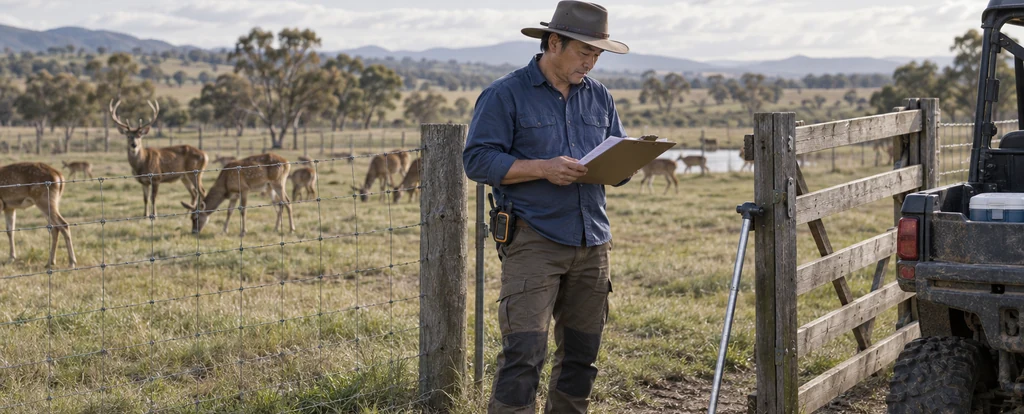
Deer farming happens on pasture-based properties, mostly in Victoria, South Australia, New South Wales and Tasmania. Farmed deer are run on pasture and handled in yards much like cattle or sheep, but they behave differently: they are flighty, they need taller fencing, and velvet antler removal is a surgical procedure carried out under veterinary supervision. Most deer farmers run the herd alongside another farm enterprise, because the venison and velvet markets are small.
How much do deer farmers earn?
The median full-time salary for a deer farmer is $75,400 per annum, before tax, up $16,000 since 2018.
Whether you own the herd or work for someone else changes earnings more than experience does in this job. Employees usually earn a salary with on-farm accommodation, while owner-operators take what venison and velvet prices leave after feed, fencing and processing costs. Because deer are often one enterprise on a mixed farm, income from cattle, sheep or cropping can matter as much as the deer.
What does a deer farmer do day to day?
The list below is what fills most weeks; the exact mix shifts with seniority and whatever stage the current work is at.
- Managing breeding herds, seasonal joining and calving
- Checking animal health, nutrition and pasture through the year
- Coordinating velvet antler harvest and venison processing with vets and abattoirs
- Maintaining fences, yards, water and handling facilities
- Keeping herd records and managing sales, transport and compliance
What skills do deer farmers need?
Employers look for animal care and handling, operations management, plant and equipment operation, backed by AgriWebb fluency and strong safety and compliance awareness.
Specialist skills
- Animal care and handling
- Operations management
- Plant and equipment operation
- Inventory management
- Budgeting and forecasting
Software and tools
- AgriWebb
- Xero
- Microsoft Excel
- NLIS database
General skills
- Safety and compliance awareness
- Physical stamina and dexterity
Is the job growing?
About 700 people work as deer farmers in Australia, and employment is projected to grow 1.2% over the decade to 2035. That's modest growth: demand is steady rather than booming.
How do you become a deer farmer?
Here's the path most deer farmers take, step by step.
- 1Get livestock experience
Most people come into deer farming from cattle, sheep or mixed farming, so time spent handling stock on any property is the foundation. Paid farm work, a school-based traineeship or helping on a family farm all count.
- 2Complete a qualification in agriculture
A Certificate III or IV in Agriculture with a livestock focus covers animal health, nutrition, pasture and farm business, and TAFE and agricultural colleges offer it over one to two years. It can be done while working on a farm, which is how many people take it on.
- 3Learn deer handling and antler harvest
Deer behave differently from cattle and sheep, and the yards, fencing and handling techniques are built around that. Velvet antler removal is a surgical procedure performed by a veterinarian or an accredited operator under veterinary supervision, so anyone planning to sell velvet needs training in it.
- 4Work on a deer farm or lease a herd
Because the industry is small, the practical route is to work for an established deer farmer, or to lease land and run deer alongside other stock. Share farming and leasing let you build a herd and a sales record without buying a property outright.
- 5Build the business side
A Diploma of Agriculture (AHC50122) or a farm business course helps with the budgeting, herd records and marketing that determine whether the enterprise pays. Venison and velvet sales go through a small number of processors and exporters, so relationships in that network carry weight.
Ready to apply as a deer farmer?
Whether you're working toward becoming a deer farmer or already are one and want a hand with the next step (sharpening your resume for ATS screening, tightening your cover letter, or knowing what you'll actually be asked at interview), here are examples grounded in this specific role, not generic templates.
What jobs can a deer farmer move to?
None of the roles deer farmers typically move into pay more than the role itself. Sheep Farmer is the closest match. If a bigger salary is the goal, moving up into a senior or principal position within the role is usually the faster route than moving sideways.
| Move to | Typical pay change | Overlap | Retraining |
|---|---|---|---|
| Sheep Farmer Sheep farming uses the same grazing, fencing and flock health skills, so deer farmers can move across with minimal retraining. | +$0 | 76% | minimal |
| Dairy Farmer Ruminant nutrition, herd health and breeding knowledge carry from deer to dairy farming, though milking routines need learning. | −$1,600 | 78% | minimal |
| Beef Cattle Farmer Deer farmers bring livestock husbandry, pasture management and animal health skills to beef cattle farming, with little retraining needed. | −$14,000 | 80% | minimal |
| Goat Farmer Small ruminant handling, browsing management and animal health skills transfer to goat farming, with minimal extra training. | −$15,600 | 70% | minimal |
Moves are chosen from Jobs and Skills Australia's Data on Occupation Mobility, which follows income tax records between 2011-12 and 2020-21, together with entry requirements and skill overlap. A known move is one people were seen making in that data. Pay change compares median full-time pay for the two roles.
Who works as a deer farmer?
The typical deer farmer is 51 years old; 74% are men, 84% work full-time, and full-timers average 46 hours a week.
- 51
- Median age
- 26%
- Female share
- 84%
- Full-time
- +6h
- vs all-jobs avg
What's it like being a deer farmer?
The year has a clear shape: calving and antler growth through spring and summer, velvet harvest in early summer, and venison sales through the cooler months. The work is physical and weather-dependent, and deer stress easily, so moving quietly and thinking a few steps ahead matter more than speed. It suits someone who is comfortable working alone or with a small team and who wants to run the commercial side of the herd as well as the animals.
What people like
- Animals you don't see on other farms. Deer are alert and quick, so handling them well takes real skill, and the herd work stays interesting because of it.
- Selling into premium markets. Venison and velvet antler go to restaurants, specialty butchers and export buyers, which gives the product a different character from commodity livestock.
- Running your own operation. Deer farming is usually owner-operated, so decisions about breeding, pasture and sales are yours and the returns from making them well come back to you.
- A small industry where people know each other. There are few deer farmers in Australia, so vets, processors and other growers tend to know one another and word travels quickly.
What people find hard
- Deer are difficult when something goes wrong. They stress easily and can injure themselves against fences, so a sick animal or a broken gate takes longer and needs more care than the same problem in a cattle herd.
- Fencing and yards cost more. Deer need taller, stronger fencing than sheep or cattle, plus handling facilities built for them, so setup and maintenance take a bigger share of the budget.
- A thin market with few buyers. Only a small number of processors and exporters handle venison and velvet, which leaves less room to shop around when prices or seasons turn.
- Income that moves with the season. Drought, feed prices and velvet prices all land on the same bottom line, and an owner-operator carries that risk directly.
Based on our synthesis of professional-body surveys and public accounts of the role, not first-person verified reviews.
Which industries employ deer farmers?
N/A employs the largest share of deer farmers, followed by N/A.
Top employing industries
- 1N/A
- 2N/A
- 3N/A
Ranked by employment share; the source doesn't publish an exact percentage per industry.
| Certificate III/IV | 34% | |
|---|---|---|
| Diploma / Advanced Diploma | 26% | |
| Bachelor degree | 20% | |
| Year 12 or below | 20% |
Will AI replace deer farmers?
Deer farming has low exposure to AI because almost all of the work happens with animals and land. Herd management software, NLIS records and farm accounting tools handle the paperwork and make that side quicker without changing what the job is. The decisions that matter, which paddock to graze, when to call a vet, how to move a mob quietly, still rest with the farmer.
Share of typical working time by exposure level
- Moving and handling deer in the yardsDeer read movement and body position, so drafting, drenching and loading stay hands-on work that software cannot do.30%low
- Feeding, pasture checks and animal healthPasture measurement and herd apps such as AgriWebb can log what you find, but deciding which paddock to graze or which hind needs the vet is a judgement made on the ground.30%low
- Fencing, water and yard maintenanceRepairing deer fencing and handling facilities is physical work, and there is no automation doing it on a farm of this size.25%low
- Herd records, sales and compliance paperworkNLIS entries, herd records and Xero bookkeeping can be sped up by software, and reporting tools will take on more of the compliance paperwork over time.15%moderate
Common questions about becoming a deer farmer
Straight answers to the questions people ask most.
How much do deer farmers earn?
Median full-time pay for deer farmers is $75,400 per year before tax, and that is a median across the role rather than a going rate. Ownership changes earnings more than experience does, because owner-operators carry the costs as well as the upside.
How do you become a deer farmer?
Most people come from cattle, sheep or mixed farming and add deer to what they already know. A Certificate III or IV in Agriculture gives the animal health and pasture background, and deer handling and velvet harvest skills are picked up on a farm or through the industry association.
Are deer farmers in demand?
Deer farmers are currently not in shortage, and employment is projected to grow 1.2% over the decade to 2035. The industry is very small, so openings are few and are usually filled through farming networks rather than advertised. Livestock experience counts for more than deer-specific knowledge when a position does come up.
Will AI replace deer farmers?
Little of this job is exposed to automation. Herd management software, NLIS records and accounting tools take some of the record keeping and compliance reporting, but the animals still need someone on the ground every day.
What else can a deer farmer do?
Sheep farming uses the same grazing, fencing and animal health skills, and pay is about the same. Dairy farming draws on the same ruminant nutrition and herd health knowledge, though milking routines are new, and pay is $1,600 less.
Do deer farmers own their own farms?
Deer farming is usually owner-operated, either on a property you buy or through a share-farming or leasing arrangement, and that is where earnings grow. Working as an employee on someone else's deer herd is less common, and those jobs often sit on mixed farms where deer are one enterprise.
Related roles
Not sure this is you? Take the career quiz and get a ranked shortlist of roles that fit how you like to work.