Home Manufacturing & Production
Gunsmith
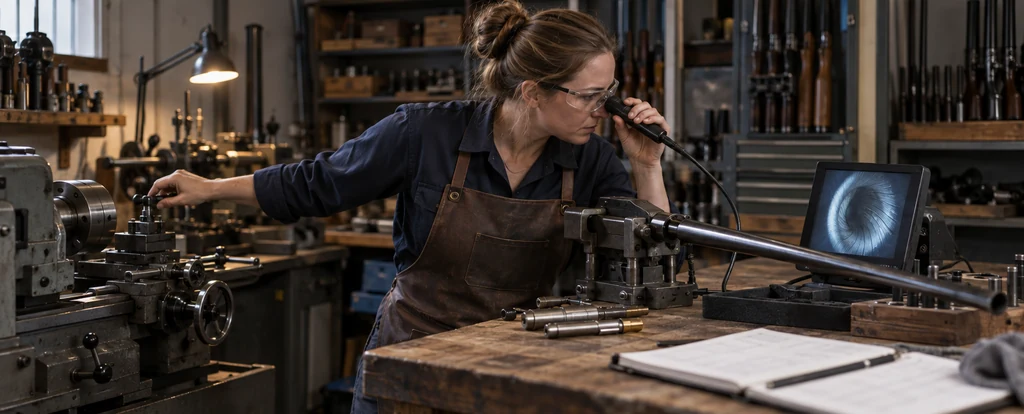
Gunsmiths maintain, repair and build firearms for licensed owners, machining and hand-fitting the parts that make a rifle or shotgun safe and accurate.
- Median salary*
- $70,200
3.8%vs last year, before tax
- People employed
- 170
15.0%vs last year
- Projected growth
- +8%
to 2035
- AI exposure*
- Low
- automation risk
- Average hours
- 44/wk
+4h vs all jobs
- Shortage status
- In shortage
national
Most gunsmiths work in small workshops attached to a gun shop or in specialist repair businesses, and a smaller number work in government or defence workshops. The trade overlaps with fitting and machining, but a gunsmith also has to know firearms law and keep records of every firearm that passes across the bench. The work is manual and precise, usually one firearm at a time rather than a production line.
How much do gunsmiths earn?
The median full-time salary for a gunsmith is $70,200 per annum, before tax, up $14,600 since 2018.
Pay depends heavily on where you work and how much of the work is your own. Gunsmiths employed in a retail gun shop or a repair workshop are usually covered by an award or enterprise agreement, while those who run their own workshop set their own prices and carry the cost of tooling, insurance and dealer fees. Government workshop roles often come with structured pay and conditions, and a gunsmith with a strong custom or restoration reputation can charge more for the time a job takes.
What does a gunsmith do day to day?
The list below is what fills most weeks; the exact mix shifts with seniority and whatever stage the current work is at.
- Diagnosing faults and wear in rifles, shotguns and handguns
- Machining and hand-fitting barrels, actions and other metal components
- Fitting, bedding and finishing timber or synthetic stocks
- Refinishing, repairing or replacing damaged or worn parts
- Recording serial numbers and checking firearms against state and territory licensing requirements
What skills do gunsmiths need?
Employers look for hand and power tool work, craft and handmade production, fabrication and finishing, backed by Metal lathe fluency and strong attention to detail.
Specialist skills
- Hand and power tool work
- Craft and handmade production
- Fabrication and finishing
- Regulatory compliance
Software and tools
- Metal lathe
- Milling machine
- Borescope
- Headspace gauges
- Firearms dealer record-keeping systems
General skills
- Attention to detail
- Problem solving
- Safety and compliance awareness
Is the job growing?
About 170 people work as gunsmiths in Australia, and employment is projected to grow 8% over the decade to 2035. That's modest growth: demand is steady rather than booming.
How do you become a gunsmith?
Here's the path most gunsmiths take, step by step.
- 1Finish Year 10 or Year 12
There is no single school subject that gets you in, but maths and any metalwork or design and technology subjects give you a head start. Most people enter as a school leaver through an apprenticeship rather than a degree.
- 2Start an engineering trades apprenticeship
The usual route is a Certificate III in engineering (mechanical trade) delivered as part of a paid apprenticeship, which takes about four years. Gunsmithing is a specialisation within that trade rather than a separate national qualification, and some TAFEs offer gunsmithing units or a gunsmithing stream, so check what is available in your state.
- 3Learn the firearms-specific work on the job
Barrel fitting and chambering, headspacing, action work and stock bedding are learned mostly under an experienced gunsmith, using a metal lathe, a milling machine, headspace gauges and a borescope. This is the part of the training that decides whether you can work unsupervised.
- 4Get your firearms licence and dealer approvals
You need a firearms licence to handle firearms, and a firearms dealer licence or equivalent approval to repair or trade in them commercially. Requirements, licence categories and record-keeping duties differ between states and territories, so check with your local police firearms registry before you start working.
- 5If you already hold a trade qualification
Fitters, machinists and toolmakers can often shorten the pathway by completing the firearms-specific units and the licensing requirements rather than a full apprenticeship. Employers still expect hands-on firearms experience, so a period working alongside a gunsmith is worth arranging.
Ready to apply as a gunsmith?
Whether you're working toward becoming a gunsmith or already are one and want a hand with the next step (sharpening your resume for ATS screening, tightening your cover letter, or knowing what you'll actually be asked at interview), here are examples grounded in this specific role, not generic templates.
What jobs can a gunsmith move to?
Moving into Metal Machinist typically comes with the biggest pay rise, worth $65,300 a year more on average.
| Move to | Typical pay change | Overlap | Retraining |
|---|---|---|---|
| Metal Machinist A gunsmith's precision machining and fitting of metal components carries into general machining work, though further training is needed. | +$65,300 | 33% | reskill |
| Engineering Patternmaker A gunsmith's precise shaping of metal and wood components suits patternmaking, with reskilling in pattern and mould production. | +$12,000 | 33% | reskill |
| Saw Doctor A gunsmith's metalworking and sharpening skills transfer to repairing and setting saws, with additional training in saw doctoring. | +$5,200 | 57% | reskill |
| Blacksmith A gunsmith's forging, heat treatment and metal shaping carry into blacksmithing, with further training in forge work. | +$2,600 | 46% | reskill |
| Toolmaker A gunsmith's fine fitting and assembly of small mechanisms suits toolmaking, with further training to make jigs and dies. | −$5,200 | 30% | requalify |
Moves are chosen from Jobs and Skills Australia's Data on Occupation Mobility, which follows income tax records between 2011-12 and 2020-21, together with entry requirements and skill overlap. A known move is one people were seen making in that data. Pay change compares median full-time pay for the two roles.
Who works as a gunsmith?
The typical gunsmith is 52 years old; 97% are men, 75% work full-time, and full-timers average 44 hours a week.
- 52
- Median age
- 3%
- Female share
- 75%
- Full-time
- +4h
- vs all-jobs avg
What's it like being a gunsmith?
Gunsmithing is bench work with a long attention span: a barrel fitting or a bedding job can take a full day, and the result is judged by how the firearm groups on the range. Most workshops are small, so the same person handles a quick spring replacement, a restoration and a full custom build. It suits someone who likes precision handwork, is patient with fiddly mechanisms, and is comfortable working alone for long stretches.
What people like
- Work you can measure at the range. A rifle that will not group gets re-crowned, bedded or re-barrelled, and the customer's first target tells you whether you got it right.
- One firearm at a time. Most workshops are not production lines, so you follow a job from the first diagnosis through to the finished repair rather than passing it down a line.
- Old and new firearms in the same week. A centrefire rifle, a shotgun with a worn action and a family heirloom each call on different skills, which keeps the bench work varied.
- Craft skills that hold their value. Hand fitting, stock work and restoration cannot be rushed, and customers seek out the gunsmiths who do them well.
What people find hard
- Paperwork on every firearm. Serial numbers, licences and dealer records have to be checked and updated for each firearm that comes in or leaves, and the rules differ by state and territory.
- Licensing rules that keep changing. Firearms law is set by each state and territory and can shift after reviews, so you need to keep up with what your customers are and are not allowed to own.
- Jobs that wait on parts. Barrels, springs and proprietary parts come from a small number of suppliers, so a firearm can sit on the rack for weeks while a part is on order.
- Expectations about accuracy and turnaround. Customers often want a rifle shooting well before a planned hunting trip, and not every worn firearm can be brought back to the standard they are hoping for.
Based on our synthesis of professional-body surveys and public accounts of the role, not first-person verified reviews.
Which industries employ gunsmiths?
Public Administration and Safety employs the largest share of gunsmiths, followed by Manufacturing.
Top employing industries
- 1Public Administration and Safety
- 2Manufacturing
- 3Construction
Ranked by employment share; the source doesn't publish an exact percentage per industry.
| Certificate III/IV | 64.2% | |
|---|---|---|
| Year 12 or below | 15% | |
| Diploma / Advanced Diploma | 11% | |
| Bachelor degree | 6.9% | |
| Postgraduate | 0% |
Will AI replace gunsmiths?
Gunsmithing rates low for AI exposure. The core of the job is hand fitting and judgement at the bench on one firearm at a time, and firearms law requires a licensed person to do and record the work. CNC machining, CAD for stock inletting, digital borescopes and laser engraving change how some tasks are done, but they still need a gunsmith to set them up and sign off the result.
Share of typical working time by exposure level
- Machining and hand-fitting metal componentsA CNC lathe or mill handles repetitive cutting faster than a manual machine, but chambering, headspacing and the final fit are still worked by hand against gauges.35%moderate
- Stock fitting, bedding and finishingCAD and CNC can rough out an inlet, but bedding a timber stock to a particular action is still done by hand with compound and chisels.25%low
- Diagnosing faults and wearA digital borescope shows throat erosion more clearly than the naked eye, yet deciding whether a barrel needs replacing comes down to experience.20%low
- Records and licensing paperworkDealer record-keeping systems and online registries already log serial numbers and check licences, which cuts the time spent on the paperwork.20%high
Common questions about becoming a gunsmith
Straight answers to the questions people ask most.
How much does a gunsmith earn?
Gunsmiths earn a median of $70,200 per year before tax, based on full-time earnings. Individual pay varies with experience, the state you work in and whether you run your own workshop, so treat the figure as a starting point rather than a ceiling.
How do you become a gunsmith?
The usual route is an engineering trades apprenticeship, typically a Certificate III in engineering (mechanical trade), with the firearms work learned on the job and followed by a firearms licence and dealer approval. Some TAFEs offer gunsmithing units or a gunsmithing stream, so check what your state provides. Expect about four years of paid training before you work unsupervised.
Are gunsmiths in demand?
Gunsmiths are currently in shortage nationally, and employment is projected to grow 8% over the decade to 2035 over the decade to 2035. Vacancies are usually filled through apprenticeships and word of mouth, so approaching workshops directly and asking about upcoming openings is worth doing.
Will AI replace gunsmiths?
Very little of this work is exposed to AI. Chambering, headspacing, bedding and finishing depend on feel and judgement at the bench, and firearms law requires a licensed person to carry out and record the repairs. CNC machining, CAD for stock inletting and digital borescopes speed up parts of the job, but a gunsmith still sets them up and checks the finished firearm.
Do you need a licence to work as a gunsmith?
Yes. You need a firearms licence to handle firearms and a firearms dealer licence or equivalent approval to repair or trade in them commercially. The requirements are set by each state and territory, and the record-keeping duties that come with the dealer licence are part of the daily work.
What can a gunsmith move into?
Gunsmiths who want more machining work can move into metal machinist roles, where the shared trade background covers much of the setup and pay is $65,300 more. Saw doctoring and engineering patternmaking suit gunsmiths who enjoy precision shaping and repair, and blacksmithing draws on the same forging and heat treatment skills. Running your own workshop is the other common path, and it is often where earnings grow.
Related roles
Not sure this is you? Take the career quiz and get a ranked shortlist of roles that fit how you like to work.