Hot Air Balloon Pilot
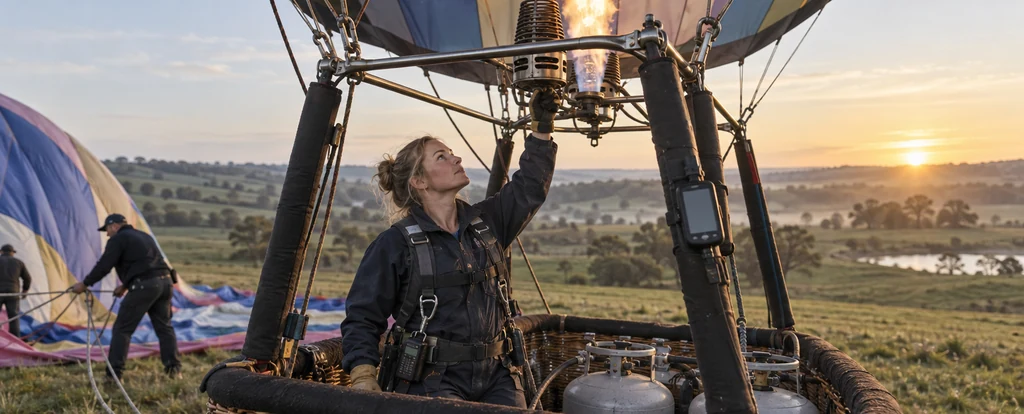
Hot air balloon pilots carry passengers on scenic flights, choosing an altitude to catch the wind that will take the balloon where they want it to go.
- Median salary*
- $88,400
3.9%vs last year, before tax
- People employed*
- 350
16.7%vs last year
- Projected growth*
- +5%
to 2035
- AI exposure*
- Low
- automation risk
- Average hours*
- 40/wk
matches all-jobs average
- Shortage status*
- Not in shortage
national
Most commercial balloon flying happens in the first hours after sunrise, when the air is calmest and the wind is light enough to launch. Pilots hold a commercial licence issued by the Civil Aviation Safety Authority and work for scenic flight operators in tourist regions, usually as part of a crew that inflates, chases and packs up the balloon. Unlike fixed-wing flying, a balloon has no powered steering, so the pilot works with altitude and wind direction instead.
How much do hot air balloon pilots earn?
The median full-time salary for a hot air balloon pilot is $88,400 per annum, before tax, up $18,400 since 2018.
How you are employed matters more here than in most flying jobs. A pilot who owns the balloon and the operator's certificate carries the business risk and keeps more of the flight revenue, while a line pilot is often paid per flight or per day, so a run of cancelled mornings shows up directly in the pay packet. Experience, the size of the operation, and whether you take on chief pilot or training duties all move the figure.
What does a hot air balloon pilot do day to day?
The list below is what fills most weeks; the exact mix shifts with seniority and whatever stage the current work is at.
- Checking the envelope, burner, fuel lines and basket before launch and recording the results
- Reading the morning forecasts and upper-level winds, then deciding whether the flight can go ahead
- Supervising the crew as they inflate the envelope and passengers climb into the basket
- Flying the planned route, changing altitude to catch winds that carry the balloon toward open landing sites
- Landing in a paddock or field and managing the pack-up, passenger disembarkation and recovery by trailer, which is where much of the physical work sits
What skills do hot air balloon pilots need?
Employers look for plant and equipment operation, operations management, backed by Garmin aviation GPS fluency and strong safety and compliance awareness.
Specialist skills
- Plant and equipment operation
- Operations management
Software and tools
- Garmin aviation GPS
- OzRunways
- Bureau of Meteorology weather services
- VHF aviation radio
General skills
- Safety and compliance awareness
- Customer service
- Attention to detail
- Written communication
- Problem solving
Is the job growing?
About 350 people work as hot air balloon pilots in Australia, and employment is projected to grow 5% over the decade to 2035. That's modest growth: demand is steady rather than booming.
How do you become a hot air balloon pilot?
Here's the path most hot air balloon pilots take, step by step.
- 1Check you can hold a CASA medical certificate
You need a current aviation medical before flying solo, so confirm this early: a condition that rules it out makes the rest of the training pointless.
- 2Complete student and private training with a balloon flying school
Training usually runs through a commercial operator that flies its own balloons, and covers air law, meteorology, navigation and balloon handling before your first solo flight.
- 3Build the flight hours CASA requires and pass the commercial licence exams and flight test
The commercial pilot licence (balloon) is the qualification that allows you to carry paying passengers, and it needs both theory exams and a practical test with an approved examiner.
- 4Start as a line pilot with a scenic flight operator
Most pilots begin by flying for an established operation, working the sunrise shift and learning local landing sites, weather patterns and crew management. The work is often casual or seasonal at first.
- 5If you want your own operation, apply for an air operator's certificate
Owning the business means holding an AOC from CASA and meeting its maintenance, safety and record-keeping requirements, which sits alongside the flying rather than replacing it.
Ready to apply as a hot air balloon pilot?
Whether you're working toward becoming a hot air balloon pilot or already are one and want a hand with the next step (sharpening your resume for ATS screening, tightening your cover letter, or knowing what you'll actually be asked at interview), here are examples grounded in this specific role, not generic templates.
What jobs can a hot air balloon pilot move to?
None of the roles hot air balloon pilots typically move into pay more than the role itself. Drone Pilot is the closest match. If a bigger salary is the goal, moving up into a senior or principal position within the role is usually the faster route than moving sideways.
| Move to | Typical pay change | Overlap | Retraining |
|---|---|---|---|
| Drone Pilot Balloon pilots bring airspace, weather and safety judgement, but need remote pilot licensing and uncrewed systems training to work as a drone pilot. | −$7,800 | 35% | reskill |
Moves are chosen from Jobs and Skills Australia's Data on Occupation Mobility, which follows income tax records between 2011-12 and 2020-21, together with entry requirements and skill overlap. A known move is one people were seen making in that data. Pay change compares median full-time pay for the two roles.
Who works as a hot air balloon pilot?
The typical hot air balloon pilot is 46 years old; 88% are men, 55% work full-time, and full-timers average 40 hours a week.
- 46
- Median age
- 12%
- Female share
- 55%
- Full-time
- +0h
- vs all-jobs avg
What's it like being a hot air balloon pilot?
The job has a distinctive rhythm: a pre-dawn start, a flight of about an hour, then packing up and washing the balloon while the day is still young. Conditions decide everything, so planning begins the night before and the final call often happens at the launch site. It suits people who are comfortable making a judgement and sticking with it, and who don't mind that a 4am start can end with the balloon still on the trailer.
What people like
- A working day that finishes early. Flights launch at first light and are usually over by mid-morning, so the afternoon is your own on the days the weather cooperates.
- Flying something you read rather than steer. A balloon has no steering, so the skill sits in judging altitude and wind direction. Pilots who enjoy that kind of problem tend to stay with it.
- Passengers on their first flight. Most people in the basket have never flown in a balloon before, and the reaction on landing is one of the rewards that keeps the job interesting.
- A small, well-connected industry. Balloon flying is a tiny corner of aviation, so operators and pilots tend to know each other and a good reputation travels quickly between them.
What people find hard
- Cancellations after an early start. The go or no-go call often happens at the launch site, so a pilot can be up at 4am with nothing to show for it, and when pay follows flights flown that morning earns nothing.
- The physical side. Rigging, inflating, chasing the balloon in a recovery vehicle and packing a large envelope are heavy work, and it happens before and after every flight.
- Responsibility you can't hand off. Once the balloon is airborne the pilot is responsible for the passengers, and there is no turning back or diverting to another airfield if conditions change.
- Work that follows the tourist season. Bookings cluster in the cooler months and the holiday periods, so a lot of the work is casual or seasonal rather than a steady full-time job.
Based on our synthesis of professional-body surveys and public accounts of the role, not first-person verified reviews.
Which industries employ hot air balloon pilots?
Scenic and sightseeing transport employs the largest share of hot air balloon pilots, followed by Tourism.
Top employing industries
- 1Scenic and sightseeing transport
- 2Tourism
- 3Transport support services
- 4Sports and recreation activities
Ranked by employment share; the source doesn't publish an exact percentage per industry.
| Certificate III/IV | 34% | |
|---|---|---|
| Diploma / Advanced Diploma | 26% | |
| Bachelor degree | 20% | |
| Year 12 or below | 20% |
Will AI replace hot air balloon pilots?
Balloon flying is a low-exposure job. Weather modelling, flight planning and record-keeping are software-assisted now, and operators use booking and rostering systems to fill the sunrise slots, but none of that flies the balloon. Inflation, launch, the burner, the search for a landing site and the pack-up are hands-on work in conditions that change hour to hour.
Share of typical working time by exposure level
- Flying the balloon and looking after passengersThe pilot watches the burner, altitude, airspace and the people in the basket at the same time, adjusting to the wind actually found rather than the one forecast.35%low
- Inflating, launching and ground handlingRigging the envelope, running the fan and burner, and holding the balloon steady while passengers climb in are physical jobs that need people on the ground.25%low
- Weather assessment and the go/no-go decisionForecast models and Bureau of Meteorology data do the number-crunching, but the call to launch, delay or cancel at the site is a human judgement about wind at altitude and the landing options it leaves.20%moderate
- Landing, pack-up and post-flight recordsChoosing a field, briefing passengers for a bumpy landing and deflating and packing the envelope are hands-on, though the log entries and paperwork that follow are increasingly digital.20%moderate
Common questions about becoming a hot air balloon pilot
Straight answers to the questions people ask most.
How much do hot air balloon pilots earn?
Balloon pilots earn a median of $88,400 per year before tax, but that figure hides a wide spread because many are paid per flight or per day rather than on a salary. Owning the balloon and the operator's certificate usually pays more than flying as a line pilot, and the number of flights you get across a season matters more than hours on a roster.
How do you become a hot air balloon pilot?
You train through a CASA-approved balloon flying school, hold a current aviation medical, and pass the theory exams and flight test for a commercial pilot licence (balloon). Because balloons need a ground crew, plenty of people start by crewing for a local operator, which is a practical way to see the work before committing to training costs.
Are hot air balloon pilots in demand?
Balloon pilots are currently not in shortage, and employment is projected to grow 5% over the decade to 2035 over the decade to 2035. The occupation is very small, with about 350 pilots nationwide, so openings tend to come from operators expanding or replacing pilots who retire rather than from steady turnover.
Will AI or automation replace balloon pilots?
Not in any direct sense, because this is a low-exposure job. Software already handles weather modelling, flight planning and passenger bookings, but inflating, flying and landing a balloon is manual work governed by hot air and wind. The decision about whether to fly at all stays with the pilot and the operator.
What can a hot air balloon pilot move into?
Some move into drone flying, where airspace and weather judgement carries over, though a remote operator licence and uncrewed systems training are needed before you can work commercially. Others stay in the industry and eventually run their own operation: owning the balloon and holding an air operator's certificate from CASA is often where earnings grow, since you take on the business risk and the flight revenue together.
Related roles
- Drone Pilot
- Railway Station Assistant
- Transport Conductor
- Helicopter Pilot
- Airport Ground Crew
- Taxi Driver
Not sure this is you? Take the career quiz and get a ranked shortlist of roles that fit how you like to work.