ROV Pilot
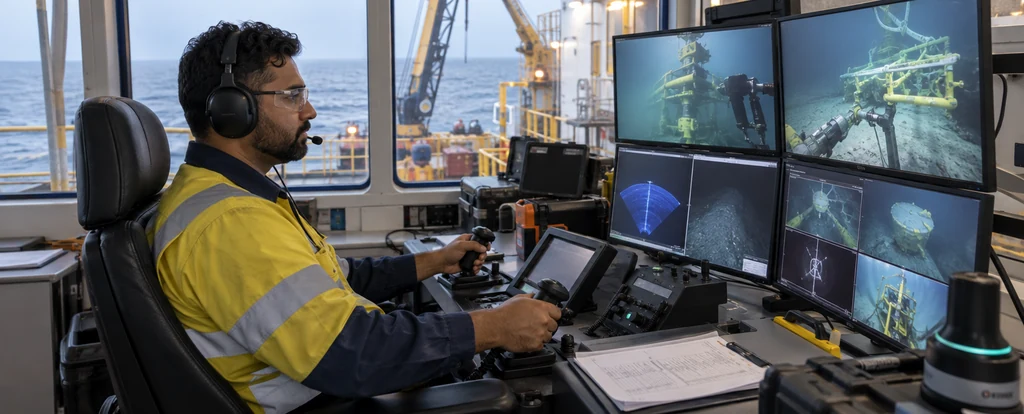
ROV pilots fly remotely operated underwater vehicles to inspect, maintain and repair subsea equipment that people cannot reach.
- Median salary*
- $135,200
3.8%vs last year, before tax
- People employed*
- 800
0.0%vs last year
- Projected growth*
- +5%
to 2035
- AI exposure*
- Moderate
- automation risk
- Average hours*
- 44/wk
+4h vs all jobs
- Shortage status*
- Not in shortage
national
Most ROV pilots work offshore from support vessels or platforms, flying vehicles down to pipelines, wellheads and aquaculture gear on a rotation, and they stay dry in a control cabin rather than diving. The occupation is small, about 800 people in Australia, and sits mainly in oil and gas, marine survey, aquaculture and defence, usually working for a specialist subsea contractor rather than the company that owns the asset.
How much do rov pilots earn?
The median full-time salary for an rov pilot is $135,200 per annum, before tax, up $28,000 since 2018.
ROV pilot pay moves with the roster and the sector, and offshore oil and gas rotations and specialist deepwater work pay more than inshore survey, aquaculture or research roles. Contractors often quote day rates that look high because they carry their own leave, insurance and gaps between projects, while staff roles trade some of that for paid leave and super. The vehicle class you are signed off to fly, and whether you supervise other pilots, also shift what you are paid.
What does an rov pilot do day to day?
The list below is what fills most weeks; the exact mix shifts with seniority and whatever stage the current work is at.
- Flying the vehicle along a pipeline or around a platform structure, holding it steady against current while the cameras record
- Running pre-dive checks on thrusters, hydraulics, sonar and cameras, and logging the results before launch
- Working the manipulator arm to cut, clean, turn a valve or place tooling on subsea equipment
- Tracking the vehicle with acoustic positioning and recording video and sensor data for the engineering report
- Servicing the vehicle between dives, fault finding on electronics and hydraulics, and swapping out failed components
What skills do rov pilots need?
Employers look for operations management, plant and equipment operation, field inspection and testing, backed by Schilling Robotics manipulator controls fluency and strong attention to detail.
Specialist skills
- Operations management
- Plant and equipment operation
- Field inspection and testing
- Installation and maintenance
Software and tools
- Schilling Robotics manipulator controls
- Saab Seaeye ROV systems
- Sonar and multibeam software
- USBL tracking systems
- Video recording and reporting software
General skills
- Attention to detail
- Problem solving
- Time and deadline management
- Safety and compliance awareness
Is the job growing?
About 800 people work as rov pilots in Australia, and employment is projected to grow 5% over the decade to 2035. That's modest growth: demand is steady rather than booming.
How do you become an rov pilot?
Here's the path most rov pilots take, step by step.
- 1Build a technical base
Most ROV pilots arrive with a certificate or diploma in electronics, instrumentation or mechanical fitting, or a degree in engineering or marine science. A bachelor degree is the most common single qualification held by people in the job, at about 38% of the current workforce.
- 2Get offshore-ready
Offshore work requires a current offshore medical and safety and survival training, usually the Basic Offshore Safety Induction and Emergency Training or its refresher, plus a seafarer's certificate if you work from a vessel. Employers arrange some of this, but many people complete it themselves so they are ready to hire.
- 3Start in the workshop
ROV technician roles onshore involve building, servicing and testing vehicles and their tooling, often in a workshop with a test tank. It is the usual paid way in for people without offshore experience, and it teaches you the vehicle before you fly it.
- 4Move offshore as a trainee pilot
Junior pilots start on simple work such as flying a survey line or a camera run, then progress to manipulator tasks and intervention work under supervision. Operators build up your flying time gradually, and the log of hours and task types follows you between employers.
- 5Specialise and move up
Experienced pilots move into senior pilot, offshore supervisor or project management roles, or specialise in work-class vehicles, subsea tooling or survey sensors. Manufacturer courses for particular vehicles are common at this stage.
Ready to apply as an rov pilot?
Whether you're working toward becoming an rov pilot or already are one and want a hand with the next step (sharpening your resume for ATS screening, tightening your cover letter, or knowing what you'll actually be asked at interview), here are examples grounded in this specific role, not generic templates.
What jobs can an rov pilot move to?
None of the roles rov pilots typically move into pay more than the role itself. Automation Technician is the closest match. If a bigger salary is the goal, moving up into a senior or principal position within the role is usually the faster route than moving sideways.
| Move to | Typical pay change | Overlap | Retraining |
|---|---|---|---|
| Automation Technician ROV pilot brings remote control and electrohydraulic skills to automation and process control systems, though further study is needed. | −$36,400 | 41% | reskill |
| Instrumentation Technician ROV pilot brings sensor, calibration and control loop experience to instrumentation work, but an apprenticeship is required. | −$36,400 | 32% | requalify |
| Marine Engine Driver ROV pilot brings offshore maritime awareness and machinery knowledge to marine engine driving, with a short course covering the licence. | −$36,400 | 55% | short course |
| Electronics Technician ROV pilot brings subsea electronics fault finding and maintenance skills to electronics technician work, but a trade qualification is required. | −$58,200 | 31% | requalify |
| Calibration Technician ROV pilot brings instrument testing and calibration discipline to calibration technician work, with a short course filling the gap. | −$59,800 | 55% | short course |
Moves are chosen from Jobs and Skills Australia's Data on Occupation Mobility, which follows income tax records between 2011-12 and 2020-21, together with entry requirements and skill overlap. A known move is one people were seen making in that data. Pay change compares median full-time pay for the two roles.
Who works as an rov pilot?
The typical rov pilot is 38 years old; 90% are men, 88% work full-time, and full-timers average 44 hours a week.
- 38
- Median age
- 10%
- Female share
- 88%
- Full-time
- +4h
- vs all-jobs avg
What's it like being an rov pilot?
ROV piloting is a technical offshore job built around long swings at sea and long blocks of leave at home. The work is precise, because you are flying an expensive vehicle in poor visibility while engineers on the surface wait on what your cameras show. It suits people who like machinery, fault finding and a small team, and who are comfortable with rosters rather than a weekly routine.
What people like
- You see work no one else can. The camera feed is often the only view of a pipeline, a wellhead or a wreck, and you are the one holding the vehicle steady to get a usable picture.
- Hands-on and technical in the same week. One shift might be electronics fault finding in the workshop and the next precision flying on the seabed, so the job rarely sits in a single lane.
- Long blocks of leave. Offshore rotations usually mean weeks on a vessel followed by weeks off, which suits people who want whole months at home rather than a day or two a fortnight.
- Clear steps up. The path from technician to pilot to senior pilot or supervisor is well worn, and senior pilots take on the harder jobs and bring trainees through them.
What people find hard
- Rotations take you away. A four or five week swing offshore is normal, and it means missing birthdays, school events and ordinary weeks at home.
- Weather and standby. Swell and wind can stop the job for days while the crew stays on station, so a fair share of offshore time is spent waiting for conditions to come good.
- Mistakes are costly. Damage to a vehicle or to the equipment you are working on can stop a project, so the flying is careful and closely watched by everyone on the bridge.
- Night shifts and screen fatigue. Shifts run around the clock when a job is live, and long spells in a dark cabin watching several screens is a real part of the work.
Based on our synthesis of professional-body surveys and public accounts of the role, not first-person verified reviews.
Which industries employ rov pilots?
Oil and gas extraction employs the largest share of rov pilots, followed by Professional, scientific and technical services.
Top employing industries
- 1Oil and gas extraction
- 2Professional, scientific and technical services
- 3Aquaculture
- 4Defence
- 5Water transport
Ranked by employment share; the source doesn't publish an exact percentage per industry.
| Bachelor degree | 38% | |
|---|---|---|
| Diploma / Advanced Diploma | 24% | |
| Certificate III/IV | 20% | |
| Postgraduate | 10% | |
| Other | 8% |
Will AI replace rov pilots?
ROV piloting sits in the middle: navigation, positioning and data handling are increasingly automated, while the physical intervention work is not. Station-keeping software, multibeam and sonar processing, and USBL tracking do much of the holding and measuring, but a pilot still reads the current, decides how to approach a structure and works the manipulator by hand. Autonomous vehicles now fly some survey lines, which changes how many pilots a survey spread needs rather than removing the role.
Share of typical working time by exposure level
- Flying the vehicle and holding station on a targetStation-keeping software and autopilot hold the vehicle in position, but the pilot still judges the approach and reads the current when the vehicle drifts near a structure.35%moderate
- Pre-dive checks, servicing and fault findingDiagnostic software flags failed thrusters and sensor faults, but tracing an intermittent fault in a wet junction box is still a hands-on job.25%moderate
- Manipulator and tooling interventionTurning a valve or placing a clamp with a robotic arm is still done by hand from the control cabin, and the feel for it comes with hours on the sticks.20%low
- Recording and reporting on video and sensor dataSoftware can log, time-stamp and partly tag footage against a survey line, though the pilot is still the one explaining what the inspection actually found.20%high
Moves least exposed to AI
These career moves from rov pilot work are rated low for AI exposure:
- Marine Engine Driver
Solid skill overlap (55%), short course to get there, and a low automation-risk profile.
Common questions about becoming an rov pilot
Straight answers to the questions people ask most.
How much does an ROV pilot earn?
$135,200 per annum, before tax, is the median for full-time ROV pilots in Australia. Offshore oil and gas rotations, deepwater work and supervisor roles sit at the upper end, while inshore survey, aquaculture and research work tends to pay less, so treat the figure as a guide rather than a fixed rate.
How do I become an ROV pilot?
Most people enter through a technical background in electronics, instrumentation or mechanical fitting, then take an ROV technician job onshore before moving offshore as a trainee pilot. An offshore medical and safety and survival training are needed before you can join a vessel, and flying hours are built up on the job under supervision.
Are ROV pilots in demand?
ROV pilots are currently not in shortage, and employment is projected to grow 5% over the decade to 2035. The occupation is small, so hiring runs through a handful of specialist subsea contractors rather than large advertised intakes, and offshore experience is what those contractors look for.
Will AI replace ROV pilots?
It is already sharing parts of the job rather than replacing the pilot. Station-keeping, sonar processing and video logging are increasingly handled by software, and autonomous vehicles take on some survey runs, but intervention tasks and fault finding on a live vehicle still need someone at the controls. The role is moderately exposed: the flying is partly automated, the hands-on work much less so.
What other jobs can an ROV pilot move into?
The closest moves ashore are into calibration, instrumentation and electronics technician roles, which share the testing and fault-finding side of the work, or into automation technician work if you add study in control systems. Pay usually drops on the way out, with calibration technician roles paying $59,800 less and electronics technician roles $58,200 less. Marine engine driving is another option for people who want to stay around vessels, with a short course covering the licence.
What are the hours and rosters like?
Full-time ROV pilots average 44 hours a week, but offshore work is rostered rather than weekly, commonly a few weeks on a vessel followed by a few weeks off. Shifts run around the clock when a job is live, so night work is part of the pattern.
Related roles
- Automation Technician
- Instrumentation Technician
- Electronics Technician
- Calibration Technician
- Marine Engine Driver
- Calibration Technician
Not sure this is you? Take the career quiz and get a ranked shortlist of roles that fit how you like to work.