Pool Builder
A pool builder takes a backyard from excavation to a finished, fenced swimming pool that is ready to fill.
- Median salary*
- $83,200
4.3%vs last year, before tax
- People employed
- 1,400
0.0%vs last year
- Projected growth*
- +4%
to 2035
- AI exposure*
- Low
- automation risk
- Average hours*
- 42/wk
+2h vs all jobs
- Shortage status*
- Not in shortage
national
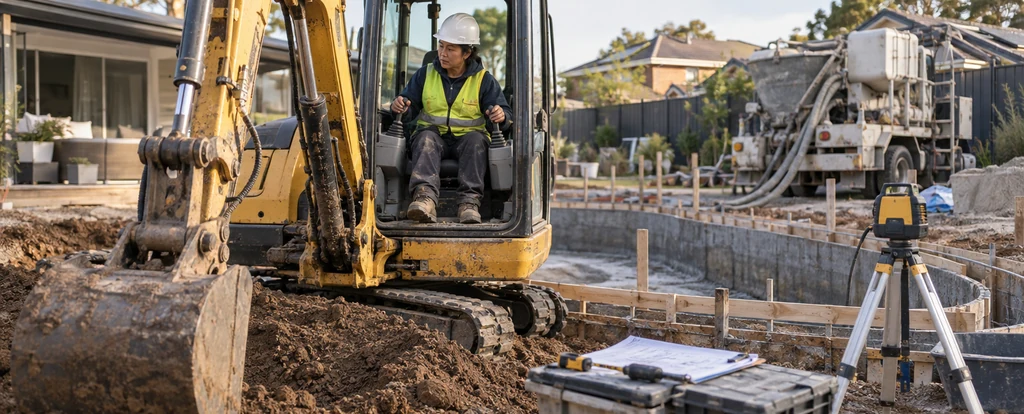
Pool builders work outdoors on residential backyards, and occasionally on commercial or strata projects. They run the whole job rather than a single trade: excavating the hole, setting steel and plumbing, spraying the shell and finishing the interior, while coordinating the electricians, fencers and concreters working around them. Many work for a specialist pool company and others run their own small building business, and the work is construction rather than servicing, since a pool technician looks after water quality once a pool is up and running.
How much do pool builders earn?
The median full-time salary for a pool builder is $83,200 per annum, before tax, up $17,500 since 2018.
How you work shapes pay more than anything else here: wages as an employee of a pool company sit differently from the margin on your own jobs, which is why many in the trade move into running their own business once they are registered. Project size and complexity matter too, and since registration is handled state by state, what you are allowed to contract for affects what you can charge.
What does a pool builder do day to day?
The list below is what fills most weeks; the exact mix shifts with seniority and whatever stage the current work is at.
- Reading the plans, checking levels and setting the pool out on site
- Excavating the shell and trimming the base to the right profile
- Fixing steel reinforcement and running the plumbing and filtration lines
- Spraying the shotcrete shell or setting a fibreglass mould, then finishing the interior
- Commissioning the pump, filter, fencing and safety barriers before handover
What skills do pool builders need?
Employers look for reading plans and specifications, worksite safety management, installation and maintenance, backed by Pool Studio fluency and strong problem solving.
Specialist skills
- Reading plans and specifications
- Worksite safety management
- Installation and maintenance
- Building codes and standards
- Quoting and estimating
- Hand and power tool work
Software and tools
- Pool Studio
- SketchUp
- Laser level
- Excavator
- Shotcrete rig
General skills
- Problem solving
Is the job growing?
About 1,400 people work as pool builders in Australia, and employment is projected to grow 4% over the decade to 2035. That's modest growth: demand is steady rather than booming.
How do you become a pool builder?
Here's the path most pool builders take, step by step.
- 1Get your White Card and some site experience
The general construction induction card is required before you can work on a building site in any state, and it is the quickest way in. Labouring for a pool company or concreter shows you whether you like the work before you commit to a qualification.
- 2Complete a trade qualification
Most pool builders come through an apprenticeship in carpentry, concreting or landscape construction at Certificate III level, which takes about three to four years and is paid work.
- 3Add the pool-specific study
A Certificate IV in Swimming Pool and Spa Building (CPC40820) covers pool hydraulics, water treatment and the structural requirements that separate a pool shell from other concrete work. TAFE colleges and some private providers deliver it, and it can be done while you are working.
- 4Get registered or licensed in your state
Builder and tradesperson registration is administered by state regulators, and the classes of work you may contract for differ between them. Check the requirements in your state before you quote on a job.
- 5Build a portfolio of completed pools
Clients and employers want to see finished jobs, so photographs, references and a list of the pools you have run help you move into better paid work or set up on your own with the insurance and entity structure that requires.
Ready to apply as a pool builder?
Whether you're working toward becoming a pool builder or already are one and want a hand with the next step (sharpening your resume for ATS screening, tightening your cover letter, or knowing what you'll actually be asked at interview), here are examples grounded in this specific role, not generic templates.
What jobs can a pool builder move to?
Moving into Concreter typically comes with the biggest pay rise, worth $31,700 a year more on average.
| Move to | Typical pay change | Overlap | Retraining |
|---|---|---|---|
| Concreter Pool builders bring concrete forming and finishing skills to concreting work, needing only a short course to specialise. | +$31,700 | 54% | short course |
| Steel Erector Pool builders already handle steel reinforcement and structural framing, so they can move into steel erection with minimal retraining. | +$5,200 | 64% | minimal |
Moves are chosen from Jobs and Skills Australia's Data on Occupation Mobility, which follows income tax records between 2011-12 and 2020-21, together with entry requirements and skill overlap. A known move is one people were seen making in that data. Pay change compares median full-time pay for the two roles.
Who works as a pool builder?
The typical pool builder is 42 years old; 98% are men, 80% work full-time, and full-timers average 42 hours a week.
- 42
- Median age
- 2%
- Female share
- 80%
- Full-time
- +2h
- vs all-jobs avg
What's it like being a pool builder?
The job runs in stages, so the week changes with the project: heavy machine work and concrete early on, then finer finishing and inspection pressure as handover approaches. Weather, soil and site access set the pace more than any schedule does, and clients who have committed a large sum to their backyard want to see progress. People who enjoy it tend to like being outdoors, running their own sequence of trades, and having something visible to show at the end of a job.
What people like
- You see the finished job. A pool goes from a hole in the ground to something a household uses every summer, and you are the one who ran it from start to finish.
- The work changes stage by stage. The week moves between machine work, steel, plumbing, spraying and finishing, so the job rarely sits in one gear for long.
- Running your own sequence. Once registered, many take on their own projects and choose the jobs they want, rather than working under someone else's schedule.
- Working outdoors and independently. Most of the day is spent on site with a small crew or on your own, which suits people who would rather not be in an office.
What people find hard
- Weather sets the schedule. Rain can turn an excavation into a bog and push a whole job back, and that lost time is hard to make up because the next stage cannot start until the ground is right.
- You depend on other trades. Electricians, fencers and concreters all have to be booked in the right order, and a delay from any of them holds up your handover.
- Pressure in the final weeks. Clients have paid a lot for a backyard they can already picture, so the finishing and commissioning stage brings close inspection and plenty of questions.
- Hard on the body. Excavation, steel fixing and spraying shotcrete are physical work done mostly in the open, in summer heat and winter cold.
Based on our synthesis of professional-body surveys and public accounts of the role, not first-person verified reviews.
Which industries employ pool builders?
Residential building construction employs the largest share of pool builders, followed by Specialised building construction services.
Top employing industries
- 1Residential building construction
- 2Specialised building construction services
- 3Landscape construction services
- 4Building completion and trades services
Ranked by employment share; the source doesn't publish an exact percentage per industry.
| Certificate III/IV | 34% | |
|---|---|---|
| Diploma / Advanced Diploma | 26% | |
| Bachelor degree | 20% | |
| Year 12 or below | 20% |
Will AI replace pool builders?
Pool building is grounded in the physical site, so the exposure is low: excavation, steel fixing, shotcrete spraying and handover inspections depend on ground conditions in a backyard that no software can read. Design and quoting tools such as Pool Studio and SketchUp have sped up the drawing and pricing stage, and machine guidance helps operators hold levels, but these change how parts of the job are prepared rather than who builds the pool.
Share of typical working time by exposure level
- Steel fixing, plumbing and shotcreting the shellThe reinforcement cage, pipework and sprayed shell are placed and finished by hand, and every pool's shape and ground conditions differ.35%low
- Setting out levels and excavatingMachine guidance and laser levels help an operator dig to the right depth, but rock, soil and backyard access decide how the digging actually goes.25%low
- Finishing, water treatment and handoverInterior finishes are applied by hand, and the builder walks the client through the equipment and the safety barrier before the pool is signed off.25%low
- Design, drafting and quotingPool Studio and SketchUp turn a client brief into a 3D pool and a materials list in hours, though the builder still checks the design against the site and the local rules.15%moderate
Common questions about becoming a pool builder
Straight answers to the questions people ask most.
How much does a pool builder earn?
Pool builders earn a median of $83,200 per year before tax. That figure covers full-time workers and moves with whether you are employed or running your own jobs, the size of the projects and the state you work in. Building your own client base is usually where earnings grow.
How do you become a pool builder?
Most come through a construction trade apprenticeship, then add a Certificate IV in Swimming Pool and Spa Building (CPC40820) and registration in their state. The White Card comes first, and site experience with a pool company or concreter helps you get taken on. Because registration is handled by state regulators, the requirements and the work you can contract differ around the country.
Are pool builders in demand?
Pool builders are currently not in shortage, and employment is projected to grow 4% over the decade to 2035 over the decade to 2035. About 1,400 people work in the occupation, and the work follows new housing, renovations and backyard upgrades rather than population growth, so demand rises and falls with building activity in your area. Being registered and able to run a job end to end keeps you employable when things slow down.
Will AI replace pool builders?
Automation has little reach into the physical side of the job: excavation, steel fixing, shotcreting and handover checks happen on site with materials and ground that vary from one backyard to the next. Design and quoting software has changed how pools are drawn and priced, and machine guidance helps with levels and digging, but someone still runs the machine and judges the conditions. The skills tied to the site are the ones that hold their value.
What can a pool builder move into?
Concreting is a good fit and pays $31,700 more a year, because the forming and finishing skills carry straight across and only a short course is needed to specialise. Steel erection pays $5,200 more a year and needs minimal retraining, since reinforcement and structural framing overlap with the work you already do. Landscapers and waterproofers move the other way into pool building, and many in this trade eventually run their own business.
Do I need a licence to build a pool?
In most states you need builder or tradesperson registration before you can contract for pool construction, and each state runs its own scheme. The class of licence you hold decides the type and value of work you can take on. Check with your state regulator before you quote on a job.
Related roles
Not sure this is you? Take the career quiz and get a ranked shortlist of roles that fit how you like to work.