Poultry Farmer
Poultry farmers raise chickens, turkeys and ducks for meat and eggs, running the sheds, feed and biosecurity that keep a flock healthy and production on schedule.
- Median salary*
- $78,000
3.9%vs last year, before tax
- People employed
- 2,600
0.0%vs last year
- Projected growth
- +1.2%
to 2035
- AI exposure*
- Moderate
- automation risk
- Average hours
- 49/wk
+9h vs all jobs
- Shortage status
- Not in shortage
national
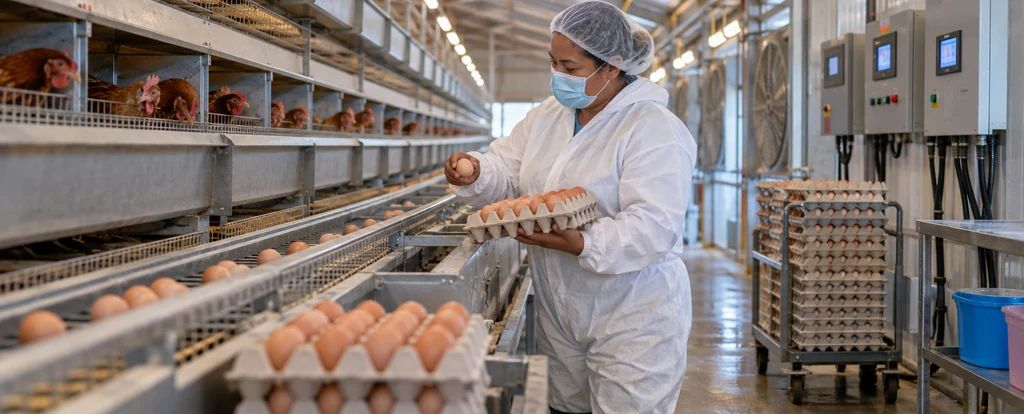
Poultry farming happens in sheds rather than paddocks. A broiler farm grows birds under contract for a meat processor, while an egg farm keeps hens laying for retailers, and in both cases a whole farm's output sits in a handful of climate-controlled buildings. Many poultry farmers own or lease the farm and grow birds on a processor contract, which is the main difference from a general farm hand who handles stock without carrying responsibility for how the flock performs.
How much do poultry farmers earn?
The median full-time salary for a poultry farmer is $78,000 per annum, before tax, up $16,200 since 2018.
Pay depends heavily on whether you own the farm or work for someone else. Owner-operators on a processor contract are paid per bird or per kilogram grown, so income tracks performance, feed costs and the price set in the contract rather than a weekly wage, while farm managers and supervisors earn a salary. Overtime and weekend loadings are common because the flock is checked every day, and on-farm housing often forms part of the package in remote locations.
What does a poultry farmer do day to day?
The list below is what fills most weeks; the exact mix shifts with seniority and whatever stage the current work is at.
- Walking the sheds each day to check feed, water and bird behaviour
- Catching and handling birds for vaccination, weighing or transfer
- Collecting, grading and packing eggs, or preparing birds for the processor
- Running and servicing feeders, drinkers and ventilation equipment
- Recording mortality, feed use and treatments for the processor or regulator
What skills do poultry farmers need?
Employers look for animal care and handling, operations management, plant and equipment operation, backed by Xero fluency and strong people leadership.
Specialist skills
- Animal care and handling
- Operations management
- Plant and equipment operation
- Worksite safety management
- Inventory management
- Supply chain planning
Software and tools
- Xero
- AgriWebb
- Farmbrite
- Automatic feeding systems
- Climate control systems
General skills
- People leadership
Is the job growing?
About 2,600 people work as poultry farmers in Australia, and employment is projected to grow 1.2% over the decade to 2035. That's modest growth: demand is steady rather than booming.
How do you become a poultry farmer?
Here's the path most poultry farmers take, step by step.
- 1Get paid work on a poultry farm
Most poultry farmers start as farm hands, and no formal qualification is needed to begin. Daily shed checks, feeding and bird handling teach the routines that supervision later depends on.
- 2Take a Certificate III in Poultry Production or Agriculture
Registered training organisations deliver these courses, which cover bird husbandry, shed management, biosecurity and machinery. They are not mandatory, but they count when you apply for supervisor or manager roles.
- 3Add the licences and qualifications the farm uses
A forklift licence, chemical user accreditation for cleaning and pest control, and first aid are common requirements. Every farm also runs its own biosecurity induction, which you complete before entering a shed.
- 4Learn the business side, not just the birds
Feed conversion, bird weights, contract terms and budgets decide whether a farm makes money. A diploma in agriculture or agribusiness helps if you are heading for management or ownership.
- 5Move into management or contract growing
Farm managers run sheds, staff and compliance for an owner, while contract growers provide the sheds, labour and utilities and are paid by the processor for the birds grown. Contract growing usually needs capital or a loan, so most people manage a farm first.
Ready to apply as a poultry farmer?
Whether you're working toward becoming a poultry farmer or already are one and want a hand with the next step (sharpening your resume for ATS screening, tightening your cover letter, or knowing what you'll actually be asked at interview), here are examples grounded in this specific role, not generic templates.
What jobs can a poultry farmer move to?
Moving into Bulk Materials Handling Operator typically comes with the biggest pay rise, worth $28,100 a year more on average.
| Move to | Typical pay change | Overlap | Retraining |
|---|---|---|---|
| Bulk Materials Handling Operator Feed and litter handling, machinery operation and safety skills transfer to bulk materials handling with a short course. | +$28,100 | 71% | short course |
| Pig Farmer Poultry farmers bring livestock husbandry, biosecurity and shed management to pig production, requiring only minimal adjustment. | −$4,200 | 70% | minimal |
| Dairy Farmer Stock handling, feed management and animal health practices transfer to dairy farming with minimal retraining. | −$4,200 | 62% | minimal |
| Orchardist Farm management, irrigation and seasonal labour coordination skills transfer to orchard production with minimal retraining. | −$5,200 | 68% | minimal |
| Beef Cattle Farmer Poultry farmers apply animal health, pasture management and farm operations skills to beef cattle production. | −$16,600 | 65% | minimal |
Moves are chosen from Jobs and Skills Australia's Data on Occupation Mobility, which follows income tax records between 2011-12 and 2020-21, together with entry requirements and skill overlap. A known move is one people were seen making in that data. Pay change compares median full-time pay for the two roles.
Who works as a poultry farmer?
The typical poultry farmer is 46 years old; 72% are men, 81% work full-time, and full-timers average 49 hours a week.
- 46
- Median age
- 28%
- Female share
- 81%
- Full-time
- +9h
- vs all-jobs avg
What's it like being a poultry farmer?
The job runs on a daily cycle rather than a seasonal one, because birds need feeding and checking every day of the year. The sheds set the pace: a ventilation fault or a disease outbreak can undo weeks of work, so noticing small changes matters more than big gestures. It suits people who like practical routine, machinery and animals, and who are content working alone or with a small team.
What people like
- Results you can see. A flock that hits its weight or laying target at the end of a cycle reflects the feed, ventilation and hygiene decisions you made weeks earlier.
- Hands-on work with animals. Most of the day is spent in the sheds and around the machinery rather than at a desk, and the feedback from the flock is immediate.
- A predictable rhythm. Batch cycles, feed deliveries and vaccination rounds are planned well ahead, which makes it easier to organise staff and time off.
- Contract growing removes the selling. On a processor contract the company supplies the birds and feed and collects them, so you focus on growing rather than finding a market.
What people find hard
- The birds do not take holidays. Full-time poultry farmers average around 49 hours a week, and the daily rounds happen every day, including weekends and public holidays.
- Biosecurity leaves little room for visitors. Shower-in, restricted entry and clean footwear are standard, and a casual visitor or a shared vehicle can put an entire flock at risk.
- Margins are set elsewhere. Feed is the largest cost and contract prices are set by the processor, so a lean year is often outside the farmer's control.
- One outbreak can empty a shed. Disease or a heat failure can kill or force the culling of a whole batch, which is both an animal welfare and a financial blow.
Based on our synthesis of professional-body surveys and public accounts of the role, not first-person verified reviews.
Which industries employ poultry farmers?
Agriculture, Forestry and Fishing employs the largest share of poultry farmers, followed by Manufacturing.
Top employing industries
- 1Agriculture, Forestry and Fishing
- 2Manufacturing
Ranked by employment share; the source doesn't publish an exact percentage per industry.
| Year 12 or below | 47.7% | |
|---|---|---|
| Certificate III/IV | 22.1% | |
| Bachelor degree | 12.1% | |
| Diploma / Advanced Diploma | 8.4% | |
| Postgraduate | 3.5% |
Will AI replace poultry farmers?
Automation already runs much of a modern poultry shed. Feed lines, drinkers, ventilation and egg collection work off controllers and sensors, and flock records increasingly sit in farm software, which puts the routine monitoring and paperwork of the job in moderate territory. Bird handling, disease judgement and biosecurity decisions stay with the farmer, so the technology changes how the day is spent more than whether the job exists.
Share of typical working time by exposure level
- Flock walks and bird health checksSpotting a lame bird, a drop in feed intake or a wet patch under a drinker still comes from walking the shed and knowing how a healthy flock looks and sounds.32%low
- Catching, grading and packingEgg graders and conveyors sort and count automatically, but catching crews, cracked egg checks and clearing machinery jams remain manual work.26%moderate
- Feeding, watering and shed climate controlControllers hold temperature, humidity and feed curves to set points, and the farmer sets the targets and responds when an alarm goes off overnight.24%high
- Flock records, feed orders and compliance paperworkMortality, feed use, treatments and biosecurity logs are moving into farm management software that generates the reports processors and regulators ask for.18%high
Moves least exposed to AI
These career moves from poultry farmer work are rated low for AI exposure:
- Pig Farmer
High skill overlap (70%), little retraining to get there, and a low automation-risk profile.
- Dairy Farmer
High skill overlap (62%), little retraining to get there, and a low automation-risk profile.
- Beef Cattle Farmer
High skill overlap (65%), little retraining to get there, and a low automation-risk profile.
- Orchardist
High skill overlap (68%), little retraining to get there, and a low automation-risk profile.
Common questions about becoming a poultry farmer
Straight answers to the questions people ask most.
How much do poultry farmers earn?
The median is $78,000 per year before tax for full-time poultry farmers. What moves that figure most is whether you own the farm or work for someone else, since contract growers are paid per bird or per kilogram grown and carry the feed and utility costs themselves.
How do you become a poultry farmer?
The usual route is a job as a farm hand on an existing poultry farm, since just under half of the people in the role finished school at Year 12 or below (48%). A Certificate III in Poultry Production or Agriculture helps when you go for supervisor roles, and farm owners generally start as managers or growers before taking on a contract.
Are poultry farmers in demand?
Poultry farmers are currently not in shortage, and employment is projected to grow 1.2% over the decade to 2035. Openings tend to come from farmers leaving or retiring rather than from new farms starting, so practical experience on a farm counts for more than a qualification alone.
Will automation replace poultry farmers?
Automated feeding, climate control and egg collection already handle much of the routine work in modern sheds, and farm software manages records and feed ordering. The parts least touched are handling birds, spotting disease early and making biosecurity calls, which is why the role sits at moderate exposure rather than high.
What other work can a poultry farmer move into?
Pig and dairy farming use the same stock handling and shed routines, with pay $4,200 less in pig farming and $4,200 less in dairy. Bulk materials handling is a bigger change but a short course in machinery and safety covers much of the gap, and pay is $28,100 more. Many poultry farmers instead expand within the industry, moving into contract growing or running more sheds, which is often where earnings grow.
What hours do poultry farmers work?
Full-time poultry farmers average about 49 hours a week, and the day usually starts early because the first shed check happens before the heat builds. Because birds are checked every day of the year, weekends and public holidays are either rostered across staff or covered by the owner.
Related roles
Not sure this is you? Take the career quiz and get a ranked shortlist of roles that fit how you like to work.