Radiator Repairer
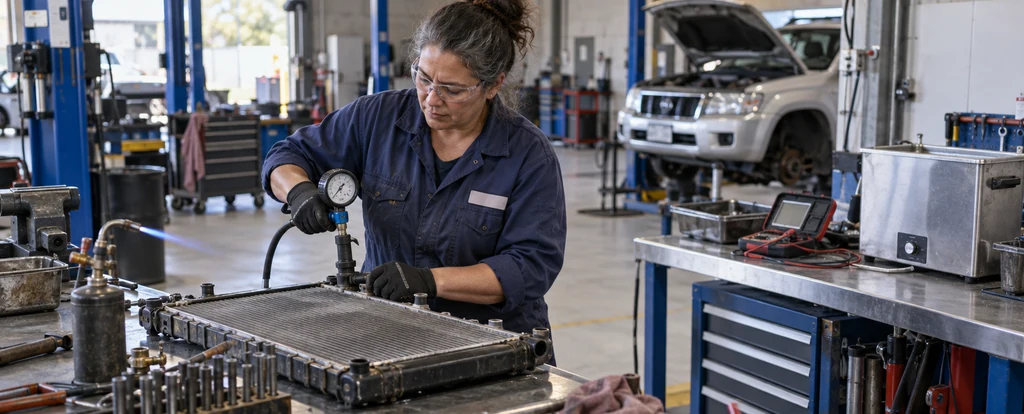
Radiator repairers keep engines at a safe operating temperature by testing, cleaning and rebuilding the cooling systems that carry heat away.
- Median salary*
- $65,000
4.3%vs last year, before tax
- People employed
- 240
20.0%vs last year
- Projected growth
- +4.6%
to 2035
- AI exposure*
- Moderate
- automation risk
- Average hours
- 37/wk
−3h vs all jobs
- Shortage status
- Not in shortage
national
Most radiator repairers work in a specialist workshop, though some sit inside a general mechanical business or run a mobile service that visits truck fleets and machinery yards. The role is close to light vehicle mechanics, but the day stays on cooling systems rather than whole-of-vehicle servicing, and many repairers work alone or with one or two others at the bench.
How much do radiator repairers earn?
The median full-time salary for a radiator repairer is $65,000 per annum, before tax, up $13,700 since 2018.
Pay depends mostly on where you work: a specialist radiator workshop, a general mechanical business, or a mobile service that charges callout rates on top of the repair. Repairers who hold a trade qualification and take on air conditioning work tend to sit higher, and fleet contracts bring steady hours rather than higher rates. In a trade this small, individual workshops set their own rates within the relevant award, so it is worth asking about overtime and callouts before you accept a job.
What does a radiator repairer do day to day?
The list below is what fills most weeks; the exact mix shifts with seniority and whatever stage the current work is at.
- Pressure testing radiators, caps, hoses and cooling systems to find leaks and blockages
- Removing and refitting radiators, thermostats, water pumps and fans, often in tight engine bays
- Rodding and ultrasonic cleaning cores, then soldering or brazing split tanks, seams and fittings
- Flushing systems and refilling them with the correct coolant mix, because the wrong coolant starts the corrosion that causes the next leak
- Quoting repairs and explaining to fleet customers what failed and whether a repair or a replacement unit is worth it
What skills do radiator repairers need?
Employers look for installation and maintenance, hand and power tool work, quoting and estimating, backed by Radiator pressure testers fluency and strong attention to detail.
Specialist skills
- Installation and maintenance
- Hand and power tool work
- Quoting and estimating
Software and tools
- Radiator pressure testers
- Soldering and brazing equipment
- Ultrasonic cleaning tanks
- Tube expanding tools
- Multimeters
General skills
- Attention to detail
- Problem solving
- Safety and compliance awareness
- Customer service
Is the job growing?
About 240 people work as radiator repairers in Australia, and employment is projected to grow 4.6% over the decade to 2035. That's modest growth: demand is steady rather than booming.
How do you become a radiator repairer?
Here's the path most radiator repairers take, step by step.
- 1Start in a workshop and learn on the job
Most radiator repairers pick the trade up from an experienced hand, beginning with stripping, cleaning and pressure testing before moving on to soldering and diagnosis. This route is paid from day one and suits someone who learns by doing.
- 2Add a Certificate II in automotive servicing
A Certificate II in automotive servicing, usually a year or less at TAFE, covers the safety, tool and vehicle system basics that workshops expect. Some repairers go further with a Certificate III in light vehicle mechanical technology (AUR30620), which takes about three to four years as an Australian Apprenticeship and opens up the whole vehicle rather than just the cooling system.
- 3Get a refrigerant handling licence if you work on air conditioning
Cooling system jobs often run into the air conditioning circuit. Handling refrigerant legally requires a refrigerant handling licence through the Australian Refrigeration Council, which means a short course and an exam.
- 4Build the bench skills that set your rate
Soldering aluminium, brazing brass, expanding tubes and reading a pressure test come with repetition, and they are what let you repair a radiator rather than simply replace it.
- 5Specialise or go out on your own
After a few years, some repairers set up a mobile service or open their own workshop, often serving truck fleets and machinery operators who need quick turnaround.
Ready to apply as a radiator repairer?
Whether you're working toward becoming a radiator repairer or already are one and want a hand with the next step (sharpening your resume for ATS screening, tightening your cover letter, or knowing what you'll actually be asked at interview), here are examples grounded in this specific role, not generic templates.
What jobs can a radiator repairer move to?
Moving into Marine Mechanic typically comes with the biggest pay rise, worth $10,400 a year more on average.
| Move to | Typical pay change | Overlap | Retraining |
|---|---|---|---|
| Marine Mechanic Marine mechanics need a separate apprenticeship, but radiator repairers bring strong cooling system knowledge to marine engine repair. | +$10,400 | 81% | requalify |
| Exhaust Fitter Radiator repairers understand vehicle cooling and exhaust flow, so a short course in exhaust systems lets them fit and repair exhausts. | +$2,600 | 47% | short course |
| Vehicle Accessories Fitter Radiator repairers already fit and adjust vehicle components, so they can move into accessory fitting with little extra training. | +$0 | 71% | minimal |
| Auto Glazier Their experience with vehicle systems and hand tools transfers to auto glazing, where they can fit and seal windscreens and windows. | +$0 | 63% | minimal |
| Pool Technician Radiator repairers can apply their knowledge of pumps and water flow to pool systems, with a short course in pool maintenance. | +$0 | 63% | short course |
Moves are chosen from Jobs and Skills Australia's Data on Occupation Mobility, which follows income tax records between 2011-12 and 2020-21, together with entry requirements and skill overlap. A known move is one people were seen making in that data. Pay change compares median full-time pay for the two roles.
Who works as a radiator repairer?
The typical radiator repairer is 47 years old; 99% are men, 86% work full-time, and full-timers average 37 hours a week.
- 47
- Median age
- 1%
- Female share
- 86%
- Full-time
- −3h
- vs all-jobs avg
What's it like being a radiator repairer?
The work has a clear rhythm: units come in, get tested, get repaired, go back out, and a finished job is easy to judge because it either holds pressure or it does not. Summer and the first hot spell bring a rush of overheating vehicles, while fleet servicing fills the quieter weeks. It suits someone methodical who is comfortable working alone and does not mind grime and coolant for the satisfaction of a clean repair.
What people like
- A result you can measure. A repaired radiator either holds pressure under test or it does not, so the day ends with something you can point to.
- You see the whole job through. Most repairers strip, clean, repair, refit and test the same unit themselves rather than passing it down a line.
- Cars, trucks and machinery. Passenger cars, prime movers, forklifts and farm equipment all come through the same bench, so the work stays varied without being unpredictable.
- Repeat trade customers. Fleet and trade customers return on a schedule, which makes the workload easier to plan than a stream of walk-in retail repairs.
What people find hard
- Grime and old coolant. Radiators arrive coated in corrosion, stale coolant and road grit, and cleaning them out is physical work.
- Comebacks cost you. An older core that leaks again weeks later takes up workshop time that cannot be billed, which is why pressure testing before refitting matters.
- Tight engine bays. Lifting a full radiator out of a modern engine bay, around shrouds, fans and air conditioning lines, is awkward and hard on shoulders and back.
- Thin margins on parts. Replacement radiators are cheap and easy to source, so customers often weigh a repair quote against a new unit, which puts pressure on pricing.
Based on our synthesis of professional-body surveys and public accounts of the role, not first-person verified reviews.
Which industries employ radiator repairers?
Other Services employs the largest share of radiator repairers, followed by Retail Trade.
Top employing industries
- 1Other Services
- 2Retail Trade
- 3Manufacturing
Ranked by employment share; the source doesn't publish an exact percentage per industry.
| Year 12 or below | 58.8% | |
|---|---|---|
| Certificate III/IV | 32.9% | |
| Diploma / Advanced Diploma | 3.3% | |
| Bachelor degree | 2.1% | |
| Postgraduate | 0% |
Will AI replace radiator repairers?
Radiator repair work is moderately exposed to automation. Scan tools, pressure test data and parts catalogues now do some of the fault-finding and quoting that used to rest entirely on experience, which speeds up the front end of the job. The bench side, pulling, rodding, soldering and refitting a radiator, is still physical work with tools and is largely untouched.
Share of typical working time by exposure level
- Removing and refitting radiators and componentsUnbolting a radiator from a cramped engine bay, working around shrouds, fans and air conditioning lines, changes with every vehicle and stays a hands-on job.30%low
- Diagnosing cooling system faultsPressure test results and scan tool data now narrow down a failed cap, thermostat or head gasket quickly, though someone still has to confirm it and decide what is worth repairing.25%moderate
- Bench repair and rebuildingRodding cores, expanding tubes and soldering or brazing split tanks rely on touch and on knowing how different metals behave, which automation does not reproduce.25%low
- Quoting, parts lookup and customer updatesCatalogue software finds the right replacement and works out a quote in minutes, which has shifted this part of the job toward checking the software's answer.20%moderate
Moves least exposed to AI
These career moves from radiator repairer work are rated low for AI exposure:
- Vehicle Accessories Fitter
High skill overlap (71%), little retraining to get there, and a low automation-risk profile.
- Exhaust Fitter
Solid skill overlap (47%), short course to get there, and a low automation-risk profile.
Common questions about becoming a radiator repairer
Straight answers to the questions people ask most.
How much do radiator repairers earn?
Radiator repairers earn a median of $65,000 per year before tax, with full-time hours averaging around 37 a week. What moves that figure is the type of business you work in, a specialist workshop, a general mechanical shop or a mobile fleet service, along with whether you hold a trade qualification and handle air conditioning work.
How do you become a radiator repairer?
Most people learn the trade on the job in a radiator or mechanical workshop, starting with cleaning and testing and moving on to soldering and diagnosis. A Certificate II in automotive servicing helps you get that first job, and a Certificate III in light vehicle mechanical technology (AUR30620) through an apprenticeship gives you the wider mechanical grounding some employers prefer.
Are radiator repairers in demand?
Radiator repairers are currently not in shortage, and employment is projected to grow 4.6% over the decade to 2035. It is a very small occupation, so openings tend to appear one at a time when a workshop loses someone, and a repairer with fleet contacts or air conditioning licensing has an easier time finding the next job.
Will AI take over radiator repair work?
The bench work stays with people. Diagnosis is shifting, because scan tools and cooling system pressure data now point to a failed cap, thermostat or head gasket faster than a visual check, and parts catalogues and quoting software speed up the front counter. Removing, rodding, soldering and refitting a radiator is still done by hand with tools, and that is where most of the week goes.
What can a radiator repairer move into?
The easiest moves are into vehicle accessories fitting and auto glazing, where the hand tools and vehicle systems knowledge carry over with little extra training. Exhaust fitting takes a short course, and marine mechanic is a bigger step that needs a separate apprenticeship, though cooling system knowledge transfers well and the move pays $10,400 more. Some repairers instead open their own workshop or run a mobile service, which is often where earnings grow.
Do radiator repairers need a licence?
No licence is needed to repair radiators themselves. If the job runs into the vehicle's air conditioning circuit, though, handling refrigerant requires a refrigerant handling licence through the Australian Refrigeration Council, which means a short course and an exam.
Related roles
- Vehicle Accessories Fitter
- Auto Glazier
- Exhaust Fitter
- Pool Technician
- Marine Mechanic
- Mechanic's Assistant
Not sure this is you? Take the career quiz and get a ranked shortlist of roles that fit how you like to work.