Railway Shunter
Railway shunters assemble and break up trains in rail yards, moving wagons between tracks and securing them so services can depart on schedule.
- Median salary*
- $93,100
3.8%vs last year, before tax
- People employed
- 330
10.0%vs last year
- Projected growth*
- −2%
to 2035
- AI exposure*
- Moderate
- automation risk
- Average hours*
- 42/wk
+2h vs all jobs
- Shortage status*
- Not in shortage
national
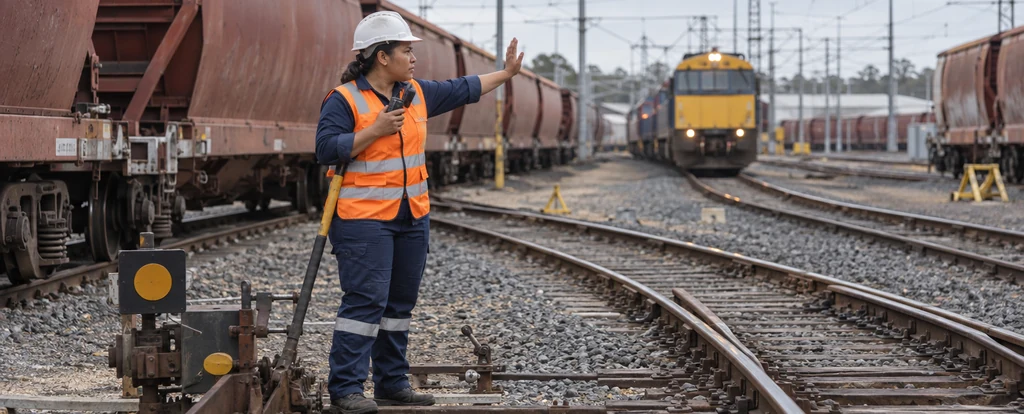
Railway shunters work outdoors in rail yards, in all weather and often at night, connecting and disconnecting wagons to build the trains that freight and passenger operators run. The role sits between the track and the train: shunters move rolling stock around the yard under the direction of a signaller or yard controller, rather than driving services on the main line. About 330 people work as railway shunters in Australia, mainly for freight operators, urban rail networks and port terminals.
How much do railway shunters earn?
The median full-time salary for a railway shunter is $93,100 per annum, before tax, up $19,300 since 2018.
Shunter pay is set by enterprise agreements, so the operator you work for and the agreement covering it matter more than the job title does. Penalty rates for night, weekend and public holiday shifts make up a large part of take-home pay, which is why rosters and overtime can shift earnings as much as the base rate. Freight and resources haulage operators often pay above what urban passenger networks pay for similar yard work.
What does a railway shunter do day to day?
The list below is what fills most weeks; the exact mix shifts with seniority and whatever stage the current work is at.
- Reading shunt lists and yard plans to work out which wagons go where
- Coupling and uncoupling wagons, and connecting brake and air hoses
- Setting points, handbrakes and wagon chocks around the yard
- Directing movements by hand signal and two-way radio
- Checking couplings, hoses and handbrakes before a consist departs
What skills do railway shunters need?
Employers look for worksite safety management, plant and equipment operation, operations management, backed by Two-way radio fluency and strong attention to detail.
Specialist skills
- Worksite safety management
- Plant and equipment operation
- Operations management
Software and tools
- Two-way radio
- Shunting pole
- Wagon handbrakes and chocks
- Yard management and train control systems
- Personal protective equipment
General skills
- Attention to detail
- Written communication
- Time and deadline management
- Physical stamina and dexterity
Is the job growing?
About 330 people work as railway shunters in Australia, and employment is projected to decline 2% over the decade to 2035. That's a real decline, worth weighing carefully before training into the role.
How do you become a railway shunter?
Here's the path most railway shunters take, step by step.
- 1Check you meet the entry requirements
Operators usually ask for a Year 12 certificate or equivalent, a clean safety record and a police check, plus a pre-employment medical that covers drug and alcohol screening and colour vision.
- 2Apply for a traineeship with a rail operator
Most shunters enter through a paid traineeship rather than a course alone, completing a Certificate II or III in rail operations over roughly 12 to 24 months while working in the yard.
- 3Get your rail industry worker credentials
You cannot work near the track without a national rail industry worker card and the operator's own safeworking accreditation, which is renewed through ongoing competency assessments.
- 4Build supervised yard time
Qualifying as a shunter depends on logged hours and competency sign-off on your operator's rules, so the pace of your progress is set by how much yard work you get and how quickly you pass each assessment.
- 5Add qualifications if you want to move on
A Certificate IV, or signalling and train control qualifications, open up roles beyond the yard once you have a few years of rail experience behind you.
Ready to apply as a railway shunter?
Whether you're working toward becoming a railway shunter or already are one and want a hand with the next step (sharpening your resume for ATS screening, tightening your cover letter, or knowing what you'll actually be asked at interview), here are examples grounded in this specific role, not generic templates.
What jobs can a railway shunter move to?
Moving into Train Driver typically comes with the biggest pay rise, worth $63,000 a year more on average.
| Move to | Typical pay change | Overlap | Retraining |
|---|---|---|---|
| Train Driver Shunters already work around trains and yards, so with substantial driver training they can progress to driving trains. | +$63,000 | 24% | reskill |
| Railway Track Machine Operator A railway shunter's yard experience and rail safety knowledge transfer directly to operating track machines, needing only minimal extra training. | +$13,500 | 61% | minimal |
| Railway Signaller Shunters understand train movements and yard layouts, which helps in learning signalling, though formal signalling qualifications are required. | +$8,300 | 33% | reskill |
| Train Controller Shunters know rail operations and scheduling, providing a foundation for coordinating trains, but a new qualification is needed. | +$8,300 | 29% | reskill |
| Rail Protection Officer A shunter's safety awareness and rail knowledge suit protection work, but specific rail safety certification is required. | +$3,100 | 33% | reskill |
Moves are chosen from Jobs and Skills Australia's Data on Occupation Mobility, which follows income tax records between 2011-12 and 2020-21, together with entry requirements and skill overlap. A known move is one people were seen making in that data. Pay change compares median full-time pay for the two roles.
Who works as a railway shunter?
The typical railway shunter is 44 years old; 93% are men, 92% work full-time, and full-timers average 42 hours a week.
- 44
- Median age
- 7%
- Female share
- 92%
- Full-time
- +2h
- vs all-jobs avg
What's it like being a railway shunter?
The job runs on rosters and safeworking rules: a shift is a sequence of movements, each one cleared by radio before it happens, which sets a deliberate pace even when the yard is busy. Much of the work happens outdoors in the dark and the weather, and the margin for error is small because rolling stock is heavy and unforgiving. People who like hands-on work with clear procedures and a visible result at the end of a shift tend to settle into it well.
What people like
- You can see what you built. By the end of a shift the wagons you coupled have become a train heading out of the yard, which gives the work a clear finish.
- Outdoors and on your feet. Shifts are spent walking the rake, handling gear and working in the open rather than sitting at a screen.
- Clear rules and small crews. Safeworking procedures spell out who does what, so you work with a handful of people who all know their part.
- Rosters that free up days. Rotating shifts and long rosters often mean blocks of days off in the middle of the week, which suits some people better than a standard working week.
What people find hard
- Weather and night shifts. Yards keep moving in heat, rain and cold, and a large share of shunting happens after dark.
- The pace can be slow. Movements run at walking pace and wait on radio clearance, so a shift can include long stretches of waiting between jobs.
- Heavy, repetitive handling. Coupling, hose connections and handbrakes are physical tasks repeated many times a shift, and the wear adds up over a career.
- A small occupation. Jobs cluster around a limited number of freight yards, ports and urban networks, so what is available depends on what operates near you.
Based on our synthesis of professional-body surveys and public accounts of the role, not first-person verified reviews.
Which industries employ railway shunters?
Rail freight transport employs the largest share of railway shunters, followed by Urban passenger rail transport.
Top employing industries
- 1Rail freight transport
- 2Urban passenger rail transport
- 3Mining and resources rail haulage
- 4Port and terminal operations
Ranked by employment share; the source doesn't publish an exact percentage per industry.
| Certificate III/IV | 34% | |
|---|---|---|
| Diploma / Advanced Diploma | 26% | |
| Bachelor degree | 20% | |
| Year 12 or below | 20% |
Will AI replace railway shunters?
Shunting is moderately exposed to automation. Yard management and train control systems already work out the most efficient order to move wagons, and automated wagon identification takes over more of the recording and checking. What stays human is the yard itself: walking the rake, coupling and uncoupling, connecting air hoses and setting handbrakes by hand, at night and in the weather.
Share of typical working time by exposure level
- Coupling and uncoupling wagonsConnecting and disconnecting wagons, air hoses and brake pipes is done by hand, and automated couplers are far from standard in Australian yards.35%low
- Directing movements across the yardHand signals, two-way radio and walking ahead of a movement are physical, safety-critical tasks that sensors do not replace.25%low
- Planning wagon movements from the shunt listYard systems increasingly propose the sequence of moves, though shunters still read the shunt list and adjust when the yard does not match the plan.20%moderate
- Recording wagon numbers and defectsEntering wagon numbers and defect reports into yard systems is the most exposed part, as automated identification and digital checklists take over the paperwork.20%high
Moves least exposed to AI
These career moves from railway shunter work are rated low for AI exposure:
- Railway Track Machine Operator
High skill overlap (61%), little retraining to get there, and a low automation-risk profile.
- Rail Protection Officer
Some skill overlap (33%), reskill to get there, and a low automation-risk profile.
Common questions about becoming a railway shunter
Straight answers to the questions people ask most.
How much do railway shunters earn?
Railway shunters earn a median of $93,100 per year before tax. Enterprise agreement rates, night and weekend penalties and overtime shift that figure, so two shunters in the same yard can take home different amounts. Treat it as a guide and check the agreement covering the operator you apply to.
How do you become a railway shunter?
Most shunters start through a paid traineeship with a rail operator, completing a Certificate II or III in rail operations over about 12 to 24 months while learning the yard under supervision. You also need to pass the operator's medical and drug and alcohol screening and hold a rail industry worker card before working near the track. A Year 12 certificate or equivalent and a clean safety record are the usual starting points.
Are railway shunters in demand?
Railway shunters are currently not in shortage, and employment is projected to decline 2% over the decade to 2035 over the decade. Because the occupation is small, most openings come from people leaving rather than from new positions being created. It is worth checking whether the freight and passenger operators near you are recruiting before you commit to training.
Will AI replace railway shunters?
Not the physical side of the job. Yard management and train control systems already plan the most efficient sequence of wagon movements, and automated wagon identification takes over more of the recording, but the exposure overall is moderate because so much of the work is hands-on. Coupling wagons, connecting air hoses, setting handbrakes and walking the rake in all weather are not close to being automated in Australian yards.
What can railway shunters move into?
Yard experience opens several rail roles. Railway track machine operators earn $13,500 more and need only minimal extra training, since much of the safety knowledge and yard awareness transfers directly. Train drivers earn $63,000 more and railway signallers earn $8,300 more, though both moves need substantial formal training before you can take them on.
Do you need a licence to work as a railway shunter?
There is no single national licence, but you cannot work in a yard without a rail industry worker card and the safeworking accreditation issued by your operator. Operators also require a current medical, including colour vision testing, and periodic competency reassessments. Because requirements sit with each rail network, confirm the details with the operator you are applying to.
Related roles
- Railway Track Machine Operator
- Railway Signaller
- Train Controller
- Rail Protection Officer
- Train Driver
- Railway Track Worker
Not sure this is you? Take the career quiz and get a ranked shortlist of roles that fit how you like to work.