Shopfitter
Shopfitters build and install the interior fitouts that turn an empty retail or hospitality space into a working shop.
- Median salary*
- $72,800
4.1%vs last year, before tax
- People employed
- 2,500
0.0%vs last year
- Projected growth*
- +2%
to 2035
- AI exposure*
- Low
- automation risk
- Average hours*
- 40/wk
matches all-jobs average
- Shortage status*
- In shortage
national
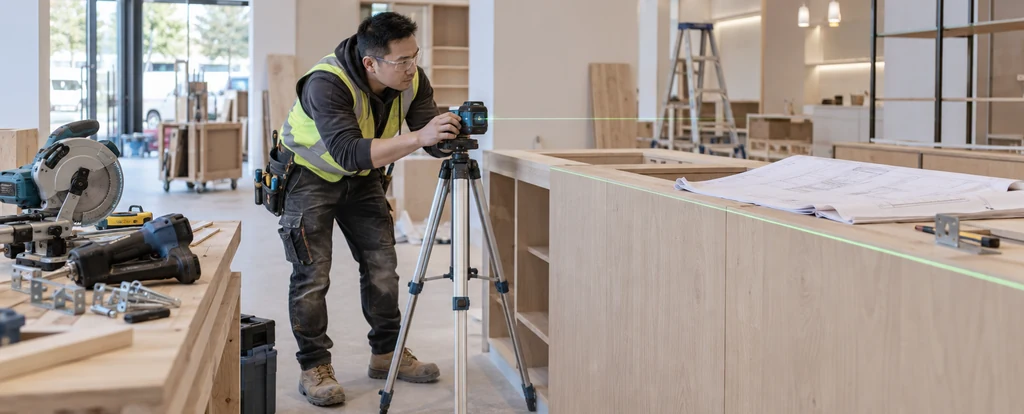
Shopfitters work on commercial interiors: retail stores, cafes, offices, banks and service counters. They measure, cut and install the counters, shelving, wall units, partitions and shopfronts that make a space usable, usually for a shopfitting or construction company alongside electricians, plumbers and painters. The trade sits close to carpentry and joinery, but the work is almost always commercial and finished to a client's design and a fixed opening date.
How much do shopfitters earn?
The median full-time salary for a shopfitter is $72,800 per annum, before tax, up $15,200 since 2018.
Pay follows the award or enterprise agreement covering the shopfitting or construction company you work for, and apprentices earn a set percentage of the trades rate that rises each year. Commercial and government fitouts usually pay better than small retail jobs, and site or travel allowances apply when the work takes you away from home. Experienced shopfitters who subcontract or run their own fitout crew set their own rates, but they carry the cost of tools, insurance and the gaps between jobs.
What does a shopfitter do day to day?
The list below is what fills most weeks; the exact mix shifts with seniority and whatever stage the current work is at.
- Reading shop drawings and setting out walls, counters and openings on site
- Measuring and cutting timber, laminate, particleboard, glass and metal components
- Assembling and installing counters, shelving, wall units, partitions and shopfronts
- Fitting doors, drawers, hardware and glass, and trimming components so they sit flush
- Checking the finished fitout against the plans and the building code before handover
What skills do shopfitters need?
Employers look for hand and power tool work, reading plans and specifications, installation and maintenance, backed by Circular saw fluency and strong attention to detail.
Specialist skills
- Hand and power tool work
- Reading plans and specifications
- Installation and maintenance
- Worksite safety management
- Fabrication and finishing
- Building codes and standards
Software and tools
- Circular saw
- Drop saw
- Laser level
- Nail gun
- AutoCAD
General skills
- Attention to detail
Is the job growing?
About 2,500 people work as shopfitters in Australia, and employment is projected to grow 2% over the decade to 2035. That's modest growth: demand is steady rather than booming.
How do you become a shopfitter?
Here's the path most shopfitters take, step by step.
- 1Get your construction induction card
The White Card (general construction induction training) is required before you can work on a building site in any state, and the course takes about a day. Some people also complete a short pre-apprenticeship in shopfitting or carpentry to show an employer they can handle the tools.
- 2Start a shopfitting apprenticeship
The standard entry is a Certificate III in shopfitting, delivered through a three to four year apprenticeship that combines paid work with TAFE. You need an employer willing to take you on, and some apprentices come across from a carpentry or cabinet making apprenticeship instead.
- 3Build range across materials and drawings
A fitout moves between timber, laminate, solid surface, glass and metal, so apprentices learn to work with all of them. Reading architectural and shop drawings properly is what lets you move from the workshop bench to running your own installations.
- 4Add a supervision or estimating qualification if you want to move up
A Certificate IV or diploma in building and construction is the common next step for shopfitters who want to supervise crews, price jobs or move into site management. It's usually done part time while you keep working, and licensing for building work varies by state, so check your own before contracting directly to clients.
Ready to apply as a shopfitter?
Whether you're working toward becoming a shopfitter or already are one and want a hand with the next step (sharpening your resume for ATS screening, tightening your cover letter, or knowing what you'll actually be asked at interview), here are examples grounded in this specific role, not generic templates.
What jobs can a shopfitter move to?
Moving into Plasterer typically comes with the biggest pay rise, worth $22,900 a year more on average.
| Move to | Typical pay change | Overlap | Retraining |
|---|---|---|---|
| Plasterer Shopfitters who work with plasterboard can move into plastering, though they must complete the plastering qualification. | +$22,900 | 80% | reskill |
| Carpenter Shopfitters bring framing, partitioning and installation skills to carpentry, though further study is needed to gain the carpentry qualification. | +$18,700 | 73% | reskill |
| Joiner Shopfitters' experience with fixtures and fittings transfers to joinery, with additional training to master workshop joinery techniques. | +$0 | 73% | reskill |
| Cabinet Maker Shopfitters' skills in assembling and installing cabinetry suit cabinet making, but a cabinet making apprenticeship or equivalent is needed. | +$0 | 57% | reskill |
| Glazier Shopfitters already install glass in shopfronts, so moving into glazing builds on this, though a formal glazing qualification is required. | −$8,300 | 80% | reskill |
Moves are chosen from Jobs and Skills Australia's Data on Occupation Mobility, which follows income tax records between 2011-12 and 2020-21, together with entry requirements and skill overlap. A known move is one people were seen making in that data. Pay change compares median full-time pay for the two roles.
Who works as a shopfitter?
The typical shopfitter is 37 years old; 98% are men, 85% work full-time, and full-timers average 40 hours a week.
- 37
- Median age
- 2%
- Female share
- 85%
- Full-time
- +0h
- vs all-jobs avg
What's it like being a shopfitter?
The work runs in bursts: a stretch in the workshop prefabricating units, then an intense installation phase on site with a store opening date fixed in the calendar. Shopfitters spend most of the day on their feet, lifting panels, working around other trades and adjusting components to walls that are rarely perfectly square. It suits people who like seeing a job finished and used by the public, and who don't mind early starts, travel between sites and the noise and dust that come with the trade.
What people like
- You see the job finished and open. A fitout that took weeks of measuring and cutting becomes a shop trading to the client's deadline, and you can walk back in later and point out what you built.
- No two fitouts are the same. Every site has different dimensions, a different design and a different mix of materials, so the work doesn't settle into the same cuts day after day.
- Small crews and steady workmates. Installation teams are usually a handful of people, so you get to know them well and often follow the same leading hand from job to job.
- A trade you can take in several directions. The measuring, cutting and installation skills overlap heavily with carpentry, joinery and cabinet making, which gives you options later without starting over.
What people find hard
- The opening date doesn't move. Handover is set by the client's lease or launch, so the final week of an install can run long and the pressure lands on whoever is still on site.
- Hard on the body. Lifting panels, kneeling to fit skirtings and working overhead for hours add up, and strains and repetitive injuries are common in the trade.
- Site conditions you can't control. You're often in an unfinished space with dust, no air conditioning in summer, and other trades wanting the same corner of the building at the same time.
- Travel between jobs. The work is wherever the client's shop is, which can mean long daily commutes or staying away from home for an installation.
Based on our synthesis of professional-body surveys and public accounts of the role, not first-person verified reviews.
Which industries employ shopfitters?
Manufacturing employs the largest share of shopfitters, followed by Construction.
Top employing industries
- 1Manufacturing
- 2Construction
- 3Administrative and Support Services
- 4Retail Trade
Ranked by employment share; the source doesn't publish an exact percentage per industry.
| Certificate III/IV | 34% | |
|---|---|---|
| Diploma / Advanced Diploma | 26% | |
| Bachelor degree | 20% | |
| Year 12 or below | 20% |
Will AI replace shopfitters?
Shopfitting has low exposure to AI. CAD, BIM and CNC panel processing have already taken over much of the drawing and cutting, but a fitout is installed inside a real building with walls that are rarely square, and adjusting components to fit stays a hands-on job. The technology changes what arrives in the workshop, not who fits it on site.
Share of typical working time by exposure level
- Installing counters, shelving and shopfrontsLevelling, packing, fixing and scribing components so drawers run and glass sits true is physical work that no machine can do for you.35%low
- Coordinating with other trades and the client on siteScheduling tools can share programmes, but agreeing access with the electrician or the centre manager on the morning of an install is a conversation.25%low
- Reading shop drawings and setting out on siteSoftware produces the drawings and the cutting lists, but someone still has to check them against the actual dimensions and services in the building before anything is fixed.20%moderate
- Cutting and machining panels and componentsCNC routers and panel saws deliver accurate, repeatable cuts in the workshop, while on-site trimming for pipes, powerpoints and out-of-square openings is still done by hand.20%moderate
Common questions about becoming a shopfitter
Straight answers to the questions people ask most.
How much do shopfitters earn?
Shopfitters earn a median of $72,800 per year before tax. What you take home depends on the award or enterprise agreement your employer uses, with commercial and government fitouts usually paying more than small retail jobs. Apprentices start on a percentage of the trades rate that increases each year of the apprenticeship.
How do you become a shopfitter?
Most shopfitters start with an apprenticeship that combines paid work and a Certificate III in shopfitting over three to four years. You need a White Card before you can work on site, and a pre-apprenticeship or experience in carpentry or cabinet making can help you find an employer.
Are shopfitters in demand?
Shopfitters are currently in shortage nationally, and employment is projected to grow 2% over the decade to 2035 over the decade to 2035. It's a small occupation, with about 2,500 people working in it, so openings often come through the companies and supervisors you've already worked for rather than broad advertising.
Will AI replace shopfitters?
Not in the near term. Design software and CNC machines now produce much of the drawing and panel cutting before anything reaches site, and that has changed how components arrive, but installation still happens in a real building with walls that are rarely square. Setting out, adjusting and fitting the finished work remains hands-on.
What can shopfitters move into?
Carpentry and plastering are common moves, paying $18,700 more and $22,900 more respectively, though both need further study to gain the qualification. Joinery and cabinet making use much the same skills and pay about the same, while glazing builds directly on shopfront work and pays $8,300 less.
Can shopfitters run their own business?
Yes, and many do once they can price work and manage a crew. Running a fitout business or subcontracting to a larger builder is often where earnings grow, though it means covering your own tools, insurance and the quiet stretches between jobs.
Related roles
Not sure this is you? Take the career quiz and get a ranked shortlist of roles that fit how you like to work.