Swim Instructor
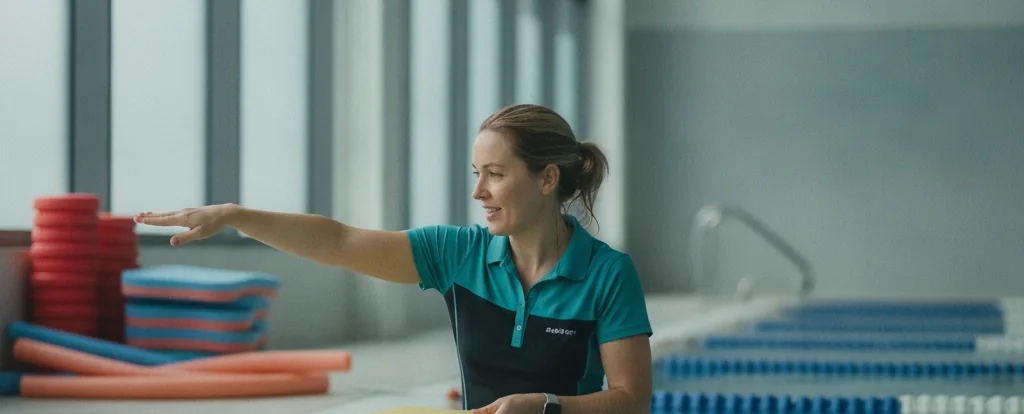
Swim instructors teach people of all ages to swim, building water safety and technique through short structured lessons at a pool.
- Median salary
- $75,000
3.6%vs last year, before tax
- People employed
- 12,000
0.8%vs last year
- Projected growth
- +12.1%
to 2035
- AI exposure*
- Low
- automation risk
- Average hours
- 41/wk
+1h vs all jobs
- Shortage status
- Not in shortage
national
Swim instructors work at swim schools, council aquatic centres and occasionally private pools, taking lessons that range from babies getting used to the water through to adults refining a stroke. The job sits next to lifeguarding but is different in purpose: a lifeguard supervises everyone in the pool, while a swim instructor is hired to teach one small group at a time. Most positions are casual, and lessons cluster into the after-school and weekend blocks when families can attend.
How much do swim instructors earn?
The median full-time salary for a swim instructor is $75,000 per annum, before tax, up $16,000 since 2018.
Most swim instructors work casually and are paid an hourly rate for each lesson, so total earnings depend on how many shifts you pick up and whether you take weekday mornings as well as the after-school rush. Weekend and evening work usually attracts penalty rates or a casual loading, and council aquatic centres tend to pay above small private swim schools. Experience and extra qualifications, such as infant teaching or squad coaching, move the rate up.
What does a swim instructor do day to day?
The list below is what fills most weeks; the exact mix shifts with seniority and whatever stage the current work is at.
- Getting into the water for most of every lesson to demonstrate strokes and correct them by hand
- Planning each lesson around what a swimmer can already do and what still worries them in the water
- Teaching back-to-back short lessons through the afternoon and weekend rush
- Settling nervous children, and often their parents, before a first attempt at putting a face in the water
- Recording progress against the swim school's skill levels so parents can see what comes next
What skills do swim instructors need?
Employers look for teaching and instruction, patient care and support, classroom and behaviour management, backed by Kickboards and pull buoys fluency and strong written communication.
Specialist skills
- Teaching and instruction
- Patient care and support
- Classroom and behaviour management
- Student assessment and reporting
- Health education and advice
Software and tools
- Kickboards and pull buoys
- Pool timers and training software
- Whistle and safety equipment
- Video analysis apps
General skills
- Written communication
- Attention to detail
Is the job growing?
About 12,000 people work as swim instructors in Australia, and employment is projected to grow 12.1% over the decade to 2035. That's healthy, above-average growth, and the role should stay in solid demand.
How do you become a swim instructor?
Here's the path most swim instructors take, step by step.
- 1Get your own swimming up to a teaching standard
You need to demonstrate each stroke and stay comfortable in the water for a whole shift, though not at competition level. Most qualifications begin with a swim test, so build your technique before you enrol.
- 2Complete a swim teaching qualification
AUSTSWIM's Teacher of Swimming and Water Safety, a Swim Australia Teacher course and Royal Life Saving courses are the ones pools recognise. They run over a few days, include supervised teaching hours, and have separate modules for infants and adults.
- 3Add CPR, first aid and a working with children check
Employers ask for current CPR and first aid certificates, which need renewing, plus a working with children check. The check is named differently in each state, such as a Blue Card in Queensland.
- 4Apply for casual shifts at swim schools and council centres
Nearly all entry-level work is casual and paid from the moment you are in the water. Larger swim schools and council centres often run their own induction, and a term of regular shifts is how most instructors build a full timetable.
- 5Train for the levels that suit you
Once you are confident with a beginner level, you can add infant, disability or squad teaching qualifications. These come with more responsibility and steadier hours, and they are the usual route into coordinating a program.
Ready to apply as a swim instructor?
Whether you're working toward becoming a swim instructor or already are one and want a hand with the next step (sharpening your resume for ATS screening, tightening your cover letter, or knowing what you'll actually be asked at interview), here are examples grounded in this specific role, not generic templates.
What jobs can a swim instructor move to?
Moving into Primary School Teacher typically comes with the biggest pay rise, worth $40,800 a year more on average.
| Move to | Typical pay change | Overlap | Retraining |
|---|---|---|---|
| Primary School Teacher Swim instructors can move into primary teaching with group instruction and child safety skills, but a teaching degree and registration are required.Known move | +$40,800 | 40% | requalify |
| Early Childhood Educator Swim instructors bring group management and child safety to early childhood education, though an early childhood qualification is needed.Known move | +$24,100 | 40% | reskill |
| Yoga Instructor Swim instructors already lead group sessions and can add yoga teaching with a short instructor course.Known move | +$3,000 | 62% | short course |
| Teacher Aide Swim instructors bring child supervision and lesson support to teacher aide work, needing only a short course.Known move | −$5,200 | 50% | short course |
| Lifeguard Swim instructors move into lifeguarding with water safety and pool supervision skills, needing a short course for the lifeguard award.Known move | −$25,700 | 36% | short course |
Moves are chosen from Jobs and Skills Australia's Data on Occupation Mobility, which follows income tax records between 2011-12 and 2020-21, together with entry requirements and skill overlap. A known move is one people were seen making in that data. Pay change compares median full-time pay for the two roles.
Who works as a swim instructor?
The typical swim instructor is 22 years old; 75% are women, 8% work full-time, and full-timers average 41 hours a week.
- 22
- Median age
- 75%
- Female share
- 8%
- Full-time
- +1h
- vs all-jobs avg
What's it like being a swim instructor?
The rhythm of the job is short, repeated lessons: half an hour with one group, then the next, mostly through afternoons, early evenings and Saturday mornings. That pace suits someone who likes children and repetition and can stay alert in warm water for a full shift, because a class of six needs watching even while you are teaching one of them. The reward is unusually visible, since a swimmer who would not put their face in during week one is often swimming a few metres by the end of term.
What people like
- Progress is easy to see. A child who clung to the edge in the first lesson is swimming a lap by the end of term, and you were in the water for every step of it.
- The hours can fit around study or family. Many instructors work a few afternoons and one weekend morning, which suits university timetables, school pickup or a second job.
- You are active and social all shift. The work happens in the water and in conversation with children and parents, not at a desk, and the pool is a loud, lively place to spend an afternoon.
- You don't need to be an elite swimmer. Teaching a stroke is about breaking it into steps and spotting what is going wrong, so patience and clear explanation matter more than your own speed.
What people find hard
- Casual hours mean casual income. Classes get cancelled when they don't fill or when a pool closes for maintenance, so weekly pay moves around and there is no paid leave.
- Water and noise take a toll. Long hours in chlorinated water dry out skin and hair, and projecting your voice over a busy pool leaves many instructors hoarse by the end of a Saturday.
- The beginner levels repeat. You may run the same water-confidence progression ten times in a week, which is exactly what beginners need and also what makes the work monotonous.
- Parents sometimes push on levels. Families want their child moved up before the skills are there, and explaining why a swimmer stays in a level is a regular part of the job.
Based on our synthesis of professional-body surveys and public accounts of the role, not first-person verified reviews.
Which industries employ swim instructors?
Education and Training employs the largest share of swim instructors, followed by Arts and Recreation Services.
Top employing industries
- 1Education and Training
- 2Arts and Recreation Services
- 3Public Administration and Safety
Ranked by employment share; the source doesn't publish an exact percentage per industry.
| Year 12 or below | 57.3% | |
|---|---|---|
| Certificate III/IV | 12.8% | |
| Bachelor degree | 12.4% | |
| Diploma / Advanced Diploma | 7.9% | |
| Postgraduate | 3% |
Will AI replace swim instructors?
Swim instruction is one of the least exposed jobs to AI, because the work happens in the water with a person who may be frightened and needs hands-on correction. Booking, rostering and progress-tracking software has already absorbed much of the administration in swim schools, and video apps can show a swimmer what their stroke looks like. None of that changes who has to be in the pool, reading whether a child is ready to let go of the wall.
Share of typical working time by exposure level
- Teaching in the water and correcting strokes by handMost of the lesson is spent in the pool demonstrating a stroke and adjusting an arm or a kick, which needs an instructor standing in the water with the swimmer.40%low
- Supervising safety in and around the poolKeeping count of a small group in the water while watching the pool deck is constant human attention, and a system cannot decide when to step in.25%low
- Recording progress and updating parentsApps let you tick off skill levels and send automatic updates, which cuts the admin, though parents still want the instructor's own account of how their child went.20%moderate
- Planning lessons for different ages and abilitiesSoftware suggests skill progressions and lesson templates, but an instructor still judges whether a four-year-old is ready to put their face in the water today.15%moderate
Common questions about becoming a swim instructor
Straight answers to the questions people ask most.
How much do swim instructors earn?
Swim instructors earn $75,000 per annum, before tax, when they work full time. That figure is a median for full-time work, and because most instructors are casual and paid per lesson, total earnings depend heavily on how many shifts you take. Weekend and evening lessons, extra qualifications and working for a council aquatic centre all push the hourly rate up.
How do you become a swim instructor?
You need a teaching qualification such as an AUSTSWIM Teacher of Swimming and Water Safety or a Swim Australia Teacher course, along with current CPR and first aid and a working with children check. Courses run over a few days and include supervised teaching hours in a pool. Most swim schools then take on newly qualified instructors for casual shifts, so applying directly to centres near you is the usual way in.
Are swim instructors in demand?
Swim instructors are currently not in shortage, and employment is projected to grow 12.1% over the decade to 2035. Openings tend to come from instructors moving on and from swim schools staffing up ahead of their busy terms, so the work is spread across many small employers rather than advertised in large batches.
Could AI or automation replace swim instructors?
AI has little reach into this job, because the lesson happens in the water and depends on physical correction and reading a nervous swimmer. Booking systems, rostering tools and progress apps have taken over much of the paperwork, and video can help a swimmer see their own stroke. Someone still has to be in the pool with them.
What can swim instructors move into?
Lifeguarding is a common move, using the same water safety and pool supervision skills but paying $25,700 less, and yoga instruction is another, where group teaching carries over and pay is $3,000 more. Teacher aide work also suits the child supervision and lesson support skills, with pay around $5,200 less. Experienced instructors often go on to run their own swim school or coordinate a program, which is frequently where earnings grow.
Do you need to be a strong swimmer to teach swimming?
You need to be competent and confident in the water, able to demonstrate each stroke and stay afloat while watching a class, but not fast. Teaching courses include a swim test for that reason. The method you learn matters more than your own times.
Related roles
Not sure this is you? Take the career quiz and get a ranked shortlist of roles that fit how you like to work.