Aquaculture Farmer
Aquaculture farmers breed, grow and harvest fish, shellfish and seaweed for Australian and export markets.
- Median salary*
- $81,100
4.1%vs last year, before tax
- People employed
- 1,900
0.0%vs last year
- Projected growth
- +17.6%
to 2035
- AI exposure*
- Moderate
- automation risk
- Average hours
- 46/wk
+6h vs all jobs
- Shortage status
- Not in shortage
national
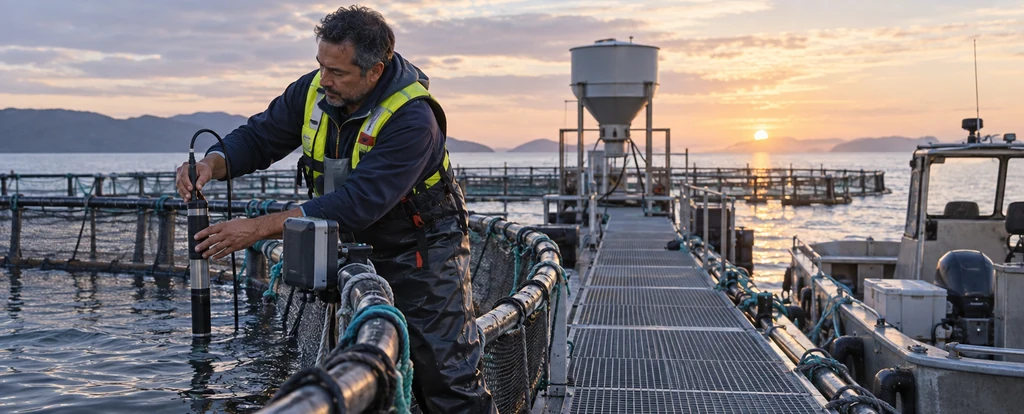
Aquaculture farmers run the day to day growing of aquatic stock in ponds, tanks, raceways, sea cages or longlines. They check water quality, feed and health of the stock, keep pumps, nets and boats working, and coordinate harvesting and despatch. The work is coastal or regional, and every operation holds a state or territory aquaculture licence along with biosecurity and environmental rules.
How much do aquaculture farmers earn?
The median full-time salary for an aquaculture farmer is $81,100 per annum, before tax, up $17,000 since 2018.
Species, the size of the operation and the system used all shift pay, and night or weekend work in hatcheries and harvest seasons usually attracts penalty rates. Because many operations are small owner-run businesses, income can follow the harvest and market price rather than a fixed wage. Remote and coastal sites sometimes come with housing or allowances that are worth weighing against the base rate.
What does an aquaculture farmer do day to day?
The list below is what fills most weeks; the exact mix shifts with seniority and whatever stage the current work is at.
- Managing water quality, aeration and filtration across ponds, tanks or sea cages
- Stocking, feeding and monitoring the growth and health of fish, shellfish or seaweed
- Harvesting, grading and packing product for sale or further processing
- Maintaining nets, cages, pumps, boats and other infrastructure
- Keeping biosecurity, disease control, feed and harvest records for licence and buyer requirements
What skills do aquaculture farmers need?
Employers look for animal care and handling, operations management, regulatory compliance, backed by AquaManager fluency and strong communication.
Specialist skills
- Animal care and handling
- Operations management
- Regulatory compliance
- Plant and equipment operation
- Worksite safety management
- Environmental assessment
- Inventory management
Software and tools
- AquaManager
- YSI water quality probes
- Automatic feeding systems
- Oxygen and temperature loggers
- Microsoft Excel
General skills
Is the job growing?
About 1,900 people work as aquaculture farmers in Australia, and employment is projected to grow 17.6% over the decade to 2035. That's healthy, above-average growth, and the role should stay in solid demand.
How do you become an aquaculture farmer?
Here's the path most aquaculture farmers take, step by step.
- 1Start with a certificate or a traineeship
A Certificate III in aquaculture (SFI30119) covers water quality, stock husbandry and operations, and plenty of employers take on trainees who study while they work.
- 2Get on the water as an aquaculture worker or farm hand
Paid work in a hatchery, pond or sea cage builds the stock handling, feeding and boat skills that managers look for, and it is the usual way people enter the industry.
- 3Add a diploma or degree if you want to manage or own the business
A Diploma of Aquaculture (SFI50119) or a bachelor degree in marine or aquaculture science opens hatchery management, research and ownership paths.
- 4Sort out the licences and qualifications your site needs
Boat and forklift licences, first aid and dive qualifications are common on sea cage and shellfish sites, and the business itself holds an aquaculture licence set by the state or territory.
Ready to apply as an aquaculture farmer?
Whether you're working toward becoming an aquaculture farmer or already are one and want a hand with the next step (sharpening your resume for ATS screening, tightening your cover letter, or knowing what you'll actually be asked at interview), here are examples grounded in this specific role, not generic templates.
What jobs can an aquaculture farmer move to?
Moving into Deckhand typically comes with the biggest pay rise, worth $8,300 a year more on average.
| Move to | Typical pay change | Overlap | Retraining |
|---|---|---|---|
| Deckhand Vessel handling, safety and marine operations carry into deckhand roles, though maritime certification is required.Known move | +$8,300 | 21% | reskill |
| Orchardist Farm management and production planning carry into orchard work, though new crop knowledge and horticulture study are needed.Known move | −$8,300 | 44% | reskill |
| Beef Cattle Farmer Livestock husbandry and farm operations transfer to beef cattle, with a short course covering cattle-specific practices.Known move | −$19,700 | 60% | short course |
Moves are chosen from Jobs and Skills Australia's Data on Occupation Mobility, which follows income tax records between 2011-12 and 2020-21, together with entry requirements and skill overlap. A known move is one people were seen making in that data. Pay change compares median full-time pay for the two roles.
Who works as an aquaculture farmer?
The typical aquaculture farmer is 47 years old; 85% are men, 73% work full-time, and full-timers average 46 hours a week.
- 47
- Median age
- 15%
- Female share
- 73%
- Full-time
- +6h
- vs all-jobs avg
What's it like being an aquaculture farmer?
The work follows the stock rather than the calendar. Feeding and water checks start early, often before sunrise, and the day stretches when a pump fails, oxygen drops or a harvest is booked for a market slot. Sites are usually small teams in coastal or regional towns, so the job suits someone who likes outdoor physical work, machinery and animals, and does not mind being on call.
What people like
- Working outdoors on the water. Most of the day is spent on ponds, tanks, cages or boats, in weather that changes quickly and in country many people only see on holiday.
- Seeing a crop through from stocking to sale. Stock takes months to grow, so there is a clear line from the juveniles you put in the water to the product that leaves the site.
- Small teams and real responsibility. On many sites the crew is a handful of people, so you learn every part of the operation quickly and your read of the stock shapes the day's decisions.
- Variety across species and systems. Hatcheries, ponds, sea cages and longlines all work differently, which gives you somewhere to move as you build experience.
What people find hard
- Early starts and weekend feeding. Fish and shellfish eat on schedule whatever the day is, so rosters include weekends, public holidays and night checks through harvest.
- Weather, disease and stock losses. Storms, heat, algal blooms and disease can kill stock that took months to grow, and some of it is beyond anyone's control.
- Licensing and record keeping. Biosecurity, environmental reporting and food safety records are part of every week, and each state and territory runs its own licensing system.
- Income that moves with the season. Where the business is owner-run, earnings follow the harvest and the market price rather than a predictable salary.
Based on our synthesis of professional-body surveys and public accounts of the role, not first-person verified reviews.
Which industries employ aquaculture farmers?
Agriculture, Forestry and Fishing employs the largest share of aquaculture farmers, followed by Construction.
Top employing industries
- 1Agriculture, Forestry and Fishing
- 2Construction
Ranked by employment share; the source doesn't publish an exact percentage per industry.
| Year 12 or below | 42.4% | |
|---|---|---|
| Certificate III/IV | 20.7% | |
| Bachelor degree | 15.6% | |
| Diploma / Advanced Diploma | 8.5% | |
| Postgraduate | 5% |
Will AI replace aquaculture farmers?
Aquaculture farming sits in the middle. Water quality probes, automatic feeders and farm software now handle much of the routine monitoring and record keeping on larger sites, logging oxygen, temperature and feed use without anyone writing it down. The stock itself still needs hands on it, and hatcheries and sea cage operations are further along than small pond and longline sites, where a lot of the checking is still done by eye.
Share of typical working time by exposure level
- Stock health, biosecurity and licence recordsSoftware makes the reporting easier, while diagnosing disease, deciding on treatment and managing a biosecurity incident depend on looking at the animals and knowing the site.35%low
- Feeding stock and tracking growthAutomatic feeders and growth software set the schedule and keep the records, but someone still watches how the stock is responding and changes the ration when it isn't.25%moderate
- Checking water quality and adjusting aerationSensors and loggers flag oxygen and temperature changes through the night, though restarting aerators, flushing a pond or moving a cage is physical work on site.20%moderate
- Harvesting, grading and packingGraders and counters speed up sizing for market, but handling live fish and shellfish to buyer specifications is still done by hand.20%moderate
Moves least exposed to AI
These career moves from aquaculture farmer work are rated low for AI exposure:
- Orchardist
Solid skill overlap (44%), reskill to get there, and a low automation-risk profile.
- Beef Cattle Farmer
High skill overlap (60%), short course to get there, and a low automation-risk profile.
- Deckhand
Some skill overlap (21%), reskill to get there, and a low automation-risk profile.
Common questions about becoming an aquaculture farmer
Straight answers to the questions people ask most.
How much do aquaculture farmers earn?
$81,100 per year before tax for full-time work, and the range around it is wide because species, the size of the operation and any share in the harvest all change the total. Salaried managers on larger sites sit near the top of that range, while trainees and casual workers start lower.
How do you become an aquaculture farmer?
Most people start as an aquaculture worker or farm hand and learn water quality, feeding and stock handling on the job, often while completing a Certificate III. A diploma or degree in aquaculture or marine science helps if you want to manage a site or eventually own one.
Are aquaculture farmers in demand?
Aquaculture farmers are currently not in shortage, and employment is projected to grow 17.6% over the decade to 2035. The industry is small and operations are tied to particular coastal sites, so openings often come through local employers and industry networks rather than national job boards.
Will AI and automation replace aquaculture farmers?
Automation already handles feeding, water monitoring and grading on many sites, and that is likely to spread. It removes routine checking and record keeping rather than the work itself, because someone still has to handle live stock, respond when oxygen drops overnight and judge when a crop is ready.
Do you need a licence to farm fish or shellfish?
Yes, aquaculture is licensed by the state or territory you operate in, and the licence covers the site, the species and the environmental conditions attached to it. Workers may also need boat, forklift or dive qualifications depending on the site, while food safety and biosecurity training is usually provided on the job.
What can this role lead to?
Stock husbandry carries into orchard work ($8,300 less) and beef cattle operations ($19,700 less), and marine and vessel experience supports deckhand roles ($8,300 more) with extra certification. Aquaculture workers and fishing hands step into this occupation from hands-on stock handling, with training in the aquatic systems involved. Many people in this occupation go on to own the operation or hold a share in it, which is often where earnings grow.
Related roles
Not sure this is you? Take the career quiz and get a ranked shortlist of roles that fit how you like to work.