Electric Vehicle Technician
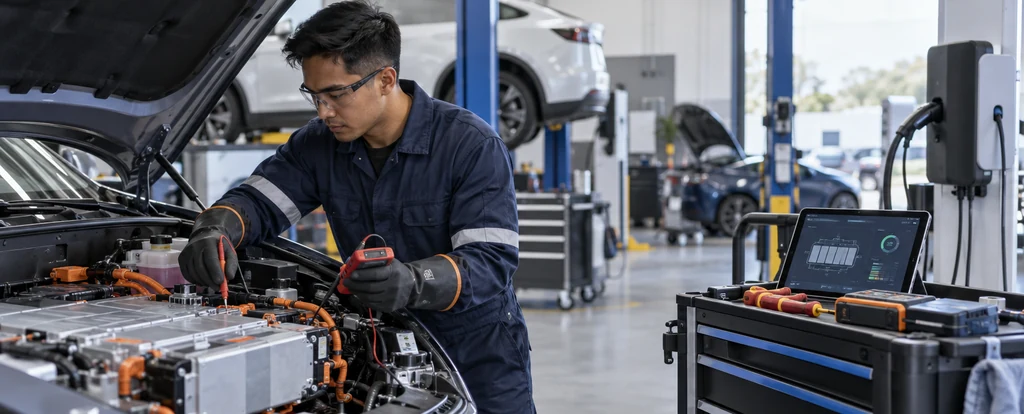
Electric vehicle technicians diagnose and repair the battery, motor and charging systems in electric and hybrid cars, and keep them safe to drive.
- Median salary*
- $85,800
3.9%vs last year, before tax
- People employed
- 3,200
3.2%vs last year
- Projected growth*
- +21%
to 2035
- AI exposure*
- Low
- automation risk
- Average hours*
- 40/wk
matches all-jobs average
- Shortage status*
- In shortage
national
Most work in dealership service centres, fleet depots or independent workshops that have tooled up for battery electric and hybrid models. The job sits between two older trades: a motor mechanic works mainly on petrol and diesel engines, while an auto electrician handles wiring and 12 volt systems, and this role takes on the high voltage side of both. Much of the work is warranty repair on cars still under new vehicle cover, which means following the manufacturer's procedure exactly.
How much do electric vehicle technicians earn?
The median full-time salary for an electric vehicle technician is $85,800 per annum, before tax, up $17,800 since 2018.
Dealerships and large fleet operators tend to pay above independent workshops, and manufacturer certifications often come with a pay step because they decide which jobs you can take on. Penalty rates, overtime and on-call arrangements for fleet and roadside work can add to the base figure. A formal auto electrical licence also lifts what some employers will offer.
What does an electric vehicle technician do day to day?
The list below is what fills most weeks; the exact mix shifts with seniority and whatever stage the current work is at.
- Diagnosing faults in battery packs, drive motors and power electronics using manufacturer scan tools
- Isolating and de-energising high voltage circuits before any repair begins
- Testing battery state of health and replacing or balancing battery modules
- Carrying out software updates and reprogramming control modules as vehicles change
- Servicing charging equipment and explaining charging and battery care to owners
What skills do electric vehicle technicians need?
Employers look for installation and maintenance, software testing and QA, backed by Manufacturer diagnostic software (e.g. Tesla Toolbox, Ford FDRS) fluency and strong problem solving.
Specialist skills
- Installation and maintenance
- Software testing and QA
Software and tools
- Manufacturer diagnostic software (e.g. Tesla Toolbox, Ford FDRS)
- Autel MaxiSys diagnostic platform
- High voltage multimeters and insulation testers
- Battery management system analysers
General skills
- Problem solving
- Attention to detail
- Safety and compliance awareness
- Digital literacy
- Customer service
Is the job growing?
About 3,200 people work as electric vehicle technicians in Australia, and employment is projected to grow 21% over the decade to 2035. That's very strong growth. Few roles in Australia are expanding this fast, and it points to solid demand for years to come.
How do you become an electric vehicle technician?
Here's the path most electric vehicle technicians take, step by step.
- 1Start an automotive apprenticeship
The usual entry is a three to four year apprenticeship, either in light vehicle mechanical technology (AUR30620) or in automotive electric vehicle technology (AUR32721). It is paid work, and most apprentices begin at a dealership or a workshop that services electric and hybrid models.
- 2Add high voltage safety training
You cannot work on a live battery system without specific high voltage training covering isolation, protective equipment and emergency procedures. Short courses and manufacturer programs deliver it, and most employers expect it before you work unsupervised.
- 3Earn manufacturer certifications
Brands such as Tesla, BYD, Hyundai and Ford run their own training and diagnostic platforms. Certification takes time to build, but it determines which repairs you are authorised to carry out and it carries across dealerships.
- 4Consider a diploma or degree later
Certificate III and IV qualifications are the most common background, held by 34% of people in the role. A diploma or degree opens specialist diagnostic, engineering support and training roles.
- 5Check your state's licensing rules
Some states require a licence for auto electrical work, and the requirements differ. Check with the relevant state regulator before taking on wiring work independently.
Ready to apply as an electric vehicle technician?
Whether you're working toward becoming an electric vehicle technician or already are one and want a hand with the next step (sharpening your resume for ATS screening, tightening your cover letter, or knowing what you'll actually be asked at interview), here are examples grounded in this specific role, not generic templates.
What jobs can an electric vehicle technician move to?
Moving into Auto Electrician typically comes with the biggest pay rise, worth $60,200 a year more on average.
| Move to | Typical pay change | Overlap | Retraining |
|---|---|---|---|
| Auto Electrician Brings high voltage battery and diagnostic skills into vehicle electrical systems, though a separate auto electrical trade qualification is required. | +$60,200 | 30% | requalify |
| Electronic Engineering Technician The technician brings vehicle diagnostic experience to electronic systems testing, though a diploma is needed to build engineering theory. | +$25,600 | 44% | reskill |
| Biomedical Technician Applies electronic and diagnostic skills to medical equipment servicing, with a diploma required to learn healthcare standards. | +$5,200 | 50% | reskill |
Moves are chosen from Jobs and Skills Australia's Data on Occupation Mobility, which follows income tax records between 2011-12 and 2020-21, together with entry requirements and skill overlap. A known move is one people were seen making in that data. Pay change compares median full-time pay for the two roles.
Who works as an electric vehicle technician?
The typical electric vehicle technician is 38 years old; 95% are men, 88% work full-time, and full-timers average 40 hours a week.
- 38
- Median age
- 5%
- Female share
- 88%
- Full-time
- +0h
- vs all-jobs avg
What's it like being an electric vehicle technician?
The week splits between scheduled servicing, which moves quickly, and diagnostic jobs that can run for days when a fault is intermittent. Vehicles arrive with faults the dealer network has not seen before, so technicians spend real time reading data and testing rather than replacing parts on instinct. It suits someone methodical who likes the puzzle and does not mind following a safety procedure to the letter.
What people like
- Technology that keeps moving. Each new model brings different battery chemistry, software and charging behaviour, so the technical side of the job does not sit still.
- Faults that reward method. An intermittent battery or charging fault is a genuine puzzle, and working through the data until the cause appears is the satisfying part of the week.
- Cleaner work than engine repair. There is no oil, exhaust or engine noise to contend with, and most of the job happens with a laptop, a meter and a hoist.
- Training the manufacturer pays for. Dealerships send technicians to factory courses on new models, which builds skills on the employer's time.
What people find hard
- Retraining comes with the job. New models arrive with new procedures, new tools and new software, and keeping current takes ongoing study outside the busy weeks.
- Safety steps slow the job down. De-energising a high voltage system and suiting up properly adds time that customers and service managers do not always expect.
- Warranty paperwork and paid software. Manufacturer diagnostic platforms carry subscription costs, and warranty claims need documentation that has to be written up after the repair is finished.
- Waiting on parts. Battery modules and specialist components can be on backorder, which leaves a vehicle occupying a bay and the job on hold.
Based on our synthesis of professional-body surveys and public accounts of the role, not first-person verified reviews.
Which industries employ electric vehicle technicians?
Automotive repair and maintenance employs the largest share of electric vehicle technicians, followed by Motor vehicle and motor vehicle parts retailing.
Top employing industries
- 1Automotive repair and maintenance
- 2Motor vehicle and motor vehicle parts retailing
- 3Road transport
- 4Electricity supply
Ranked by employment share; the source doesn't publish an exact percentage per industry.
| Certificate III/IV | 34% | |
|---|---|---|
| Diploma / Advanced Diploma | 26% | |
| Bachelor degree | 20% | |
| Year 12 or below | 20% |
Will AI replace electric vehicle technicians?
AI and automation reach the diagnostic side of this job but not the physical repair. Scan tools and manufacturer platforms such as Tesla Toolbox and Ford FDRS already read fault codes, rank likely causes and deliver some software updates over the air, which shortens the hunt for a fault. A person still has to isolate a 400 volt battery, replace a module and judge whether the car is safe to return, so exposure stays low.
Share of typical working time by exposure level
- High voltage isolation and battery repairDe-energising a pack to the manufacturer's procedure and swapping modules is hands-on, and the safety steps cannot be skipped.35%low
- Road testing, handover and warranty reportingYou confirm the repair on the road and explain battery health and charging habits to the owner in plain language.30%low
- Diagnostic scanning and fault findingFault codes and guided test plans narrow the search, but you still trace wiring and confirm the cause on the vehicle.20%moderate
- Software updates and module reprogrammingManufacturers now push many updates over the air, so a growing share of this work happens without anyone touching the car.15%high
Common questions about becoming an electric vehicle technician
Straight answers to the questions people ask most.
How much do electric vehicle technicians earn?
The median is $85,800 per year before tax for full-time work. Dealership and fleet roles generally pay more than independent workshops, and manufacturer certifications, an auto electrical licence and overtime all move the figure. The median is a midpoint, so experienced technicians in specialist or supervisory roles sit above it and new starters sit below.
How do you become an electric vehicle technician?
Most people start with an automotive apprenticeship, commonly a Certificate III in light vehicle mechanical technology (AUR30620) or in automotive electric vehicle technology. From there you add high voltage safety training and manufacturer certifications, which employers look for before letting you work on battery systems unsupervised. Tradespeople already in the industry can often convert with a shorter course and workplace training.
Are electric vehicle technicians in demand?
They are currently in shortage nationally, and employment is projected to grow 21% over the decade to 2035. The work follows the vehicle fleet, so growth depends on how quickly electric and hybrid cars reach Australian workshops rather than on broader economic conditions. Dealerships, fleet operators and larger independent workshops are where most of the openings appear.
Will AI replace electric vehicle technicians?
Not the physical work, and the diagnostic side is only partly affected. Scan tools and manufacturer platforms already read fault codes, suggest likely causes and push some software updates over the air, which shortens the search for a fault. Someone still has to isolate a high voltage battery, replace a module, road test the car and decide the repair is safe.
What can an electric vehicle technician move into?
Experienced technicians often move into electronic engineering technician work, which pays $25,600 more on the median and draws on the same diagnostic skills, though a diploma is needed to build the engineering theory. Biomedical technician roles pay $5,200 more and apply that experience to medical equipment servicing, where a diploma covers healthcare standards. Both suit someone who wants to keep diagnosing faults rather than move into service management.
Do you need an electrical trade licence to work on electric vehicles?
No. Electric vehicle work is covered by automotive qualifications and high voltage training rather than an electrical trade licence. Some states do license auto electrical work, and those rules vary, so check with your state regulator if a job involves wiring.
Related roles
- Auto Electrician
- Electronic Engineering Technician
- Biomedical Technician
- Motor Mechanic
- Auto Electrician
- Vehicle Accessories Fitter
Not sure this is you? Take the career quiz and get a ranked shortlist of roles that fit how you like to work.