Professional Golfer
Professional golfers make a living from the game, whether that comes from tournament play, coaching at a club, or a mix of both.
- Median salary*
- $70,200
4.2%vs last year, before tax
- People employed
- 900
0.0%vs last year
- Projected growth
- +12.7%
to 2035
- AI exposure*
- Low
- automation risk
- Average hours
- 43/wk
+3h vs all jobs
- Shortage status
- Not in shortage
national
Professional golfers split their time between the practice range, the course and the pro shop, and most combine competing with teaching, club fitting or retail work. Prize money is unpredictable, so coaching and club-based income often sit alongside tournament play. The role divides broadly between touring players who travel to events and club professionals whose week is built around members, visitors and junior programs.
How much do professional golfers earn?
The median full-time salary for a professional golfer is $70,200 per annum, before tax, up $14,700 since 2018.
Pay moves with results and with the type of work you do. A touring player's income depends on prize money, tour status and sponsorship, so a good season and a lean one can look very different, while club professionals usually earn a salary or retainer plus a share of lesson fees and retail sales. Coaching and fitting qualifications give you more to charge for, and arrangements vary between clubs and enterprise agreements.
What does a professional golfer do day to day?
The list below is what fills most weeks; the exact mix shifts with seniority and whatever stage the current work is at.
- Practising on the range and around the greens, often for several hours before a round
- Playing tournament rounds, pro-ams and qualifying events
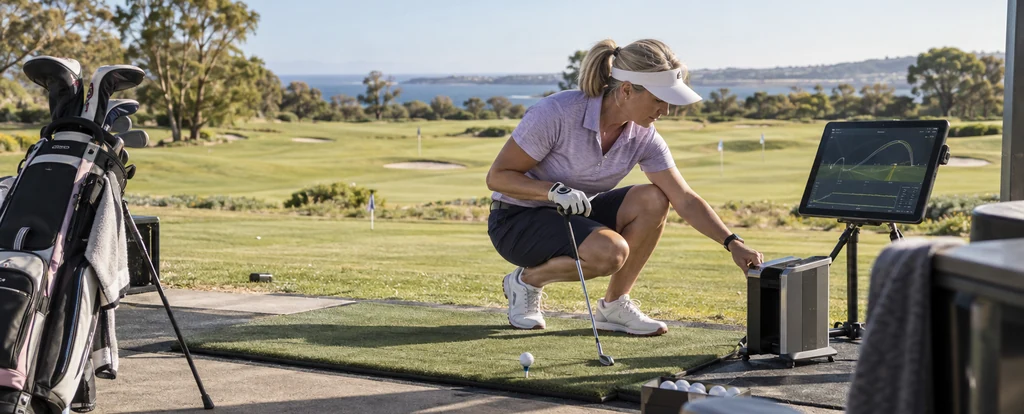
- Using a launch monitor to check swing and ball-flight numbers, then adjusting technique
- Giving lessons and clinics to members, juniors and visitors
- Handling entries, travel, sponsorship commitments and equipment arrangements
What skills do professional golfers need?
Employers look for fitness coaching and instruction, backed by TrackMan fluency and strong physical stamina and dexterity.
Specialist skills
- Fitness coaching and instruction
Software and tools
- TrackMan
- Foresight Sports GCQuad
- Arccos
- Golfshot GPS
General skills
- Physical stamina and dexterity
- Attention to detail
- Problem solving
- Written communication
- Time and deadline management
- Client relationships and advisory
Is the job growing?
About 900 people work as professional golfers in Australia, and employment is projected to grow 12.7% over the decade to 2035. That's healthy, above-average growth, and the role should stay in solid demand.
How do you become a professional golfer?
Here's the path most professional golfers take, step by step.
- 1Build a playing record
A handicap around scratch and results in state and national amateur events are what club employers and selectors look at, and that record takes years of junior and amateur competition to build.
- 2Complete the PGA of Australia trainee program
Trainees work full time at a golf facility while studying, usually over about three years, and are paid a wage by the club. The program covers coaching, club repair, rules and the business side of the game, and leads to full PGA membership.
- 3Play wherever you can qualify
Mini tours, state opens and Monday qualifying give you tournament rounds and a ranking, and they are how most touring players build a case for a place on a larger tour.
- 4Add a related qualification
A diploma or degree in sports science, golf management or business helps if you are heading towards high-performance coaching or club management, and TAFE and several universities offer them.
Ready to apply as a professional golfer?
Whether you're working toward becoming a professional golfer or already are one and want a hand with the next step (sharpening your resume for ATS screening, tightening your cover letter, or knowing what you'll actually be asked at interview), here are examples grounded in this specific role, not generic templates.
What jobs can a professional golfer move to?
Moving into Event Coordinator typically comes with the biggest pay rise, worth $14,800 a year more on average.
| Move to | Typical pay change | Overlap | Retraining |
|---|---|---|---|
| Event Coordinator Tournament experience and golf industry contacts help professional golfers coordinate events, but formal event management study is required. | +$14,800 | 21% | reskill |
| Personal Trainer Fitness, discipline and client coaching skills carry into personal training, with a short certification completing the move. | +$7,800 | 54% | short course |
| Sports Coach Professional golfers bring elite playing knowledge and course strategy to coaching, though a coaching qualification is needed to work as a sports coach.Known move | +$4,800 | 38% | reskill |
Moves are chosen from Jobs and Skills Australia's Data on Occupation Mobility, which follows income tax records between 2011-12 and 2020-21, together with entry requirements and skill overlap. A known move is one people were seen making in that data. Pay change compares median full-time pay for the two roles.
Who works as a professional golfer?
The typical professional golfer is 42 years old; 93% are men, 64% work full-time, and full-timers average 43 hours a week.
- 42
- Median age
- 7%
- Female share
- 64%
- Full-time
- +3h
- vs all-jobs avg
What's it like being a professional golfer?
The week usually mixes practice, playing and teaching, with early starts and long days when a tournament is on. Playing status and income shift with results, so patience with the same swing fault over months matters as much as talent. Professionals who enjoy the teaching side as well as the competition tend to stay in the role longer, because the coaching work is steady while prize money is not.
What people like
- You play and practise for a living. Most of the working week happens outdoors, and improving your own game is part of the job rather than something you fit around it.
- Teaching gives quick feedback. Helping a member straighten a slice or a junior break 90 is a result you can see in an afternoon rather than over a season.
- The work changes shape through the week. A pro-am, a junior clinic, a club-fitting session and range time can all fall in the same seven days, which keeps the role from settling into one routine.
- A small, connected industry. Club professionals, tour players, clubmakers and officials tend to know each other, and those contacts lead to invitations, jobs and playing opportunities.
What people find hard
- Income follows results. A missed cut or a quiet month for lessons shows up in the bank account, and touring players have no guaranteed wage to fall back on.
- Weather and cancellations. Wind, rain and heat can wipe out a competition round or a booked lesson, and the working day is outdoors in all of it.
- Travel and time away. Tournament schedules mean long drives or flights, weeks in hotels and time away from family, sometimes for modest returns.
- Repetitive practice. Getting better at this level means hitting the same shot hundreds of times, which is a long way from the tournament days people picture.
Based on our synthesis of professional-body surveys and public accounts of the role, not first-person verified reviews.
Which industries employ professional golfers?
Arts and Recreation Services employs the largest share of professional golfers, followed by Education and Training.
Top employing industries
- 1Arts and Recreation Services
- 2Education and Training
- 3Accommodation and Food Services
Ranked by employment share; the source doesn't publish an exact percentage per industry.
| Diploma / Advanced Diploma | 29.5% | |
|---|---|---|
| Year 12 or below | 24.1% | |
| Certificate III/IV | 12.2% | |
| Bachelor degree | 10.9% | |
| Postgraduate | 0.8% |
Will AI replace professional golfers?
AI and automation sit at the edges of this job rather than in the middle of it. Launch monitors such as TrackMan and GCQuad, shot-tracking apps and GPS devices already feed players exact numbers about swing and ball flight, but deciding what to change, reading conditions and holing a putt under pressure remain human. The administrative side of the role, from tournament entries to sponsor updates, is where automation has the most reach.
Share of typical working time by exposure level
- Playing tournament rounds and qualifying eventsShot selection, course management and nerves over the closing holes are not something a device takes over.35%low
- Practice and swing work on the rangeA launch monitor reports club and ball numbers precisely, but the player and coach still decide what to change and drill it into shape.25%moderate
- Coaching members and juniorsVideo and swing-analysis software speed up the diagnosis, while the explanation, the encouragement and the plan for the next lesson come from the professional.25%low
- Entries, travel and sponsor administrationBooking travel, entering events and drafting sponsor or social media updates are the tasks most readily handled by scheduling tools and software.15%high
Common questions about becoming a professional golfer
Straight answers to the questions people ask most.
How much do professional golfers earn?
Professional golfers earn a median of $70,200 per year before tax. Prize money, tour status, club retainers and lesson fees move that figure a long way in either direction, so individual earnings spread much wider than the middle number.
How do you become a professional golfer?
In Australia the usual route is the PGA of Australia trainee program, where you work full time at a golf facility while studying and end up with full membership. Touring players often build a handicap near scratch through amateur competition, then chase starts through qualifying events and mini tours. A sports science or golf management qualification can help if you want the coaching or club side.
Are professional golfers in demand?
Professional golfers are currently not in shortage, and employment in the role is projected to grow 12.7% over the decade to 2035. With about 900 people working as professional golfers, most openings appear when someone retires or leaves the game, so a playing or coaching record is what gets you considered.
Will AI replace professional golfers?
Not the playing or the coaching. Launch monitors, shot-tracking apps and GPS devices already give players precise numbers about swing and ball flight, but reading wind and lie, choosing a shot and holing a putt under pressure stay with the player, and explaining a swing change to a member stays with the professional. The administrative side of the job, from entries to travel to sponsor updates, is where automation reaches furthest.
What careers can a professional golfer move into?
Sports coaching and personal training both build on what you already do, with coaching using your playing knowledge and course strategy and personal training using the fitness and client work, and each pays $4,800 more and $7,800 more respectively. Both need a qualification before you can work in them, so treat the move as retraining rather than a straight swap. Many professionals also end up running their own coaching business or academy, which is often where earnings grow.
Do you need a qualification to teach golf?
Full PGA of Australia membership is what clubs and students look for, and it comes through the trainee program rather than a standalone course. Some teaching professionals also hold coaching accreditation or a sports science degree, which helps with junior development and high-performance work.
Related roles
Not sure this is you? Take the career quiz and get a ranked shortlist of roles that fit how you like to work.